


What is Planetary Protection?
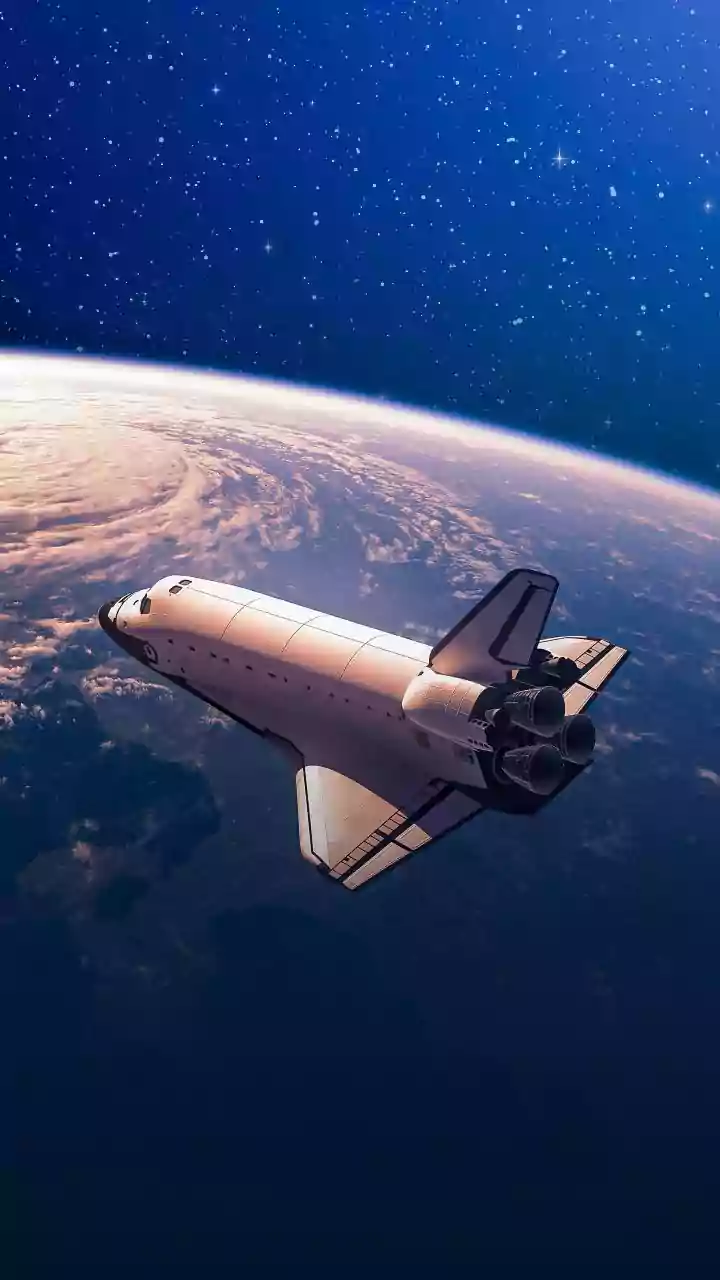
At its core, planetary protection is a guiding principle for any mission that travels between celestial bodies. It has two primary goals: preventing 'forward contamination,' which is the transfer of Earth-based microbes to another planet or moon, and
'back contamination,' which is the potential transfer of extraterrestrial organisms back to Earth's biosphere. The legal foundation for this rests in the Outer Space Treaty of 1967, signed by over 100 nations. Article IX of the treaty calls for parties to explore space in a way that avoids "harmful contamination." The international body responsible for creating the specific guidelines that space agencies follow is the Committee on Space Research, or COSPAR. These guidelines are not legally binding but represent the global scientific consensus on how to explore responsibly.
A Five-Category System of Caution
Not all space missions are created equal, and neither are the rules they must follow. COSPAR has established a five-category system that tailors protection measures to the destination and the type of mission. A 'Category I' mission, such as a flyby of the Sun, has no planetary protection requirements because the destination is not of interest in the search for life. 'Category II' applies to missions to places like the Moon or Venus, where there's an interest in the origins of life but a remote chance of contamination compromising science. As the stakes get higher, the rules get stricter. 'Category III' is for orbiters and flybys of sensitive locations like Mars or Jupiter's moon Europa, while 'Category IV' is for landers on these worlds. The highest level, 'Category V,' is reserved for missions that return samples to Earth.
Mars vs. the Moon: A Tale of Two Worlds
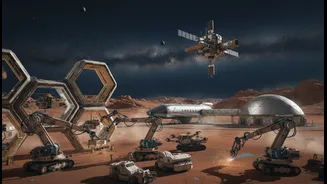
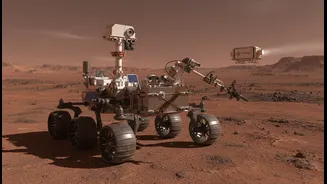
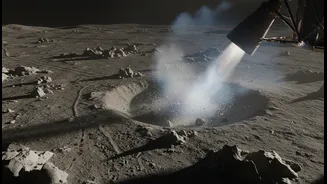
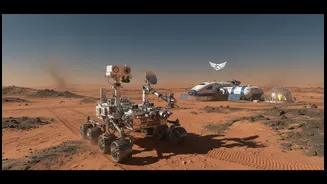
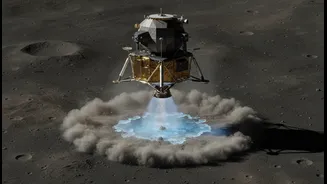
Comparing a mission to the Moon with one to Mars clearly illustrates the system's logic. The Moon is designated Category II, requiring documentation but not extreme sterilization, as it is considered to have no indigenous life. Mars, however, is a different story. It is a prime target in the search for past or present life, placing it in the more stringent Category IV. Rovers like NASA's Perseverance, which are designed to search for signs of ancient life, fall under a sub-category that demands rigorous sterilization. This involves baking spacecraft components at high temperatures and assembling them in ultra-clean rooms to drastically reduce the 'bioburden'—the number of bacterial spores on board. For missions targeting a "special region" on Mars where liquid water might exist, the rules are even stricter, requiring a level of sterilization close to that of the Viking landers in the 1970s.
Icy Moons: The Highest Level of Precaution
The most tantalizing—and therefore most protected—destinations in our solar system may be the icy moons of Jupiter and Saturn, like Europa and Enceladus. Scientists believe these worlds hide vast liquid water oceans beneath their frozen shells, making them prime candidates for harbouring extant life. Any mission that intends to land on one of these worlds, or even comes close to them, is subject to the highest levels of scrutiny. A flyby mission like Europa Clipper is classified as Category III, with limits on its microbial load. A future lander would likely face Category IVc requirements, the strictest for a robotic mission, demanding intense sterilization to avoid introducing Earth life into a potential oceanic ecosystem. A sample return from one of these moons would be a 'Restricted Earth Return' (Category V), requiring complex containment protocols to ensure nothing is accidentally released into Earth's environment.
A New Space Age Brings New Debates
For decades, planetary protection was the concern of a few national space agencies. Today, the landscape is rapidly changing. The rise of commercial space companies and an increasing number of spacefaring nations are creating new challenges for these policies. Some argue that the current rules are too burdensome and could slow down a new era of exploration, particularly human missions to Mars. Under existing COSPAR policy, there is no compliant way to send humans, with their trillions of symbiotic microbes, to the Martian surface. This has sparked a vital debate about how to adapt policies to this new, more crowded era of spaceflight while upholding the core scientific and ethical principles of planetary protection.