

The Cosmic Data Deluge
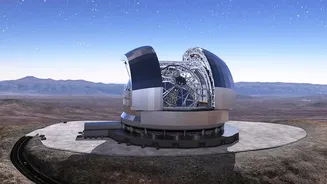
For centuries, astronomy was defined by what the human eye could see through a lens. Today, it’s defined by data—petabytes of it. Telescopes like the Vera C. Rubin Observatory, set to begin its decade-long survey, will generate an estimated 20 terabytes
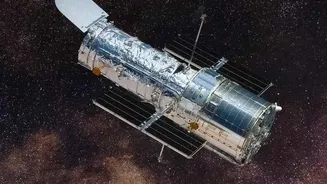
of data every single night. To put that in perspective, the entire Hubble Space Telescope archive, spanning over 30 years, is dwarfed by what these new instruments will produce in a short time. This torrent of information, containing images of billions of galaxies and alerts for millions of transient events, is fundamentally impossible for human researchers to sift through manually. It’s a classic big data problem, and the solution astronomers are turning to is artificial intelligence.
More Than Just a Speed Boost
It’s easy to think of AI as just a way to do things faster, but its role in astronomy is far more revolutionary. Machine learning models, particularly neural networks, don't just accelerate human tasks; they perform tasks that are beyond human capability. They can detect subtle, complex patterns across millions of images that would be imperceptible to the human eye. Instead of being told exactly what to look for, some AI models learn what is 'normal' in a vast dataset and then flag anything that deviates from that norm. This moves the process from simply verifying known phenomena to actively discovering the unknown. It’s a shift from searching for needles in a haystack to having the haystack tell you where the needles are.
Hunting for New Worlds
One of the most exciting applications of AI is the hunt for exoplanets, or planets orbiting other stars. The primary method for finding these distant worlds involves looking for the minuscule dip in a star's brightness when a planet passes in front of it. Training an AI on a set of 15,000 previously confirmed signals from the Kepler space telescope, researchers created a neural network that could correctly identify planets with 96% accuracy. The AI learned the tell-tale signature of a transiting planet and has since been used to find previously missed planets in the Kepler data, including the eighth planet in the Kepler-90 system. Tools like NASA's ExoMiner can analyse thousands of potential signals at once, a task that would be incredibly tedious and time-consuming for human astronomers.
A Universal Librarian
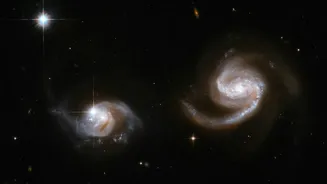
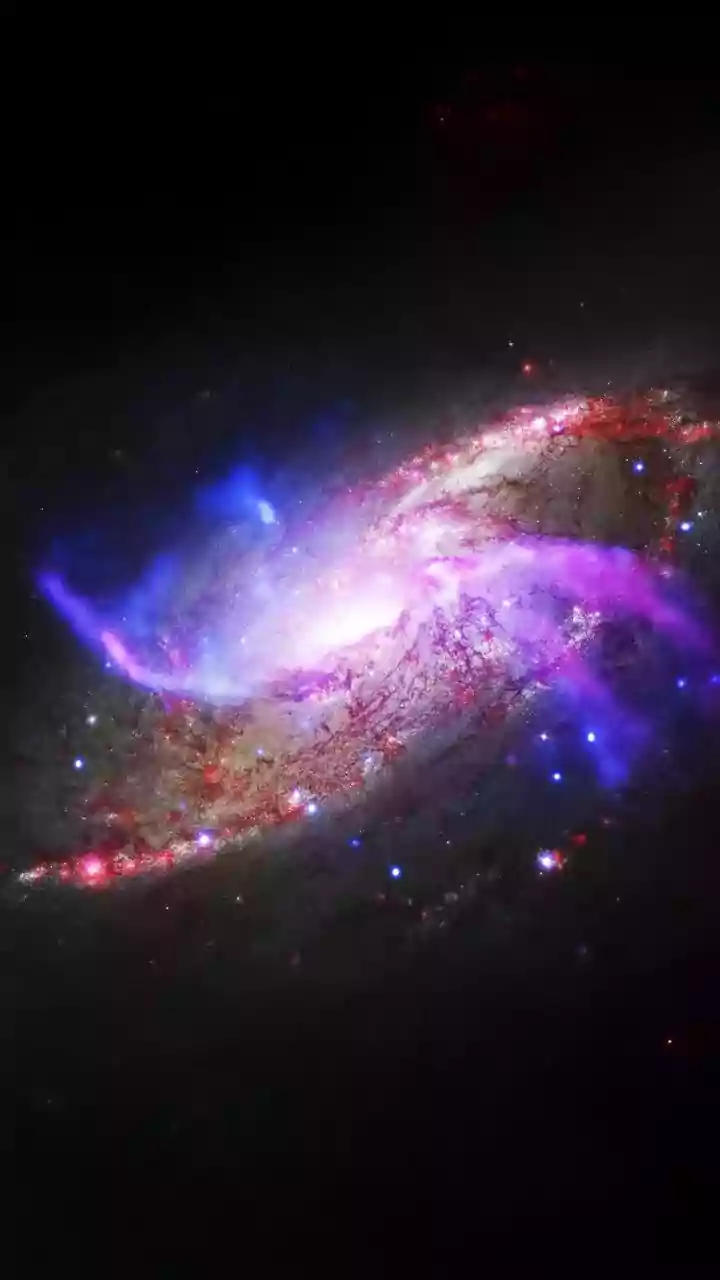
The universe is filled with countless galaxies of different shapes, sizes, and evolutionary stages. Classifying them, a field known as galaxy morphology, is crucial for understanding how the cosmos evolved. This was famously the goal of the Galaxy Zoo citizen science project, where volunteers classified galaxies by hand. Now, AI is taking over. Convolutional neural networks, the same type of AI often used for facial recognition, are trained on simulated or human-labelled galaxy images to recognise patterns. They can then classify millions of real galaxies from surveys like the Hubble Legacy Field with remarkable speed and accuracy. One program called Morpheus was developed to automatically classify galaxies by shape, tackling the immense datasets that new observatories will produce.
Finding the Odd Ones Out
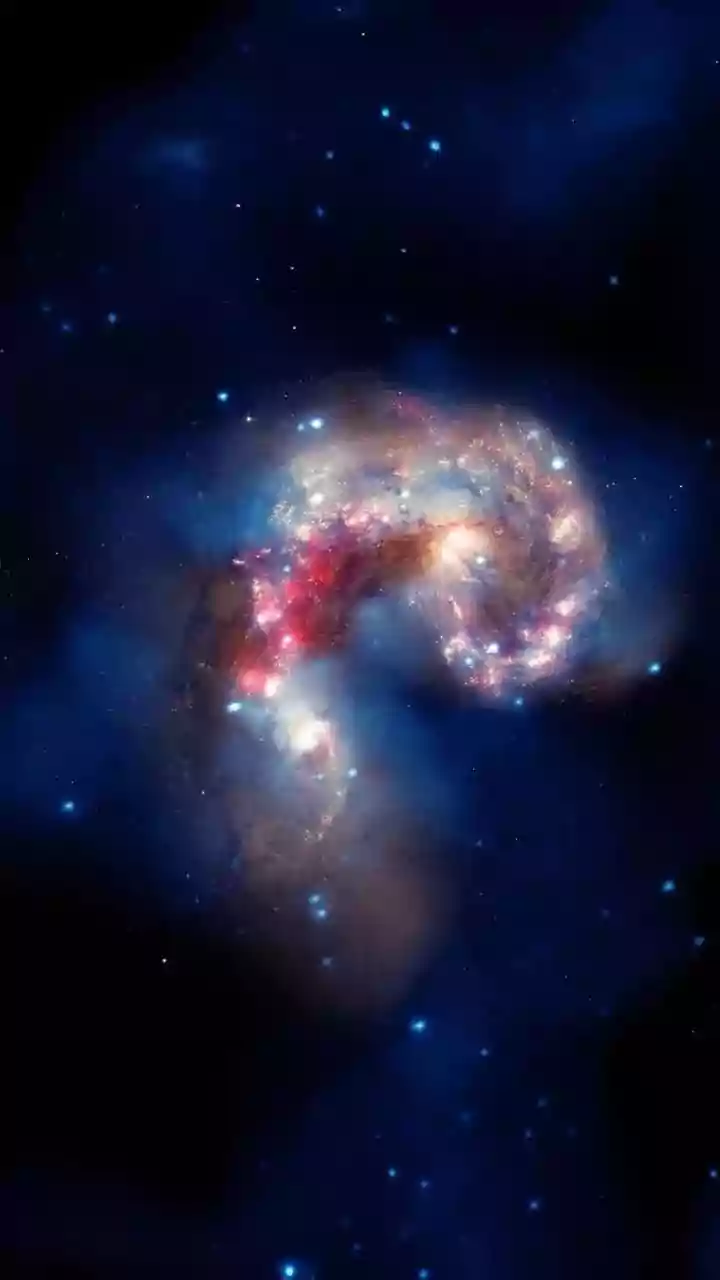
Perhaps AI's most profound contribution is in anomaly detection—finding the truly weird and unexpected. Recently, researchers from the European Space Agency developed an AI called AnomalyMatch. After training it on what 'normal' astrophysical objects look like, they unleashed it on the entire Hubble Legacy Archive. In just a few days, it flagged over 1,300 anomalies, including interacting galaxies, gravitational lenses, and around 800 objects that had never been documented before. These discoveries are not just curiosities; they represent phenomena that defy current classification and could point toward new physics. This AI-driven approach allows scientists to move beyond hypothesis-driven research and embrace discovery-driven exploration, where the data itself highlights the most interesting questions to ask.