




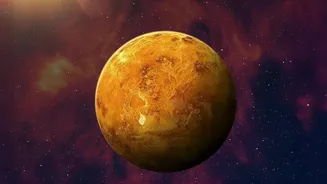


A Different Kind of Planet
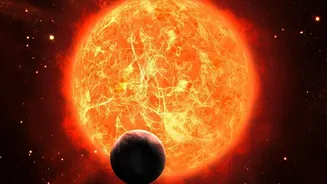
Imagine a world larger than Earth but smaller than Neptune, orbiting its star so closely that a year lasts just a few days. This is the realm of 'warm Neptunes,' a class of exoplanet that has no direct parallel in our own solar system.. One such world,
GJ 1214 b, located about 48 light-years away, has become a focal point for researchers.. These planets are tidally locked, meaning one side is trapped in perpetual daylight and intense heat, while the other faces the freezing darkness of space.. For years, GJ 1214 b's secrets were hidden beneath a thick, reflective layer of haze or clouds, making it impossible to study its atmosphere.. But now, with the power of the James Webb Space Telescope (JWST), scientists have finally peered beneath the veil..
Reading the Rainbow of Starlight
So how do you analyze the air of a planet trillions of kilometres away? The technique is called transit spectroscopy, and it is a marvel of modern astronomy. When an exoplanet passes in front of its host star from our point of view, a tiny fraction of the starlight filters through the planet’s atmosphere.. The gases in that atmosphere absorb specific colours, or wavelengths, of light. By capturing the light that reaches the telescope and analyzing which colours are missing, astronomers can deduce the chemical composition of the atmosphere.. This is precisely what the JWST did with GJ 1214 b.. The powerful infrared observatory was able to pick apart the starlight and find the tell-tale signatures of several molecules, including water vapour and, most intriguingly, methane..
The Methane Mystery
Finding methane is a big deal in exoplanet science for a simple reason: it is an unstable molecule. Methane in an atmosphere is quickly destroyed by starlight, so if you find it, it means something on the planet is actively and continuously replenishing it.. On Earth, a vast amount of atmospheric methane is produced by living organisms, from microbes in wetlands to the digestive systems of cattle.. This has led some to label methane a potential 'biosignature'—a chemical hint of life. However, it’s not a slam dunk. Methane can also be produced by purely geological processes, such as volcanic activity or reactions in underwater hydrothermal vents, with no life involved.. The presence of methane is not proof of life, but rather the start of a fascinating scientific puzzle.
A Clue, Not a Conclusion
This is why researchers are 'intrigued' rather than 'convinced'. The discovery of methane on a warm Neptune is a critical data point, not a final answer. The key for scientists now is to understand the context. For methane to be considered a strong biosignature, it would ideally be found in an atmosphere rich in carbon dioxide but with very little carbon monoxide.. This specific chemical imbalance is difficult to explain through geology alone but is a known byproduct of a widespread biological ecosystem.. The next steps will involve using the JWST and other future observatories to get an even clearer picture of the atmospheres of these distant worlds. Scientists will aim to measure the relative abundances of these gases to determine if a biological or geological explanation is more likely. Each discovery like this helps refine our models of how planets form and what diverse types of environments might exist across the galaxy.