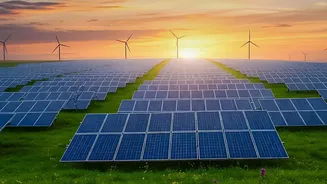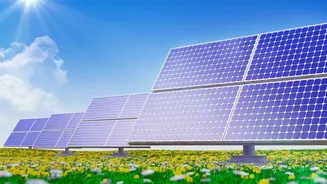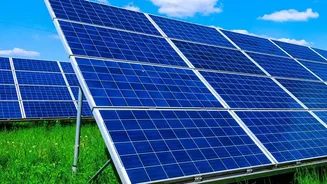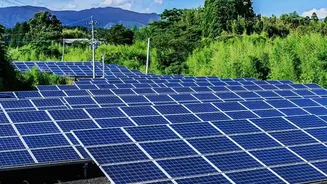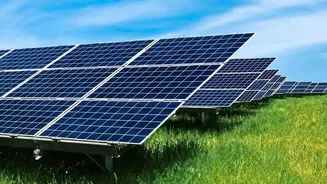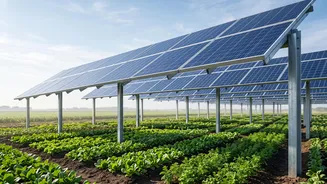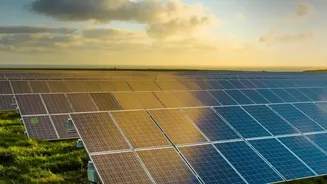






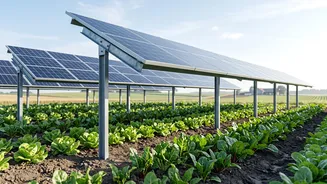
What if a single piece of land could yield both food and energy? This is the promise of agrivoltaics, an innovative approach where crops are grown under solar panels, a concept gaining serious traction across India.
The Rise of Dual-Use Farming
Agrivoltaics, or agrisolar, is the practice
of using agricultural land for both crop cultivation and solar power generation simultaneously. Instead of displacing farms, solar panels are elevated on structures high enough to allow farming activities to continue underneath. For a country like India, which faces the twin challenges of ensuring food security and expanding its renewable energy capacity, this dual-use model is more than just a novelty; it's a potential solution. By sharing land, India can pursue its ambitious solar targets without taking valuable farmland out of production, offering farmers a way to diversify their income through electricity sales and crop harvests.
Why Shade Isn't Always the Enemy
The immediate assumption is that shade is bad for crops. While true for some, it's a blessing for others, especially in India's hot and arid regions. The partial shade from solar panels creates a cooler microclimate. This reduces heat stress on plants and lowers soil temperature, which in turn cuts down on water evaporation by as much as 30-40%. For many crops, the respite from the intense midday sun allows them to grow more efficiently, sometimes resulting in better quality produce and even higher yields than those grown in the open field.
Spices and Medicinal Herbs
Among the star performers in Indian agrivoltaic systems are shade-loving, high-value crops like ginger and turmeric. These plants are naturally adapted to low-light conditions. Studies and pilot projects in states like Odisha and Andhra Pradesh have shown that not only do they grow well under panels, but their yield can sometimes improve. The regulated temperature and moisture retention in the soil are ideal for the development of their rhizomes. Other medicinal and aromatic plants, which often grow in forested environments, also show great promise.
Leafy Greens and Vegetables
Many common vegetables are proving to be highly compatible with agrisolar setups. Leafy greens like spinach, coriander, and lettuce thrive in the cooler, partially shaded environment, which can also reduce 'bolting' (premature flowering) in summer. Pilot projects across the country have successfully cultivated a range of vegetables, including tomatoes, onions, cauliflower, and broccoli. Research by institutions like the Indian Agricultural Research Institute (IARI) has even recorded improved yields for some vegetables grown under panels. However, some crops like rice and sugarcane have not been found suitable in initial assessments.
Pulses and Beans in Arid Zones
Pioneering work by the Central Arid Zone Research Institute (CAZRI) in Jodhpur has demonstrated the viability of growing various pulses and beans. In the arid conditions of Rajasthan, crops that are already drought-tolerant benefit immensely from the shade and water conservation offered by solar panels. Trials have included mung bean (moong), moth bean, and cluster bean (guar). While there might be a slight reduction in yield compared to open-field cultivation with full irrigation, the ability to grow these crops with less water while also generating power makes it a compelling model for dry regions.
Looking Ahead: The Farmer's Double Income
The primary appeal of agrivoltaics for Indian farmers, over 85% of whom are small and marginal, is the potential for a stable, dual income. Farmers can earn money from selling crops and from selling the electricity generated on their land, often supported by government schemes like PM-KUSUM. This creates a financial buffer against unpredictable weather and market price fluctuations. While the initial setup cost is higher than for conventional solar farms, the combined longterm economic returns and efficient land use present a powerful case for its expansion.