



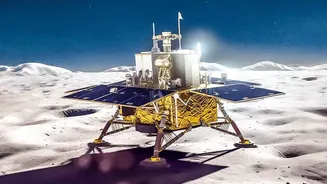
The Moon's Deep Freeze Problem
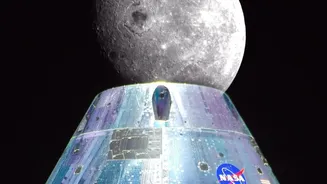
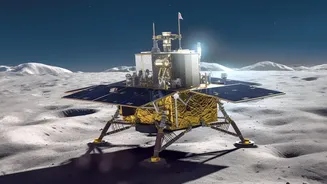
Exploring the Moon isn't just about the journey there; it's about surviving once you arrive. A primary obstacle for NASA's Artemis program and the goal of a sustained human presence is the extreme environment. The lunar night lasts for 14 Earth days,
and in the shadowed regions of the Moon's South Pole, temperatures can drop to a staggering minus 200 degrees Celsius. For standard technology, this is a death sentence. Conventional lithium-ion batteries, like those in our phones and cars, contain a liquid electrolyte that freezes solid in such brutal cold. This freezing doesn't just stop the battery from working; it can cause permanent damage, meaning that even when the sun returns, the equipment never wakes up. This challenge requires a fundamental rethink of how we power our lunar ambitions.
NASA's Solid Solution: The SPEARS Project
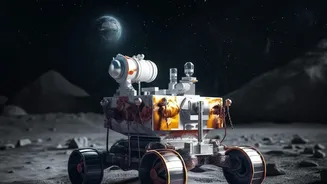
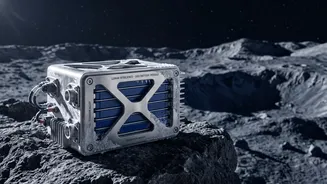
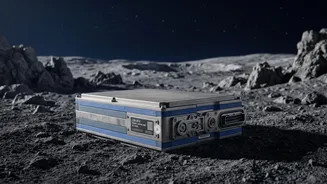
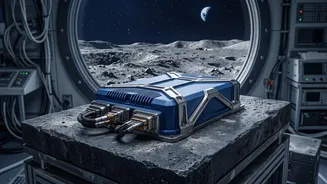
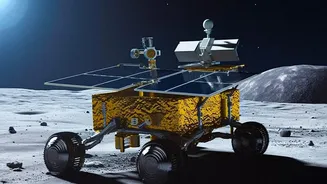
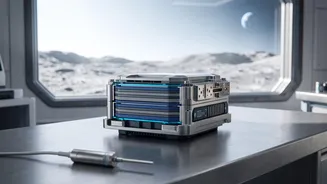
Enter the SPEARS project, a key piece of NASA's research puzzle. SPEARS stands for Solid Power for Extreme Environment Adaptability and Resilience in Space. Led by NASA's Glenn Research Center, this project is focused on creating a new class of battery that can weather the Moon's wild temperature swings. The core innovation is the shift from a liquid electrolyte to a solid one. By using a solid material, such as a ceramic or polymer, the battery no longer has a component that can freeze, evaporate in the vacuum of space, or pose a fire hazard. This makes the entire system inherently more robust and safer for everything from rovers and scientific instruments to an astronaut's emergency power pack.
How to 'Wake Up' a Frozen Battery
The headline idea of a battery that can 'restart' is central to the SPEARS concept. While these solid-state batteries are designed to survive the deep freeze without damage, they don't produce power at the absolute coldest temperatures. The key is that they can be gently and efficiently warmed back up to an operating temperature. The plan involves integrating small, internal heaters into the battery packs. When the sun rises or when power is needed, these heaters would use a tiny fraction of the battery's own stored energy to warm the cells. This 'self-heating' capability means the system doesn't need a large, power-hungry external heating system just to keep it alive through the night, saving critical mass and energy for the mission itself.
Promising Results and Future Potential
Recent tests have shown significant promise. In thermal vacuum chambers that simulate lunar conditions, small prototype SPEARS cells have demonstrated they can operate in a wide temperature range, from 176°F (80°C) down to minus 112°F (minus 80°C) with only slightly reduced performance at the colder end. Crucially, the cells survived exposure to temperatures as low as minus 274°F (minus 170°C) without sustaining any damage. This proves the core concept: the batteries can endure the punishing lunar night and be ready to work again once warmed. Researchers are confident they can improve performance even further. The modular nature of the technology also allows scientists to tweak the battery's chemistry to prioritize energy density, power output, or long-term durability depending on the specific application, whether it's for a handheld drill or a long-range rover.
Powering a Permanent Lunar Presence
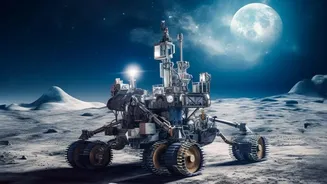
This technology is more than just a better battery; it's an enabling technology for the entire Artemis campaign. To build habitats, conduct long-term science, and explore permanently shadowed craters that may hold water ice, NASA needs equipment that can function for months or years, not just a single lunar day. Reliable power that can survive the night is non-negotiable. The SPEARS project represents a critical step toward that goal, potentially unlocking the ability to establish a persistent and sustainable human and robotic presence on the Moon. While still in the development phase, this research could also have significant impacts back on Earth, leading to better batteries for electric vehicles, drones, and electronics that operate in extreme cold climates.