





First, What Is This TCS Thing?
TCS stands for Tax Collected at Source. Think of it as an advance tax that your travel agent or tour operator collects when you book an overseas tour package. They deposit this amount with the government against your PAN. For a long time, the high rate
of this tax was a major hurdle for travellers. It wasn't an extra cost you'd lose forever, as you could claim it back when filing your income tax returns. However, it meant a large chunk of your travel budget was locked up for months, creating a significant cash-flow problem, especially for budget-conscious backpackers.
What Has Actually Changed?
The Union Budget 2026 brought a massive relief for travellers. Previously, the TCS on overseas tour packages was structured in tiers: 5% for packages up to a certain limit and a steep 20% for amounts above that. This often meant adding a huge sum to your upfront cost. As of April 1, 2026, this has been simplified to a flat 2% rate on the total package cost, with no minimum threshold. This change was specifically made for overseas tour packages, simplifying the entire process and making costs far more predictable.
How This Directly Affects Your Wallet
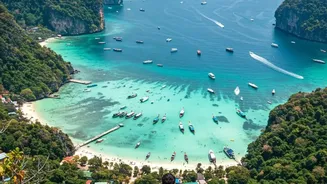
The difference is best explained with an example. Let's say you and a friend were planning a trip to Thailand with a tour package costing ₹2,00,000. Under some of the previous high-rate structures, a 20% TCS would have meant paying an extra ₹40,000 upfront, money you wouldn't see again until your next tax refund. For a young traveller, that amount could be the entire budget for another short trip. With the new flat 2% rate, the TCS on the same ₹2,00,000 package is just ₹4,000. This leaves ₹36,000 in your pocket that you can use for hostels, food, activities, or even extending your trip. It’s a huge boost for liquidity, making it much easier to commit to booking the trip in the first place.
It's a Cash Flow Win, Not a Discount
It's crucial to remember that TCS is not a final tax you lose. It is an advance tax that gets credited against your PAN, and you can either adjust it against your total income tax liability or get it back as a refund if you don't have any tax to pay. The real victory here is one of cash flow. Young backpackers often save for months for a single trip and operate on tight budgets. The previous system forced them to set aside a significant amount of cash that was essentially unusable for up to a year. The new 2% rule means much less of your hard-earned savings is tied up with the tax department, freeing it for your actual travel expenses.
Planning Your Adventure Just Got Easier
This policy change is already having a real-world impact. Travel operators have reported a surge in enquiries for popular backpacking destinations like Bali and Krabi, as well as emerging favourites in Eastern Europe. With less money blocked upfront, travellers are also finding it easier to upgrade parts of their trip, perhaps opting for a private room for a few nights or booking a special experience. For young Indians bitten by the travel bug, the message is clear: that first big international adventure is no longer a distant dream hampered by complicated tax rules. The financial barrier to entry has been lowered, making it the perfect time to pull out your world map and start planning.