



A New Strategic Alliance
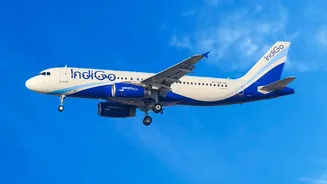
In late July 2026, the Ministry of Tourism signed a significant Memorandum of Understanding (MoU) with Air India, followed by a similar agreement with IndiGo. These partnerships establish a formal framework for the government and the airlines to jointly
promote India as a top-tier global tourism destination. The collaboration is designed to be a strategic, non-financial alliance where both parties leverage their strengths. The Ministry will use its 'Incredible India' brand and promotional content, while the airlines will utilize their vast domestic and international networks to bring the message—and the tourists—to India. The goal is to create a unified and powerful promotional push, co-branding marketing campaigns across digital platforms, in-flight entertainment, and global travel exhibitions.
Solving the Last-Mile Problem
For years, a key challenge for inbound tourism has been the 'last-mile' connectivity. While international visitors could easily fly into major metros like Delhi or Mumbai, reaching culturally rich but less-connected destinations like Aurangabad, Hampi, or Khajuraho often required complex and time-consuming onward journeys. This new strategy directly addresses that gap. By combining forces, the Ministry and airlines like Air India Express and IndiGo can better integrate international arrivals with the domestic network. Recent expansions by Air India Express, for instance, have added destinations like Aurangabad, Jodhpur, and Madurai, connecting them to metro hubs. This makes it easier for a tourist landing in Delhi to seamlessly book a connecting flight to a Tier-2 city, unlocking parts of India previously considered too difficult to access.
New Routes and Broader Horizons
The partnership coincides with a broader expansion of India's international air links. In 2026 alone, a flurry of new direct routes has been announced, connecting India to new markets. Air India has launched services from Delhi to Hanoi and Mumbai to Tokyo, while IndiGo has started flights from Chennai to Réunion Island. Significantly, connectivity is also improving from non-metro cities. Air India Express recently launched its first-ever international services from Guwahati to Dubai and Abu Dhabi, providing a direct gateway to the Gulf for the entire Northeast region. These new routes are crucial, as the partnership with the Ministry of Tourism can now leverage these connections for targeted promotional campaigns in key source markets across Southeast Asia, the Middle East, and Europe.
Beyond Promotion to Experience
This collaboration is about more than just running advertisements. It's a holistic approach to improving the entire visitor experience. The MoUs include provisions for creating structured familiarisation trips for international tour operators, media, and travel influencers to showcase diverse tourism products beyond the usual Golden Triangle. The focus is on promoting niche segments like wellness and Ayurveda circuits, spiritual tourism, and eco-tourism. By featuring promotional content on in-flight entertainment systems and exploring 'Incredible India' branding on boarding passes and even aircraft livery, the partnership aims to surround the traveller with the India story from the moment they book their ticket. It also aims to position India as a viable transit hub, encouraging stopover tourism for passengers en route to other destinations.
The Bigger Economic Picture
Ultimately, this partnership changes the case for international routes by treating them as economic arteries rather than just transport links. By making it easier for tourists to visit and explore more of the country, the initiative aims to drive significant economic growth. Increased tourist arrivals translate directly into more foreign exchange earnings. Furthermore, by dispersing tourists to a wider range of destinations, the benefits of tourism spending on hotels, transport, and local crafts are distributed more evenly, boosting local economies in smaller towns and creating jobs. This strategic alignment between aviation infrastructure and tourism policy is a powerful signal of India's ambition to not only recover its tourism sector but to expand it into a more resilient and geographically diverse industry.