





The Dual Power of Rolling
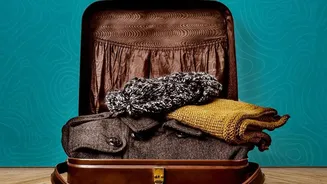
Folding clothes is the default for most, but when it comes to travel, rolling is superior for two key reasons. Firstly, it saves a significant amount of space. Tightly rolled garments are more compact than folded ones, allowing you to fit more into your
bag. Secondly, and more importantly for this mission, a dense roll is less permeable to water. Unlike a flat, folded shirt that can get saturated quickly, a compact cylinder of fabric offers a surprising level of resistance. If water does seep into your luggage, it has a harder time penetrating the core of a tightly rolled item, often resulting in only the outer layer getting damp.
Mastering the 'Ranger Roll'
For maximum security, the military-inspired 'Ranger Roll' (or Army Roll) is the gold standard. This technique creates a tight, self-contained bundle that is incredibly compact and resistant to unrolling. Here’s how to do it with a t-shirt: First, lay the shirt flat and fold the bottom hem up and inside-out, creating a 'cuff' about three to four inches wide. Next, fold one side of the shirt towards the center, then fold the sleeve back over it. Repeat on the other side to create a neat rectangle. Now, starting from the collar, roll the shirt down as tightly as possible towards the cuffed end. Once you have a tight cylinder, use the cuff you created at the beginning to wrap it around the roll, securing it in place. The result is a 'burrito' of clothing that won't come undone.
Applying the Technique to Trousers and Shirts
The same principle applies to other garments. For trousers, zip them up and lay them flat. Fold one leg over the other. You can then either fold the cuff up to create the 'lip' or simply start rolling tightly from the waistband down. For long-sleeved shirts, button them up, lay them face down, and fold the sleeves into the center to form a rectangle before rolling from the collar. The key to success with any item is rolling it as tightly as you can. It may take a few practice runs to get the tension right, but the space-saving and protective benefits are well worth the effort.
Your First Line of Defence: Waterproof Layers
While rolling helps, it isn't a magical force field. Your first real line of defence is an internal waterproof layer. You don’t need expensive gear for this. Simple plastic bags or garbage bags work wonders. Group your rolled items—for example, all your shirts, all your trousers—and place each group into its own bag before putting it in your suitcase. For an upgrade, invest in packing cubes, which add a layer of organisation and protection. For truly critical items like electronics or documents, dedicated dry bags or even large resealable food bags provide an almost impenetrable seal against moisture.
Strategic Packing for Maximum Protection
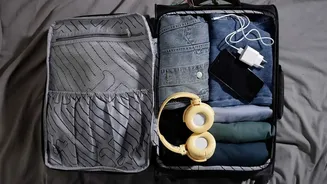
How you arrange your luggage is the final piece of the puzzle. Once your clothes are rolled and bagged, pack them tightly together inside your suitcase. This leaves fewer air gaps, creating a dense block that is harder for water to navigate. If you have a hardshell suitcase, you have a good outer barrier. If using a soft bag or transporting luggage on a car roof rack, this internal density is even more critical. Place less important items, like towels or older clothes, along the outer edges of the suitcase to act as a buffer. Keep your most sensitive or valuable items, like a wedding outfit or your electronic devices, packed in the center, shielded on all sides.