






A Vision of 100 New Airports
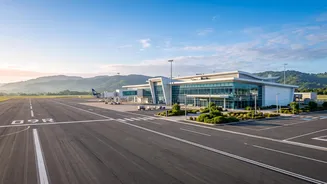
The government has announced a bold new chapter for Indian aviation: building 100 new airports over the next 10 years. This initiative is part of the 'Modified UDAN' scheme, a regional connectivity program designed to make flying more accessible. With
a planned investment of approximately ₹30,000 crore, the goal is to dramatically expand the country's aviation network, which has already grown from 74 airports in 2014 to 166 today. Civil Aviation Minister K. Ram Mohan Naidu stated that this expansion will specifically target Tier-2 and Tier-3 cities, remote areas, Himalayan regions, and islands like Lakshadweep and Andaman. The demand for air travel is no longer confined to major metros; it's a rising aspiration across the nation.
Learning from the Past: The UDAN Experience
This new push builds on the foundation of the original UDAN (Ude Desh ka Aam Naagrik) scheme, which has seen mixed results. Launched in 2016, UDAN aimed to connect unserved and underserved airports through subsidized routes. Over the last decade, the scheme successfully operationalized hundreds of new routes and connected dozens of new locations, giving many Indians their first taste of air travel. However, the model has faced challenges. A key issue has been the sustainability of routes once the initial three-year government subsidy, known as Viability Gap Funding (VGF), runs out. Many airlines have discontinued services on previously operational UDAN routes, leaving passengers stranded and highlighting the economic difficulties of serving low-demand markets.
The Challenge for Airlines
Simply building an airport doesn't guarantee flights. For any route to be successful, it must be commercially viable for airlines. Carriers face significant operating costs, including high taxes on Aviation Turbine Fuel (ATF), maintenance, and crew salaries. In smaller cities, passenger demand can be unpredictable and seasonal, making it difficult to fill seats consistently. The Modified UDAN scheme attempts to address this by extending the financial support period for airlines to five years, with the subsidy gradually decreasing over time to encourage a transition to commercial sustainability. The success of the 100-airport plan will hinge on creating an environment where airlines see a clear path to profitability on these new regional routes.
More Than Just a Runway
A thriving airport is an ecosystem, not just a strip of tarmac. For a new airport in a smaller city to succeed, it needs robust supporting infrastructure. This includes good-quality roads connecting the airport to the city center, reliable public transport, and local economic activity that generates a need for travel. The government is also promoting a 'hub-and-spoke' model to better integrate these smaller airports into the national and international network. Under this system, passengers from regional towns can fly to a larger domestic hub—like the newly designated hubs in Ahmedabad, Varanasi, and Amritsar—and seamlessly connect to international flights without needing to re-check baggage or clear customs multiple times. This integrated approach is crucial for making travel from smaller cities genuinely convenient.
Will This Time Be Different?
So, will this new push deliver lasting connectivity? The ambition is undeniable, and the financial commitment is significant. The government's plan to develop 100 airports under a modified, longer-term subsidy scheme shows an awareness of past shortcomings. Furthermore, the focus on a hub-and-spoke model and integrated infrastructure suggests a more holistic strategy. However, the fundamental challenges remain. The economic viability of routes in low-demand areas is a persistent hurdle that subsidies can only temporarily fix. The true test will be whether these new airports can spur local economic growth, creating a self-sustaining cycle of demand for air travel. Success stories in cities like Darbhanga and Shirdi have shown it is possible, but replicating that success across 100 new locations will be a monumental task.