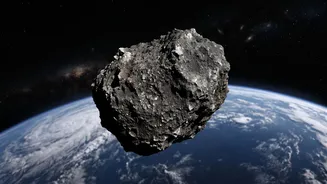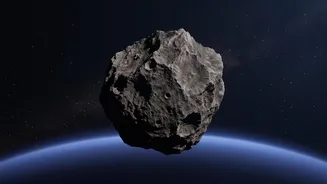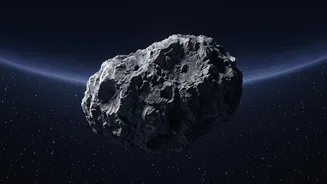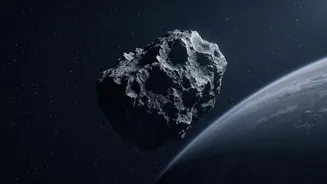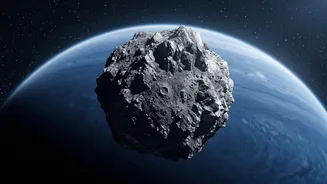



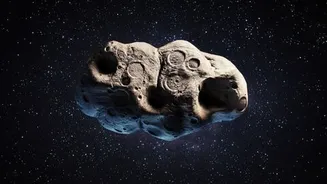
In the vastness of space, a tiny object is causing a big stir. Meet 1998 KY26, an asteroid so small it could fit inside a tennis court, yet it spins faster than almost anything else in our solar system and follows a peculiar path.
A Cosmic Spinning Top
Imagine an object in space
that completes a full day in just over five minutes. That's the reality on 1998 KY26. This incredibly rapid rotation is one of its most baffling features. Initially, observations suggested a rotation period of about 10.7 minutes, which was already record-breaking. However, more recent studies in 2024 revealed it spins twice as fast, with a day lasting a mere 5.35 minutes. For an object so small, estimated to be only about 11 metres in diameter, this speed is extraordinary. It suggests the asteroid is not a loose collection of rubble held together by gravity, which would fly apart at such speeds. Instead, scientists believe it must be a single, solid piece of rock, likely a fragment from a larger asteroid that was shattered in a long-ago collision.
An Unusual Path Through Space
The asteroid's orbit is just as peculiar as its spin. Classified as a near-Earth asteroid, 1998 KY26's path brings it close to our planet, though it poses no collision threat. What puzzles scientists is a slight, but persistent, acceleration it displays that cannot be explained by gravity alone. This type of movement is often seen in comets, where ice turns to gas and escapes, creating a gentle push. This led to the theory that 1998 KY26 could be a 'dark comet'—an object that outgasses so faintly that it doesn't produce a visible tail. However, recent computer models suggest the asteroid is too warm to hold onto the subsurface ice needed for this process, making the cause of its acceleration a continuing mystery.
A Miniature World of Clues
Despite its small size, 1998 KY26 is a treasure trove of potential information. Early radar observations suggested it was a carbonaceous chondrite type, rich in water and organic compounds—the very building blocks of life. These types of asteroids are of great interest to scientists trying to understand how water and life's precursor materials arrived on Earth. More recent observations have classified it as an E-type or Xe-type asteroid, meaning it has a very bright, reflective surface likely made of a mineral called enstatite. While different from the initial assessment, this composition still offers valuable clues about the raw materials that formed our solar system billions of years ago.
The Hayabusa2 Encore Mission
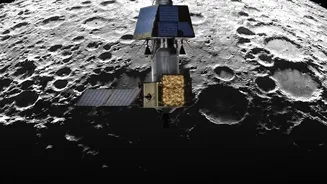
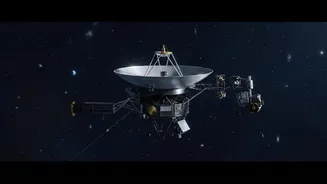
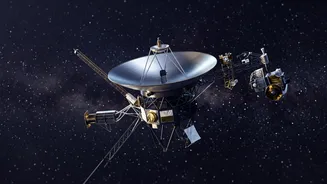
The mysteries of 1998 KY26 are so compelling that it has become the target of a major space mission. Japan's Hayabusa2 spacecraft, famous for successfully collecting samples from the asteroid Ryugu and returning them to Earth in 2020, is now on an extended mission. Its final destination, scheduled for July 2031, is 1998 KY26. This will be the first time a spacecraft has ever attempted to rendezvous with such a small, fast-rotating object. The smaller size and faster spin make the mission incredibly challenging, but the potential scientific rewards are immense. The spacecraft will study the asteroid up close, aiming to understand its composition, structure, and the forces acting upon it.
Why This Tiny Rock Matters
Studying ١٩٩٨ KY٢٦ is about more than just solving a cosmic puzzle. Understanding these small, decametre‑sized objects is crucial for planetary defence. Its size is comparable to the impactors that caused the Chelyabinsk and Tunguska events, so learning about its structure could help us prepare for future threats. Furthermore, it offers a window into the formation of our solar system. By visiting what could be a monolithic fragment of a larger body, scientists can learn about the internal structure of asteroids and the violent collisions that shaped our cosmic neighborhood. The Hayabusa٢ mission will provide an unprecedented close‑up look, promising to turn this puzzling object into a source of profound knowledge.