
The Sun's Violent Temper
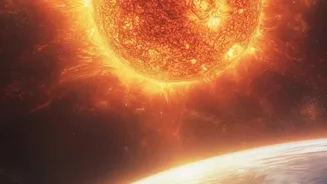
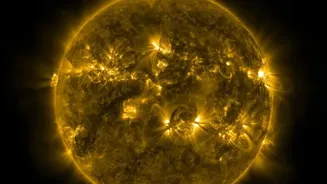
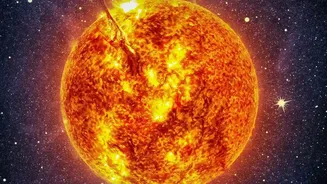
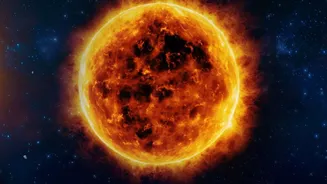
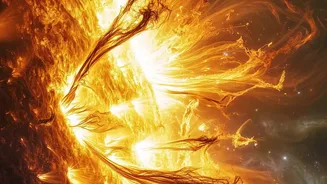
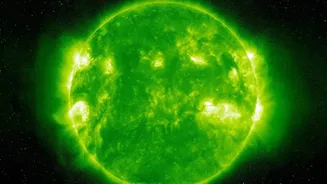
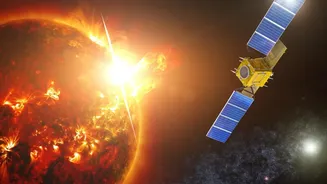
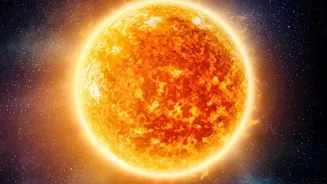
Our sun is not always the benign, life-giving star it appears to be. It has a dynamic and often violent nature, driven by an 11-year cycle of activity. During periods of high activity, the sun is more prone to producing solar flares and Coronal Mass Ejections
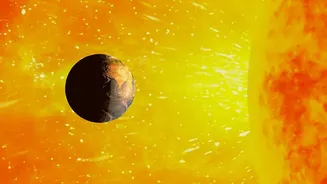
(CMEs). A solar flare is an intense burst of radiation, while a CME is a colossal eruption of plasma and magnetic fields from the sun's corona. These events send billions of tons of matter hurtling through space at speeds that can exceed millions of kilometres per hour. While many CMEs miss Earth entirely, the ones directed at our planet can have significant consequences for our technology-dependent society. This phenomenon is known as space weather, and as our reliance on space-based technology grows, so does our vulnerability to it.
Satellites in the Firing Line
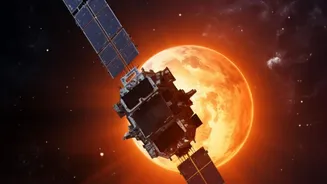
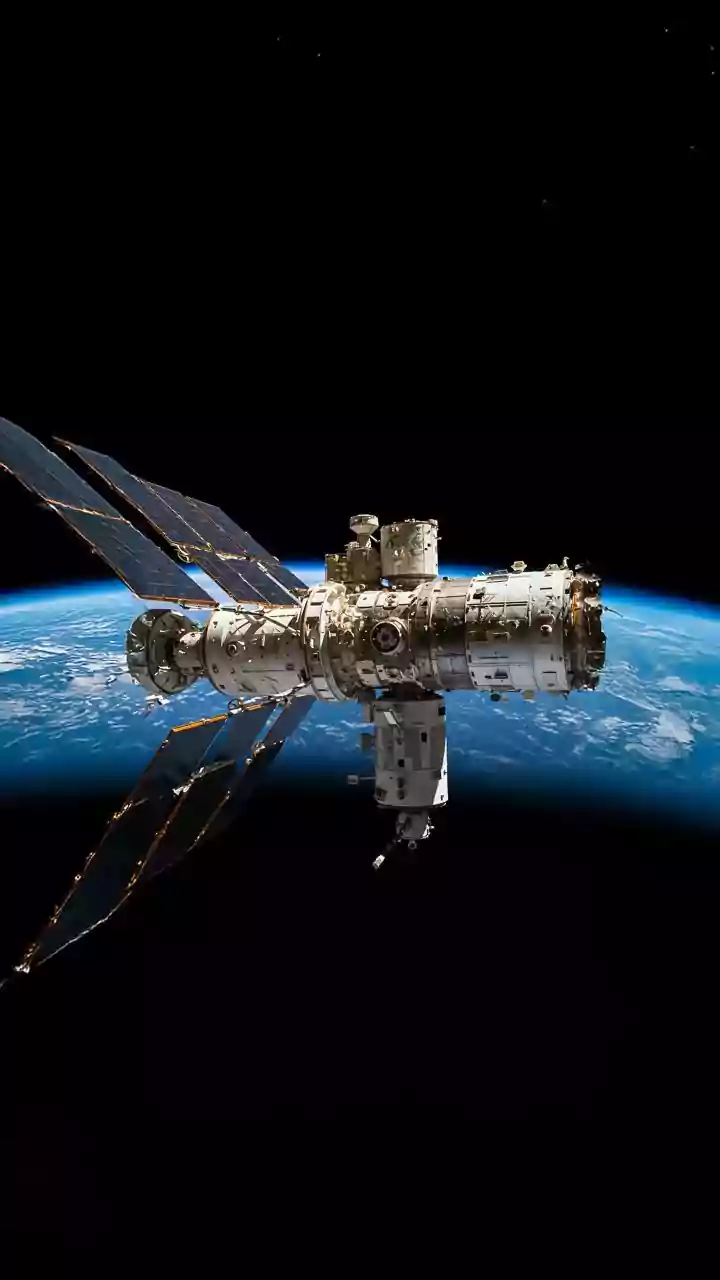
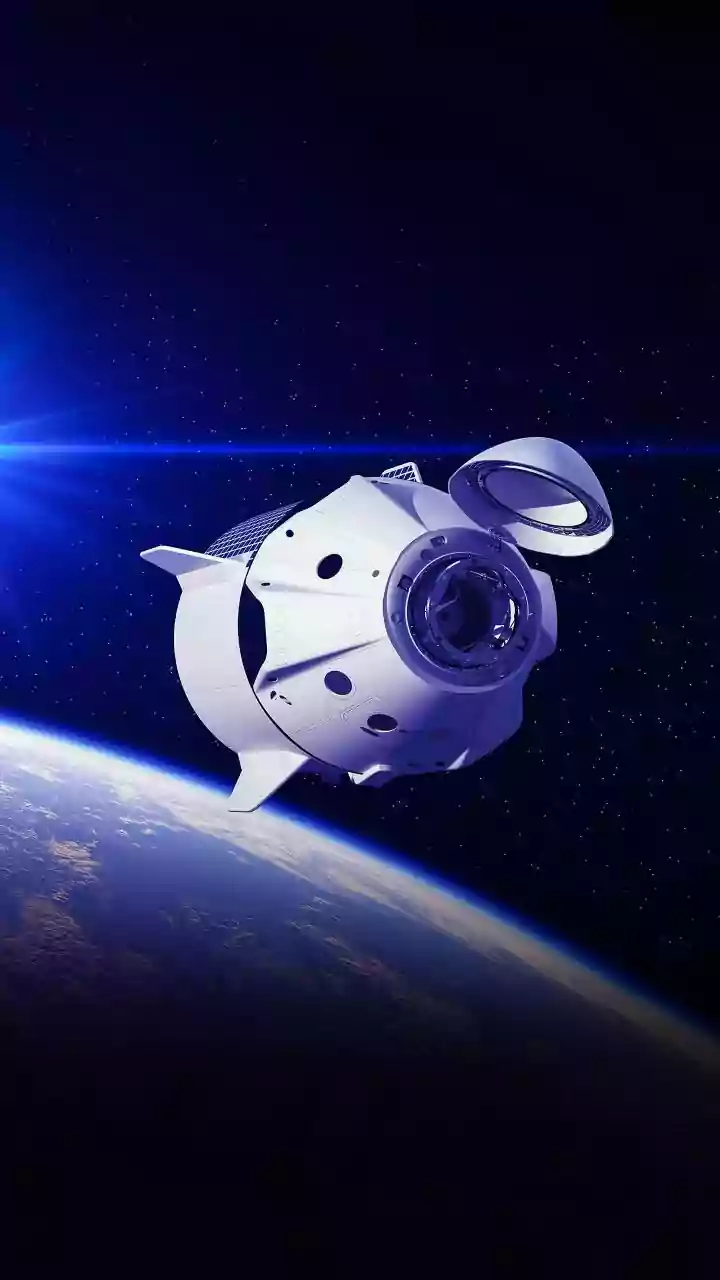
Satellites, particularly those in low-Earth orbit (LEO), bear the brunt of a solar storm's impact. The effects are threefold. First, the storm heats and expands Earth's upper atmosphere, increasing the density of the air where LEO satellites operate. This causes a dramatic increase in atmospheric drag, slowing the satellites down and causing their orbits to decay. If not corrected, this can lead to premature re-entry and destruction, as famously happened to a batch of 40 Starlink satellites in 2022. Second, highly charged energetic particles from a storm can bombard a satellite's sensitive electronics, causing short circuits, phantom commands, or permanent damage. Third, the build-up of plasma on a satellite's surface can create a powerful electrostatic discharge, frying its internal components.
Domino Effect on the Ground
The disruption doesn't stop in space. Damage or disruption to satellites has a cascading effect on the ground-based services we use every day. GPS and other global navigation satellite systems (GNSS) are particularly vulnerable. The ionosphere, a layer of the atmosphere crucial for signal travel, becomes disturbed during a solar storm. This can slow down and distort GPS signals, leading to significant inaccuracies in positioning. For industries like aviation, shipping, and precision agriculture that rely on pinpoint accuracy, these errors can be costly and dangerous. Furthermore, solar storms can disrupt high-frequency radio communications used by airlines and ships for long-range contact. In extreme cases, geomagnetic storms can even induce powerful electrical currents in ground-based power grids, potentially damaging transformers and causing widespread blackouts, as seen in Quebec in 1989.
The Power of a Head Start
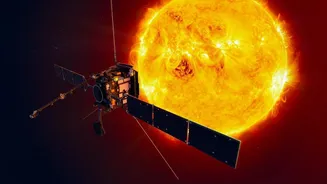
Currently, our most effective warnings come from spacecraft like the Deep Space Climate Observatory (DSCOVR), positioned at a point between the Earth and the sun. By monitoring the solar wind, it can provide a warning of 15 to 60 minutes before a geomagnetic storm hits Earth. This is valuable, but it's a very short window. Getting earlier, more accurate predictions is the holy grail of space weather forecasting. With hours or even days of advance notice, satellite operators could take evasive action. They could reorient satellites to protect sensitive components, switch non-essential systems into a safe mode, or perform orbit-raising manoeuvres to counteract increased atmospheric drag. Aviation authorities could reroute flights away from polar regions where radiation exposure is highest during a storm, and power grid operators could take steps to stabilize their networks to prevent cascading failures.
An Increasingly Urgent Task
The need for better forecasting is becoming more urgent. We are currently in Solar Cycle 25, which began in 2019. This cycle has proven to be significantly more active than scientists initially predicted, with more sunspots and eruptions than expected. With an explosion in the number of satellites planned for LEO—from around 3,000 today to a potential 50,000—the risk of widespread disruption from a single major event is growing exponentially. Improving our ability to predict the sun's behaviour is no longer just a scientific curiosity; it is a critical investment in the resilience of our global infrastructure. It's about protecting the digital backbone of our economy and our daily lives from the inevitable fury of our own star.