

The First Detection: A Speck in the Dark
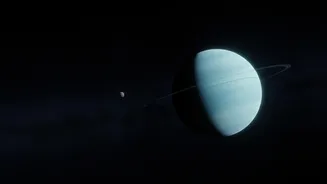
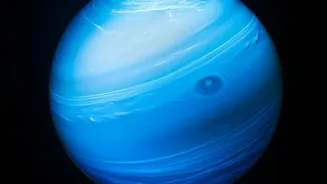
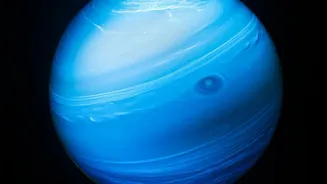
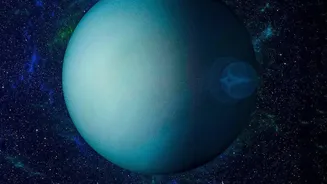
The process begins with powerful telescopes, often on the ground in remote, high-altitude locations with clear skies. For instance, the recent discoveries of moons around Uranus, including one provisionally named S/2023 U1, were made using instruments
like the Magellan telescopes in Chile. Astronomers take a series of long-exposure images of the planet over several hours. They aren't looking for a single, static dot. They are hunting for something that moves relative to the distant, fixed background of stars and galaxies. By tracking the planet, any object gravitationally bound to it, like a moon, will appear as a point of light, while the stars streak by in the background of the composite image. This initial detection is a monumental feat of patience and technology, often revealing objects that are incredibly faint and small—sometimes only a few kilometres across.
Connect the Dots: Gathering Observations
Finding a moving dot once isn't enough. It could be an asteroid or a temporary visitor. To confirm it's a moon, its path must show that it is gravitationally tethered to the planet. This requires multiple observations over an extended period. After the initial sighting, astronomers will return to observe the object on subsequent nights, and then again weeks or even months later. Each new observation provides another data point—a precise location in the sky at a specific time. For the faintest moons, like those recently found around Uranus and Neptune, confirming the orbit can involve piecing together observations over several years. Sometimes, once a tentative orbit is calculated, scientists can even go back through archival images from previous years and find the faint moon in older data, further strengthening their calculations.
Applying the Laws of Gravity
With a handful of data points, the real work of calculating the orbit begins. This part of the process is less about telescopes and more about fundamental physics and immense computational power. Scientists use the laws of universal gravitation, first laid out by Isaac Newton and later refined by Albert Einstein, as their rulebook. These laws describe how objects move under the influence of gravity. The primary force acting on the new moon is the massive gravitational pull of Uranus itself. However, to get a precise orbit, scientists must also account for the gravitational influence of the Sun, other nearby moons, and even other planets in the solar system. All these forces gently tug on the tiny moon, shaping its path in complex ways.
Finding the Best Fit: The Power of Computation
No orbit is a perfect circle. A moon's path is an ellipse, and defining that ellipse requires determining several key parameters: its size, its shape (eccentricity), and its orientation in three-dimensional space. Scientists use powerful computers to test countless possible orbits, searching for the one that best fits all the observed data points. The computer model essentially plays a game of cosmic connect-the-dots, governed by the laws of physics. It will generate a potential orbit, predict where the moon should have been during each observation, and compare that prediction to the actual data. Through a process of differential correction, the computer refines the orbital parameters over and over until the calculated path matches the real-world observations with incredible accuracy. For a distant moon like S/2023 U1, this process confirmed a long, looping journey that takes 680 days to complete.
Confirmation and Refinement
Once an orbit is determined that fits all the data, the International Astronomical Union's Minor Planet Center officially announces the discovery. But the work doesn't stop there. Astronomers will continue to observe the new moon whenever possible. Each additional data point helps to refine the orbit further, reducing any uncertainties and allowing for more accurate predictions of its future path. This ongoing work is crucial for understanding the complex dynamics of the Uranian system, where many small moons interact with each other and the planet's faint rings. These tiny, distant worlds act as fossils, holding clues about how our solar system formed and evolved billions of years ago.