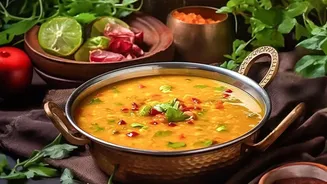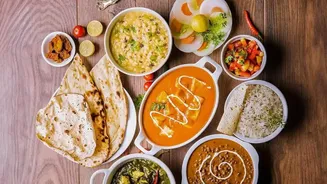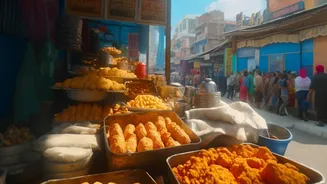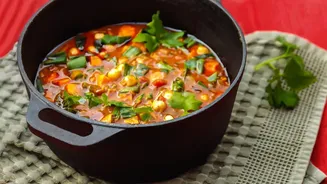


The Illusion on the Plate
Walk into many restaurants advertising a ‘pan-Indian’ menu, and you’ll likely find a familiar lineup: a collection of popular North Indian gravies, a few kebabs, and perhaps a token dosa or idli. While delicious, this greatest-hits collection reduces
a subcontinent’s worth of culinary traditions into a handful of commercially viable dishes. This homogenization does a profound disservice to the nuances of Indian food. A dish's identity is tied to its geography, climate, and community. When a fiery Goan vindaloo is toned down for mass appeal or a complex Chettinad curry is simplified to a generic base, what is lost is not just flavour, but history and context. The label becomes a marketing shortcut that prioritizes broad appeal over authentic representation, creating a monolith out of a mosaic.
Losing the Story with the Recipe
Every regional dish tells a story. The techniques and ingredients in a Rajasthani meal speak of a history shaped by arid landscapes, while the food of the Konkan coast is rich with coconut, fish, and spices traded for centuries. These are not just recipes; they are cultural records passed down through generations. Unfortunately, many of these traditions, often transmitted orally from mother to daughter rather than being written down, are at risk of vanishing. The commercial pressure to create menus that are quick, easy, and familiar means that time-intensive, complex dishes are often ignored. As a result, we lose more than just a meal. We lose the ingenuity of using local, seasonal ingredients, the specific blend of spices unique to a particular community, and the connection to our own past.
Beyond the Convenience of 'Curry'
The simplification of Indian food is not a new phenomenon. It has roots in colonial history, where the term 'curry' was used as a catch-all by foreigners who couldn't be bothered to learn the actual names of dishes. This created a flattened, Westernized understanding of Indian cuisine that, in some ways, continues with the 'pan-Indian' label. It reduces complex preparations like qorma, moilee, or vathakuzhambu to a single, ambiguous category. This trend isn't just about semantics; it’s about respect. Calling everything a 'curry' or lumping it under a 'pan-Indian' banner strips away the specificity and dignity of cuisines that have evolved over millennia. It suggests our food is a monolith, easily summarised and sold, rather than a vibrant and varied cultural treasure.
What 'More' Really Looks Like
So, what is the alternative? 'More' means celebrating specificity. It involves chefs and restaurateurs taking on the role of culinary ambassadors, proudly championing the food of a single region, community, or even family. It means menus that tell a story—explaining that a dish comes from the kitchens of the Awadhi nawabs or the Syrian Christians of Kerala. It also requires a shift in us, as diners. It means being more curious, asking questions, and seeking out restaurants that go beyond the familiar. The revival of lost recipes and the championing of hyper-regional food isn't just a trend; it's a vital act of cultural preservation. Supporting these efforts ensures that the rich tapestry of Indian food is not reduced to a few common threads.