



What Exactly Is a Planetary Alignment?
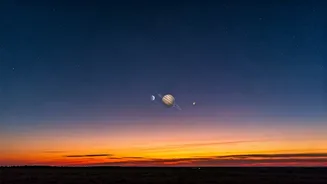
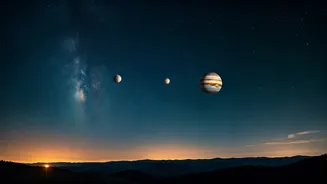
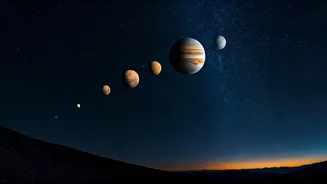
First, let's clear up a common misconception. A planetary alignment, or conjunction, doesn't mean the planets are forming a perfect straight line in space—that's an astronomically near-impossible event. Instead, it’s a beautiful illusion created by perspective.
From our vantage point here on Earth, the orbits of several planets cause them to appear close together in a small section of the sky. Think of it like seeing two distant mountains appear to touch, even though they are miles apart. These events are considered 'rare' because each planet moves at its own pace. Getting three to cluster together in our line of sight is a special, though not unheard of, celestial coincidence.
Meet Tonight's Celestial Trio
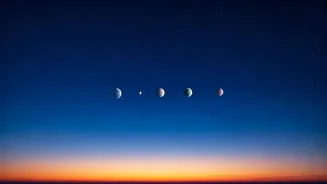
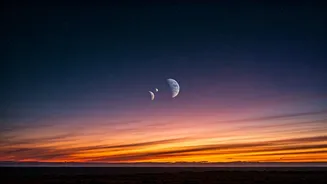
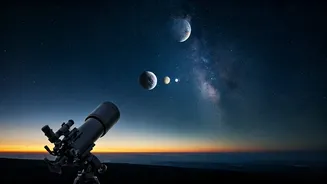
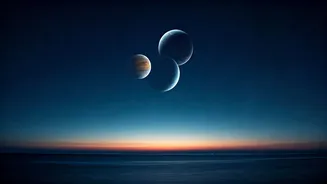
The stars of tonight’s show are Mercury, Venus, and Mars. Each one offers a distinct personality. Venus, often called the 'Evening Star', will be the brightest and easiest to spot, shining with a brilliant, steady white light. It's impossible to miss. Mars, the Red Planet, will be fainter and have a distinct reddish-orange hue, setting it apart from the twinkling stars around it. The trickiest one to catch will be Mercury. As the smallest planet and the one closest to the sun, it never strays far from the sun's glare. It will appear as a small, star-like point of light very low on the horizon, making it a rewarding challenge for keen-eyed observers.
When and Where to Look
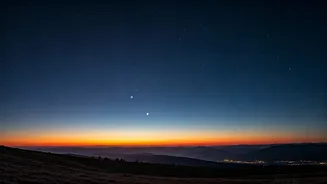
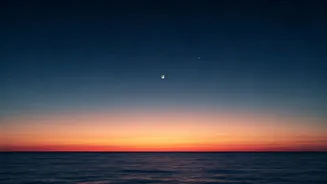
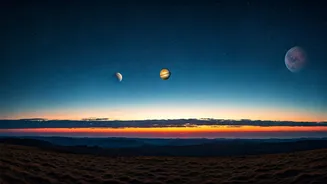
Timing and direction are everything for an event like this. The best viewing window will be short, lasting from about 30 to 60 minutes after sunset. As the sun dips below the horizon, find a spot with a clear, unobstructed view to the west. This is where the sky will still be glowing with the last light of day. The three planets will be clustered together low in this western sky. Because they are so close to the horizon, any tall buildings or trees could block your view, so finding an open field, a rooftop, or a west-facing balcony is your best bet. The alignment will sink below the horizon soon after it gets fully dark, so don't be late!
Tips for the Best Viewing Experience
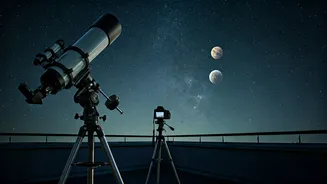
You don’t need a fancy telescope for this celestial treat; your naked eyes are perfectly sufficient. However, a pair of binoculars can dramatically enhance the view, potentially revealing the different colours more clearly and making faint Mercury easier to pick out from the twilight glow.
Here are a few more tips:
- **Escape City Lights:** If you can, get away from the bright lights of the city. Light pollution washes out fainter celestial objects. Even a short drive to a darker park can make a huge difference.
- **Let Your Eyes Adjust:** Give your eyes at least 15 minutes to adapt to the darkness. Avoid looking at your bright phone screen, as it will ruin your night vision.
- **Use a Stargazing App:** Apps like SkyView, Star Walk, or Stellarium can be your best friend. They use your phone's GPS to show you exactly where to look for the planets in your sky. Just be sure to use their 'night mode' to preserve your vision.
- **Be Patient:** Mercury, in particular, can be elusive. Scan the area just above the horizon where the sun has set. Once you spot bright Venus, look nearby for the other two.
A Moment of Cosmic Connection
Beyond being a pretty sight, watching a planetary alignment is a wonderful way to connect with the immense scale of our solar system. You're not just seeing points of light; you're seeing other worlds. You are witnessing a fleeting moment in the grand, silent dance of celestial mechanics—a dance that has been going on for billions of years. It’s a reminder of the vast and beautiful universe that exists just beyond our atmosphere, accessible to anyone who simply takes a moment to look up.