

The Foundational Power of Breathing
Before diving into stretches, it’s important to acknowledge the core of yoga: the breath. Focused breathing exercises, known as pranayama, are highly effective at reducing stress and improving concentration. Simply sitting comfortably and focusing on slow,
deep breaths can calm the nervous system. Try 'belly breathing': place one hand on your belly and imagine blowing up a balloon inside it as you inhale, and feel it deflate as you exhale. Just a few minutes of this can quiet mental chatter and prepare you for a productive study session.
Child’s Pose (Balasana) for Instant Calm
This gentle resting pose is one of the most effective for immediate stress relief. It helps release tension that builds up in the back, neck, and shoulders after long hours of sitting and studying. To do it, kneel on the floor, sit back on your heels, and then fold forward, resting your torso on your thighs and your forehead on the floor. You can keep your arms extended in front of you or rest them alongside your body. Stay here for up to five minutes, focusing on deep breaths to feel centred and relaxed.
Cat-Cow Pose (Marjaryasana-Bitilasana) to Ease a Stiff Back
Sitting hunched over books for hours inevitably leads to a stiff spine. The Cat-Cow flow is a simple movement that increases spinal flexibility and promotes relaxation. Start on your hands and knees with your wrists under your shoulders and knees under your hips. As you inhale, drop your belly and look up, arching your back into Cow Pose. As you exhale, round your spine, tuck your chin to your chest, and press the floor away into Cat Pose. Repeating this fluid motion helps redistribute blood flow and relax tense muscles.
Tree Pose (Vrikshasana) to Sharpen Focus
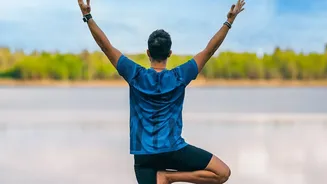
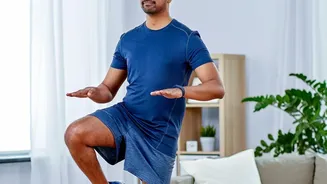
When your mind is scattered, a balancing pose can work wonders to improve concentration. Tree Pose requires you to be fully present, which helps develop mental strength and reduce anxiety. Stand tall and shift your weight onto one foot. Place the sole of your other foot on your inner ankle or calf (avoiding the knee). Bring your hands to your heart or reach them up like branches. The key is to find a fixed point to gaze at. This act of balancing improves focus that can translate directly to your studies.
Legs-Up-The-Wall Pose (Viparita Karani) to Refresh a Tired Mind
This incredibly restorative pose is perfect for tackling mental and physical exhaustion. It helps reduce fatigue in the legs after prolonged sitting and calms the nervous system by promoting relaxation. To practice it, simply lie on your back and swing your legs up against a wall, getting your buttocks as close to the wall as is comfortable. Keep your arms relaxed by your sides, close your eyes, and breathe deeply for five to ten minutes to feel refreshed.
Seated Forward Bend (Paschimottanasana) to Soothe the Mind
A forward bend is a powerful way to stretch the entire backside of the body and calm the mind. This pose is excellent for releasing stress stored in the shoulders and back. Sit on the floor with your legs extended in front of you. You can keep a slight bend in your knees. Inhale to lengthen your spine, and as you exhale, hinge at your hips to fold forward. Rest your hands on your legs or the floor. Stay in the pose for several deep breaths, allowing your body to relax deeper with each exhale.