





It’s a paradox millions in India face: a full stomach but a body starved of essential nutrients. This is 'hidden hunger', a silent crisis of micronutrient deficiency. Now, a vibrantly coloured vegetable is stepping into the spotlight as a potential solution.
The Hunger You Can't See
Across India, many diets are dominated by calorie-dense staples like rice and wheat. While these foods prevent outright starvation, they often lack the essential vitamins and minerals needed for healthy development and bodily function. This leads to 'hidden hunger', or micronutrient deficiency, a condition where people consume enough calories but suffer from a lack of vital nutrients like iron, zinc, and Vitamin A. The consequences are severe, contributing to poor growth in children, weakened immune systems, and reduced cognitive development. Unlike the visible crisis of famine, hidden hunger is a quiet epidemic that affects a vast portion of the population, with estimates suggesting that nearly half of the world's micronutrient-deficient people live in India. This widespread issue has profound impacts on public health and the nation's economic potential.
A New Colour on the Plate
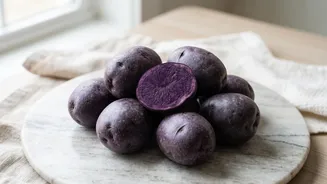
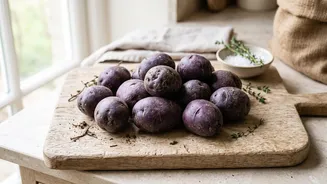
Enter the Kufri Neelkanth, India's first indigenously developed purple potato. Created by the Indian Council of Agricultural Research (ICAR) at its Central Potato Research Institute in Shimla, this isn't just a novelty item for gourmet kitchens. It is a product of 'biofortification' — the process of breeding crops to have higher levels of micronutrients. The potato's striking purple-black skin gets its colour from anthocyanins, the same powerful antioxidants found in blueberries and jamun. Developed to be a high-yielding, main-season crop, Kufri Neelkanth is designed for cultivation across the North Indian plains, from Punjab to Bihar. This potato was specifically bred to address the nutritional gaps that contribute to hidden hunger, transforming a common staple into a source of vital nutrients.
More Than Just a Pretty Tuber
The deep purple hue of the Kufri Neelkanth signifies a high concentration of anthocyanins, which have potent antioxidant and anti-inflammatory properties. Research has linked these compounds to a range of health benefits, including improved cardiovascular health, better brain function, and protection against certain diseases. In addition to its high antioxidant content (over 100µg per 100g), this variety is also rich in other essential nutrients like carotenoids. By packing these benefits into a familiar and widely consumed vegetable, the purple potato offers a practical way to fight micronutrient deficiencies without requiring drastic changes to dietary habits. It aims to turn the humble potato, often dismissed as a simple carbohydrate, into a vehicle for better public health.
From Lab to the Land
Developing a nutrient-rich crop is only half the battle; getting it adopted by farmers and accepted by consumers presents its own set of challenges. Farmers are primarily concerned with yield, pest resistance, and market price—all areas where new varieties must prove themselves. ICAR reports that Kufri Neelkanth has a high yield potential of 35–38 tonnes per hectare and good storability, making it an attractive option for cultivators. However, consumer preference in India has traditionally leaned towards white or yellow–skinned potatoes. Overcoming this perception requires awareness and education about the nutritional benefits packed into the purple skin. More recent innovations, like the 2024 release of Kufri Jamunia with purple flesh, show a continued effort to embed these nutrients more deeply into the tuber, ensuring they aren't lost when peeled.
Can a Potato Solve a National Problem?
No single crop can eradicate a problem as complex as hidden hunger. The purple potato is a powerful tool, but it's part of a much broader strategy. Biofortification is being applied to numerous staple crops in India, including zinc–rich wheat and iron–rich pearl millet, to create a more resilient and nutritious food system. This approach is seen as a sustainable and cost–effective way to deliver essential nutrients to large rural populations who may not have access to a diverse diet or commercially fortified foods. The success of Kufri Neelkanth and other biofortified crops depends not only on scientific innovation but also on government support, effective supply chains, and a concerted effort to educate the public on the importance of nutrition over mere calorie intake.