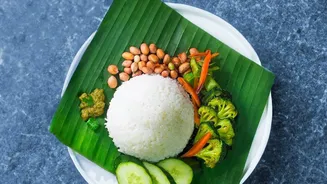







The Wisdom of the Banana Leaf
Before disposable plates became the norm for large gatherings, the banana leaf was the original eco-friendly tableware. Serving a meal on a banana leaf is a practice rooted in the traditions of South India and other parts of Asia, especially for festive
feasts like Onam Sadhya. This practice is not just about nostalgia; it’s a smart, sustainable choice. Banana leaves are completely biodegradable, returning to the earth within a short time, unlike plastic or styrofoam which can take centuries to decompose. They require no soap or water for cleaning, saving precious resources. Furthermore, the leaves have a natural waxy coating that is hygienic and prevents food from sticking. When hot food is placed on the leaf, it releases polyphenols—natural antioxidants also found in green tea—which can subtly infuse the food and add a faint, earthy aroma that enhances the dining experience.
Sourcing a Regional, Organic Menu
A truly sustainable feast celebrates the bounty of the local land. Planning your menu around regional and seasonal organic produce not only reduces the carbon footprint associated with long-distance food transport but also supports local farmers. Sourcing organic produce in India is becoming easier, with many cities having dedicated farmers' markets and delivery services that connect consumers directly with growers. When shopping, look for certifications like 'India Organic' to ensure the produce is grown without synthetic pesticides. Building your festive menu around what’s fresh—be it vibrant greens post-monsoon, root vegetables in the winter, or seasonal fruits—ensures peak flavour and nutritional value. This approach encourages a deeper connection with local food systems and traditions.
Planning for a Zero-Waste Kitchen
Sustainable planning extends beyond just plates and produce. A significant part of a conscious celebration is minimising food waste. Start by getting a firm headcount of guests to avoid over-preparing. Plan a menu that uses ingredients creatively and wholly. For example, vegetable peels and scraps can be used to make flavourful stocks or chutneys, while leftover rice can be transformed into new dishes the next day. Set up a clear system for waste segregation, with separate bins for compostable food scraps, recyclables, and other waste. If you do have untouched, surplus food, consider partnering with local NGOs that redistribute meals to those in need, ensuring your festive generosity extends beyond your home.
Eco-Friendly Decorations and Ambiance
The festive spirit is often expressed through beautiful decorations, and these too can be sustainable. Instead of plastic garlands and synthetic decor, opt for natural and reusable materials. Use fresh flowers, leaves, and colourful dupattas or old sarees to create vibrant backdrops and torans. For lighting, prioritise traditional clay diyas over electric fairy lights to save energy and create a warm, authentic glow. You can create beautiful rangolis using natural materials like rice flour, turmeric, kumkum, and flower petals, which are fully biodegradable. These choices not only reduce plastic waste but also support local artisans who craft terracotta diyas and other traditional decor items.