




The Balcony Gardener's Dilemma
Urban balcony gardening is a rewarding hobby, but it comes with unique hurdles. Unlike gardens in the ground, container plants have a limited root environment. This makes them highly susceptible to watering mistakes. A fixed watering schedule—say, every
Tuesday and Friday—doesn't account for changes in weather, humidity, or the plant's specific needs. It's incredibly easy to give too much water with the best of intentions, leading to the most common plant killer: root rot. When soil is constantly waterlogged, roots are deprived of oxygen and begin to decay, making it impossible for the plant to absorb nutrients. The result is often yellowing leaves and a wilting plant that, ironically, looks thirsty, tempting the gardener to water it even more.
What Exactly Are Smart IoT Probes?
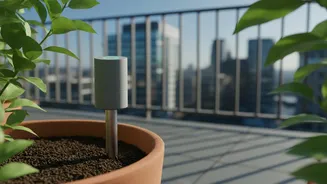
Enter the smart IoT probe, a game-changer for plant care. In simple terms, it's a small stake-like device you insert into the soil of your potted plant. These probes are packed with sensors that measure key environmental factors. The most crucial sensor for preventing water damage is the soil moisture sensor. The "IoT" part stands for "Internet of Things," which just means the probe connects wirelessly (usually via Bluetooth or Wi-Fi) to an app on your smartphone. This connection allows the device to send real-time data directly to you, taking the guesswork out of gardening. It transforms plant care from a routine based on habit to one based on actual, live data from the plant's environment.
Taking the Guesswork Out of Watering
So, how does this prevent overwatering? Instead of you guessing when the soil is dry, the probe knows for sure. It continuously measures the moisture level right at the root zone. Most companion apps allow you to select the type of plant you have from a large database. The system then knows the optimal moisture range for that specific plant—a succulent needs much less water than a fern, for example. The app will only send you a notification when the soil moisture drops below the healthy threshold. This completely flips the script on watering. You no longer water on a schedule; you water only when the plant is actually thirsty. This data-driven approach is the single most effective way to avoid the root rot and fungal growth that plagues overwatered container plants.
More Than Just a Water Meter
While preventing overwatering is their killer feature, many smart probes offer a more holistic view of your plant's health. Advanced models include sensors that also measure ambient light intensity, air temperature, humidity, and even the level of nutrients or fertilizer in the soil. This comprehensive data can help you understand why a plant might be struggling. For instance, you might discover that your sun-loving basil isn't getting enough direct light on your balcony, or that the soil has been depleted of essential nutrients. The app logs this data over time, allowing you to track conditions and understand your plant's environment better, making you a more knowledgeable and successful gardener.
Choosing the Right Smart Probe
When looking for a smart probe, there are a few things to consider. First, think about connectivity. Bluetooth-only models require your phone to be in range to get a reading, which is fine for a few indoor plants. Wi-Fi enabled probes connect to a hub or directly to your home network, allowing you to check on your plants from anywhere. Also, consider the power source; most use a coin-cell battery that can last from six months to over a year. Finally, look at the app's interface and plant database. A user-friendly app with a comprehensive library will make the experience much smoother, especially for beginners. Some systems are even modular, allowing you to add more sensors over time as your balcony garden grows.