




A New Cosmic Portrait
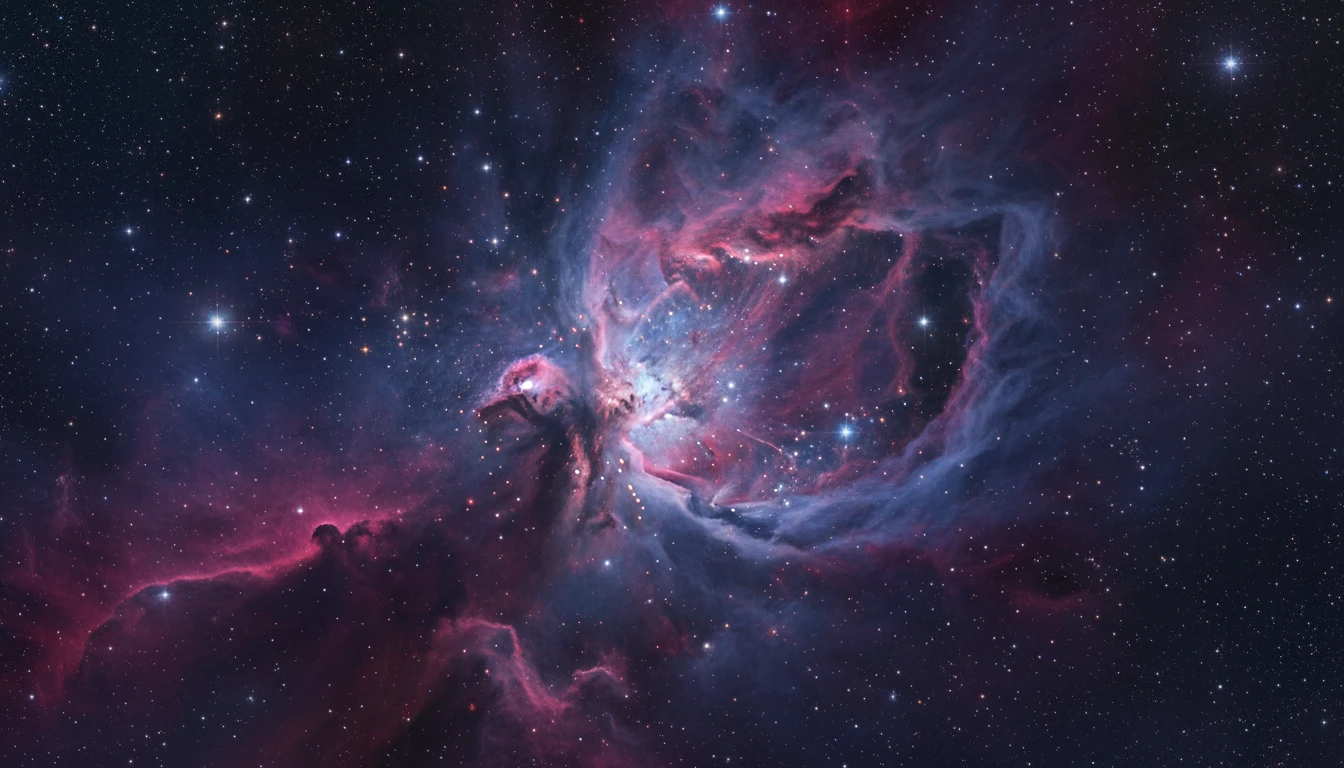
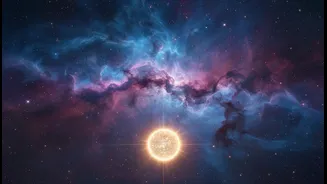
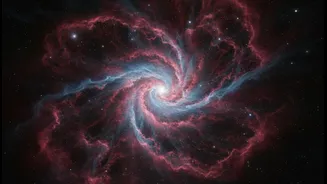
The latest celestial masterpiece from the Hubble Space Telescope captures a portion of N79, a massive star-forming complex in a neighboring galaxy, the Large Magellanic Cloud. The image is a vibrant tapestry of glowing gas, dark dust lanes, and brilliant,
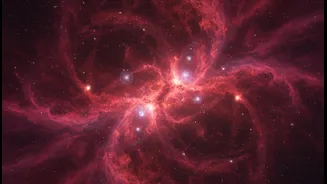
newly-formed stars. It looks like a watercolor painting splashed across the cosmos, with billowing clouds of hydrogen gas set ablaze by the intense radiation from infant stars. These stellar newborns, some many times the mass of our Sun, illuminate their surroundings, carving out cavities in the gas and creating intricate, flowing shapes that are both chaotic and breathtakingly beautiful. The image focuses on a region called N79 South, revealing the turbulent environment where stars are born at a furious rate.
What Exactly Is a Nebula?
At its simplest, a nebula is an enormous cloud of gas and dust in space. These are not the kind of clouds you see in the sky; they can stretch for hundreds of light-years. Some nebulae are the ghostly remnants of dead or dying stars, their outer layers puffed out into space. Others, like N79, are known as stellar nurseries. They are unimaginably vast reservoirs of raw materials, primarily hydrogen and helium, the fundamental building blocks of stars. Within these cold, dense clouds, gravity slowly works its magic, pulling material together into clumps. As these clumps grow, they become hotter and denser, eventually reaching a tipping point where a star ignites.
An Engine of Creation
The N79 nebula is a particularly fascinating subject for astronomers. It is considered a younger, more active version of the famous Tarantula Nebula. Research suggests that N79 is creating stars at twice the rate the Tarantula Nebula has over the last half-million years. This furious pace of star birth makes it an ideal laboratory for understanding the early universe, when star formation was much more common and intense. The new Hubble image allows scientists to study the intricate feedback loop between stars and their environment. The powerful radiation and stellar winds from the most massive young stars can both trigger the collapse of new star-forming cores and blow away the surrounding gas, halting the process.
Why This Image Matters
Beyond its sheer beauty, this new view of N79 provides crucial scientific data. By comparing star-forming regions like this one to those in our own Milky Way, astronomers can learn more about how a galaxy's environment affects the birth of stars. The chemical composition of N79 is different from stellar nurseries closer to home, making it a valuable analogue for the types of galaxies that existed billions of years ago. Observing these processes helps astronomers piece together the story of cosmic evolution—how the simple elements forged in the Big Bang were transformed into the rich diversity of stars and galaxies we see today. Each new image is another puzzle piece in understanding our own origins.
Hubble's Enduring Legacy
For over three decades, the Hubble Space Telescope has been humanity's most persistent eye on the universe, fundamentally changing our understanding of the cosmos. Even with the advent of newer observatories like the James Webb Space Telescope, Hubble remains a vital scientific instrument. Its ability to see in ultraviolet and visible light complements Webb's infrared vision, providing a more complete picture of celestial objects. This new image of N79 is a testament to the telescope's enduring power and its ability to continue delivering both groundbreaking science and awe-inspiring beauty, connecting us to the vast universe we inhabit.