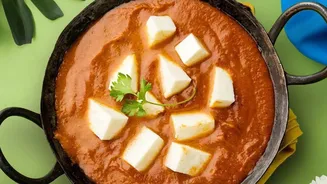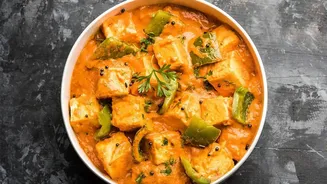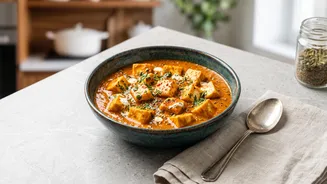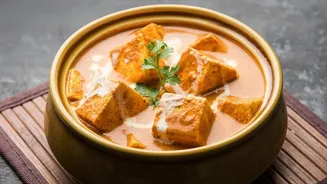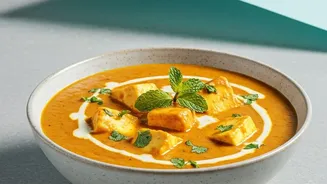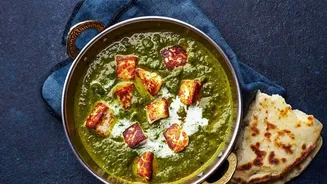


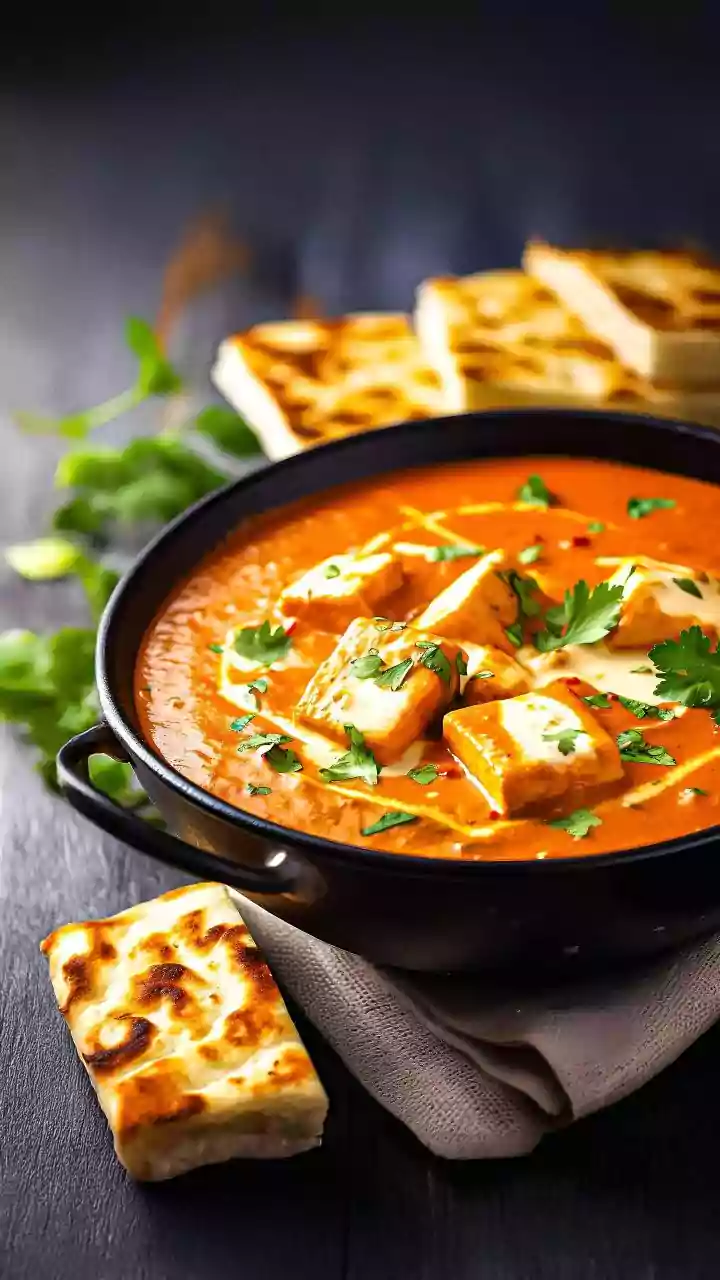
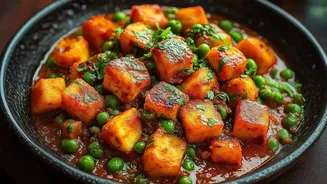

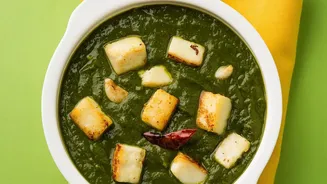
Ever wonder why the paneer at your favourite restaurant is always perfectly soft and the gravy so rich and silky? You're not alone. The good news is that achieving that same quality at home doesn't require a professional kitchen or exotic ingredients.
The Secret to Perfectly Soft Paneer
The single biggest difference between homemade and restaurant paneer is often the texture. Store-bought paneer can become tough or rubbery when cooked. The fix is remarkably simple: hydration. Before adding paneer to any dish, give it a quick soak. Cut your paneer into cubes and place them in a bowl of warm water for 10-15 minutes. This simple step rehydrates the cheese, ensuring it remains soft and spongy, ready to absorb the flavours of your gravy. Avoid soaking it for too long, as it can become mushy. For those who prefer a slightly firmer texture with browned edges, pan-frying is an option. Sear the cubes in a hot pan with a little oil for just a minute or two on each side until lightly golden. The key is to use high heat for a short time to create a crust without overcooking the inside. Immediately after frying, you can transfer the cubes back into warm water to keep them soft.
Mastering the Rich Gravy Base
A truly great paneer dish is built on a flawless gravy. Most restaurant-style gravies start with a base of onions, tomatoes, ginger, and garlic. The secret to that velvety smoothness lies in how this base is prepared. After sautéing the aromatics, many chefs add cashews. The cashews break down during cooking and, when blended, create a natural, creamy thickness without making the gravy heavy. For an even richer base, some recipes use a combination of cashews and almonds or even a touch of poppy seeds. Cook the onion-tomato-cashew mixture until the tomatoes are completely mushy and the oil begins to separate from the masala. This indicates that the raw taste is gone. Allow the mixture to cool slightly before blending it into a very fine, smooth puree. Rushing this step can result in a grainy texture.
The Creamy, Velvety Finish
With a smooth base puree, the final step to achieving that luxurious, restaurant-quality mouthfeel is the finishing touch. This is where butter and cream come into play. After blending your base, return it to the pan and add a knob of butter, allowing it to melt into the gravy. When it's time to add cream, ensure it's not cold straight from the fridge. Using room-temperature cream and adding it on low heat while stirring continuously prevents the gravy from splitting or developing an uneven texture. This also helps in balancing the tanginess from the tomatoes. A small pinch of sugar is another common restaurant trick to balance the flavours, not to make it sweet, but to round out the acidity. Finally, a sprinkling of kasuri methi (dried fenugreek leaves), crushed between your palms before adding, imparts a signature aroma that is quintessentially North Indian.
Timing is Everything
One of the most common mistakes home cooks make is overcooking the paneer. Paneer is a delicate cheese that doesn't require a long cooking time. Adding it to the gravy too early will cause its proteins to tighten, resulting in a chewy, rubbery texture. The best practice is to add the softened paneer cubes only during the last 2ndndndndndndndndndndndndndndndndndndndndndndndndndndndndndndnd minutes of cooking. Simply stir them into the simmering gravy, cover the pan, and turn off the heat. The residual warmth of the gravy is more than enough to heat the paneer through and allow it to soak up the flavours without becoming tough. Following this single rule will dramatically improve the texture of your final dish.