




The Hidden Danger in That Big Pot
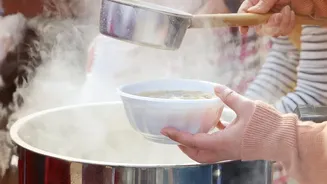
When you place a large, hot pot of food directly into the refrigerator, it seems like the responsible thing to do. However, the food at the centre of that pot can take a very long time to cool down. Improper cooling is a leading cause of foodborne illness.
A large, dense mass of food, like a pot of thick stew or a container packed with biryani, acts as its own insulator. While the outside cools, the core remains warm for hours, creating the perfect breeding ground for harmful bacteria that can make you and your family sick. Even a powerful refrigerator struggles to cool the core of a large pot fast enough to be safe. In some cases, it can take over 20 hours for the centre to reach a safe temperature, long after dangerous bacteria have had a chance to multiply.
Understanding the Temperature 'Danger Zone'
To understand why slow cooling is so risky, you need to know about the 'Temperature Danger Zone'. Food safety authorities, including the FSSAI in India, define this zone as the temperature range between 5°C and 60°C. Within this range, bacteria can multiply at an alarming rate, sometimes doubling in number in as little as 20 minutes. The goal is to move your cooked food through this danger zone as quickly as possible, both when cooling it for storage and when reheating it. Leaving leftovers on the counter to cool before refrigerating is a common mistake that keeps the food in this danger zone for too long. The rule is to get hot foods cooled and refrigerated within two hours. Forcing your leftovers to pass through this temperature range quickly is the most critical step in preventing food poisoning.
Shallow Portions: The Simple, Scientific Solution
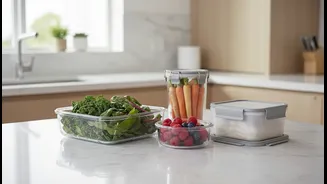
This is where the headline's advice becomes crucial. The single most effective way to cool food rapidly is to increase its surface area. By dividing a large quantity of food into several smaller, shallow containers, you allow heat to escape much more quickly. Think of it as the difference between a single large block of ice and the same amount of ice crushed into small pieces; the crushed ice melts faster because more of it is exposed to the warmer air. Similarly, food in a shallow pan, with a depth of no more than two to three inches, cools down uniformly and rapidly. This method drastically reduces the time your food spends in the temperature danger zone, ensuring it reaches a safe refrigerator temperature of 5°C or below in a timely manner.
Your Step-by-Step Guide to Safe Cooling
Putting this into practice is simple. The next time you have a large pot of leftovers, follow these steps:
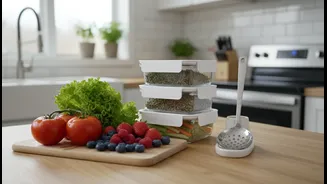
1. Divide and Conquer: As soon as you're done serving, divide the remaining hot food from the large pot into smaller, shallow containers. Metal containers will help food cool faster than plastic ones.
2. Keep it Shallow: Aim for a food depth of no more than two inches for thick items like rajma or sabzi, and up to three inches for thinner liquids like soups.
3. Leave Uncovered (At First): To let heat escape faster, place the shallow pans in the refrigerator uncovered or loosely covered. Place them on a top shelf where they won't have anything drip into them.
4. Give Them Space: Don't stack the hot containers on top of each other. Allow for air circulation around each one to promote even and rapid cooling.
5. Cover When Cold: Once the food is completely cooled to refrigerator temperature (you can check with a clean thermometer or by touch), you can cover the containers tightly.
Extra Tips for Rapid Cooling
For particularly large batches or very thick foods, you can speed up the process even more. One effective method is an ice bath. Place your smaller container of hot food into a larger bowl or sink filled with ice and a little cold water. Stirring the food frequently while it's in the ice bath will help distribute the cold and cool the food down even faster. For soups and stews, you can also use 'ice paddles'—frozen plastic wands made for this purpose—to stir and cool from the inside out. The key is to be proactive. Don't just leave the pot on the stove; take active steps to cool it down safely and quickly.