







A Telescope on a Continental Scale
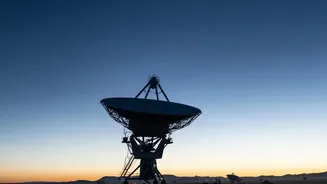
The Square Kilometre Array isn't a single telescope but a revolutionary concept. It's a collection of thousands of antennas spread across two continents, working together as one gigantic eye on the universe. The name comes from its ambitious goal: to have
a total collecting area of one square kilometre. This enormous scale will make the SKA 50 times more sensitive than any previous radio instrument, allowing it to survey the sky at speeds thousands of times faster than ever before. Construction began in 2022, with two main sites chosen for their radio quietness: Western Australia and South Africa. This isn't just about size; it's about creating a technological marvel to answer some of science's most profound questions.
Peering into the Cosmic Dawn
The primary mission of the SKA is to travel back in time, astronomically speaking. It's designed to detect the faint radio signals emitted by hydrogen, the universe's most abundant element, more than 13 billion years ago. This period, just a few hundred million years after the Big Bang, is known as the Cosmic Dawn and the Epoch of Reionization, when the first stars and galaxies formed, lighting up the cosmos for the first time. These first celestial bodies were incredibly faint, and their light has been traveling for billions of years. By capturing these ancient signals, the SKA will create a 3D map of the early universe, providing unprecedented insight into how the first cosmic structures were born out of the primordial darkness.
Two Telescopes, One Global Observatory
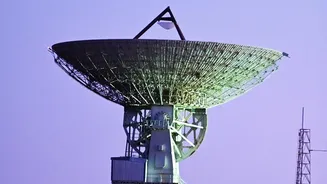
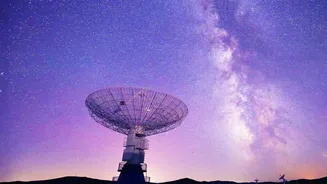
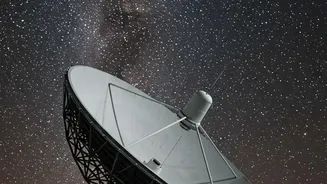
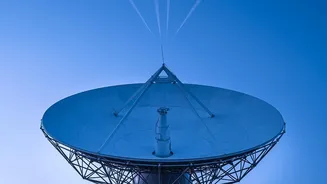
The SKA project consists of two distinct but complementary telescopes. In Western Australia, the SKA-Low will comprise over 131,000 small, Christmas-tree-like antennas. These are designed to pick up low-frequency radio waves, the kind that can help us study the Cosmic Dawn. Meanwhile, in South Africa's Karoo desert, the SKA-Mid will consist of 197 large dish antennas, including the existing 64-dish MeerKAT array. This part of the telescope will focus on mid-frequency radio waves to investigate everything from pulsars and black holes to the nature of cosmic magnetism. Together, they form the SKA Observatory (SKAO), an intergovernmental organisation with its headquarters in the UK, coordinating this global effort.
India's Pivotal Role as the Telescope's 'Brain'
India is not just a participant but a key leader in the SKA project. Having been involved since its early conceptual stages, India became a full member of the SKAO, formalising its commitment. The National Centre for Radio Astrophysics (NCRA) in Pune has been at the forefront, leading an international consortium to design the Telescope Manager—the complex software system that acts as the 'brain' and 'nervous system' of the entire observatory. This system is responsible for controlling and synchronising all the telescope components across continents to perform observations. Beyond this critical software, India is also contributing significantly to digital signal processing hardware, and will host a regional data centre to process the immense amounts of data the SKA will generate, ensuring Indian astronomers are at the heart of future discoveries.
Beyond the Beginning of Time
While studying the early universe is a headline goal, the SKA's capabilities will transform many areas of astrophysics. It will be a powerful tool to test Einstein's theories of gravity with extreme precision by observing pulsars, the rapidly spinning remnants of dead stars. Astronomers will use it to map the magnetic fields of the Milky Way, search for the building blocks of life in space, and track gravitational waves by looking for their effects on spacetime. The sheer volume of data—more than the entire internet's current traffic—will also drive innovation in computing and data science, with benefits extending far beyond astronomy. As it comes online over the next decade, the SKA is poised to revolutionise not just our view of the cosmos, but technology here on Earth.