






The Mystery of 'Junk DNA'
Your DNA contains the complete instruction manual for building and operating you. For a long time, scientists were puzzled by the fact that only a tiny fraction of this manual—about 2%—contains the actual blueprints for proteins, the building blocks of life.
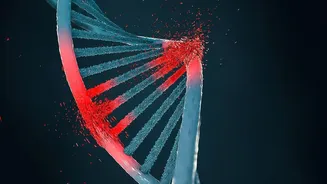
The remaining 98% was often dismissed as 'junk DNA'. However, researchers now know this non-coding DNA is anything but junk. It's more like the grammar and punctuation of the genetic language, containing millions of switches, known as regulatory elements, that tell genes when and where to turn on or off. The problem is that a tiny error, or mutation, in one of these switches can have huge consequences. Over 88% of genetic variants linked to common human diseases, like diabetes and autoimmune disorders, are found in these non-coding regions. Identifying which specific mutation causes which problem has been a monumental challenge for researchers.
How AlphaGenome 2 Works
Enter AlphaGenome 2, an advanced AI model developed by Google DeepMind. Think of it as a highly sophisticated interpreter for the genome. While its predecessor, the original AlphaGenome, could predict genetic effects across broad tissues, AlphaGenome 2 zooms in with incredible precision. It looks at how DNA variations affect specific, individual cell types—for example, not just the heart, but a particular type of heart muscle cell, or not just the immune system, but a specific immune cell that has been activated by a vaccine. By being trained on over 100 million individual cell profiles from both human and mouse samples, the AI learned to predict how a single 'letter' change in a DNA sequence might alter a cell's behaviour. This is crucial because a variant might be harmless in most cells but trigger a disease process in one specific cell type.
Pinpointing the True Culprits of Disease
The potential of this new tool is immense. It helps scientists move from simply knowing that a broad stretch of DNA is associated with a disease to pinpointing the exact causal variant and the cell type where the problem occurs. For instance, researchers already used AlphaGenome 2 to computationally reproduce a recent discovery in Inflammatory Bowel Disease (IBD). The AI correctly identified that a specific genetic variant boosts the activity of a particular gene (ETS2) in gut immune cells, leading to inflammation. In another example, the model showed that a variant linked to severe COVID-19 has a much stronger disruptive effect on immune cells when they are in an activated state, which happens after vaccination or infection. This level of detail can help researchers prioritize which genetic leads are worth pursuing in the lab, saving time and resources.
A New Era for Drug Discovery
Ultimately, the goal is to translate these discoveries into better treatments. For many complex conditions like heart disease, cancers, and neurodevelopmental disorders, understanding the precise genetic mechanism is the first step toward a cure. By identifying the right gene and the specific cells it affects, researchers can develop more targeted therapies. AlphaGenome 2 doesn't invent drugs, but it provides a detailed map that can guide drug developers. It helps them understand whether a future therapy should aim to increase or decrease a gene's activity to combat a disease. While the model is currently available for non-commercial research, it represents a significant leap in using AI to unravel the complex biology of human health.