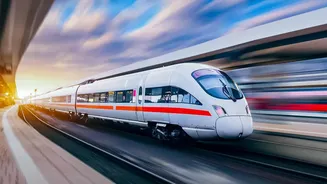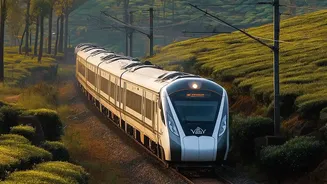


India's dream of a high-speed rail network is rapidly becoming a reality on the ground in Gujarat. The first trains are now expected to roll in 2027, with the Surat-Vapi section poised to mark the nation's entry into the bullet train era.
A National Dream Takes Shape
The Mumbai-Ahmedabad
High-Speed Rail (MAHSR) corridor has long been a symbol of India's infrastructure ambitions. Spanning approximately 508 kilometres, the project aims to slash travel time between the two financial hubs to just under two hours, a dramatic reduction from the current eight to nine hours by road. This is not just about speed; it's about creating new economic corridors and connecting major industrial centres like Mumbai, Thane, Vapi, Surat, Vadodara, and Ahmedabad more seamlessly than ever before. After years of planning, land acquisition, and complex engineering work, the project is now at a stage where its first tangible results are visible and a phased rollout is on the horizon.
Why Surat to Vapi First?
The decision to launch the Surat-Vapi section first is a strategic one, driven by practical considerations and construction progress. This stretch, located entirely within Gujarat, has seen a faster pace of development compared to sections in Maharashtra, where land acquisition and tunnelling work presented more significant challenges. By prioritising a section where the majority of civil and engineering work is complete—from elevated viaducts to station structures—the National High Speed Rail Corporation Limited (NHSRCL) can begin operations sooner. This phased approach allows the project to deliver a functional segment, test its systems in a real-world environment, and build momentum for the completion of the entire 508-km corridor.
The Current State of Play
Recent updates from Railway Minister Ashwini Vaishnaw confirm that significant milestones have been achieved. As of late 2026, pier work has been completed across more than 456 kilometres, with over 371 kilometres of the elevated viaduct structure already erected. A critical achievement came in November 2026, when the overhead electrical equipment on the 50-kilometre Surat-Bilimora section was successfully 'energised', preparing it for trial runs. According to the latest timelines, trial runs on the Surat-Bilimora stretch are targeted for May 2027, with the first commercial passenger service on the larger Surat-Vapi section anticipated in the last quarter of 2027. Civil construction at all eight stations in Gujarat is complete, with architectural finishing now underway.
The Tech Behind the Speed
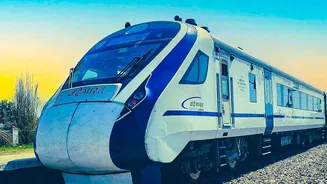
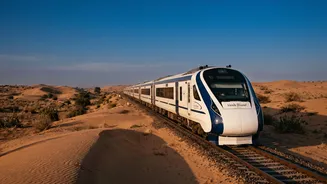
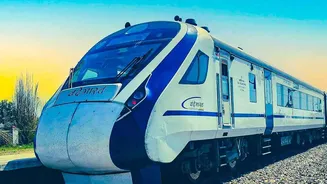
The project is not only an engineering feat but also a major step in domestic manufacturing. While the corridor is being developed with technological assistance from Japan's Shinkansen system, India is also developing its own high-speed rolling stock. The indigenous B28 trainset, designed for speeds of up to 280 km/h, is being manufactured by the Integral Coach Factory (ICF) and BEML. The first body frame has already completed structural testing, with track trials for the train expected by mid-2027. For the initial runs, the trains will operate at a design speed of 280 km/h, while the corridor itself is designed for a maximum speed of 350 km/h.
Challenges and the Road Ahead
While the Gujarat section is advancing rapidly, significant work continues in Maharashtra. This includes the construction of a 21-kilometre tunnel, of which a 7-kilometre portion will run under Thane Creek—India's first undersea railway tunnel. This complex part of the project is crucial for connecting the corridor to its final destination in Mumbai. The entire corridor is expected to become operational in phases post-2027, with the full Mumbai-Ahmedabad line projected for completion by the end of 2029. The launch of the first section will serve as a powerful proof of concept, transforming a long-held vision into a tangible service for Indian passengers.