
Beyond Roads and Rail
At the heart of this transformation is the National Waterways Act, 2016, which identified 111 rivers, canals, and backwaters for development into National Waterways (NWs). The goal is to create a robust alternative to India's congested road and rail networks.
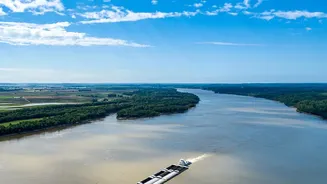
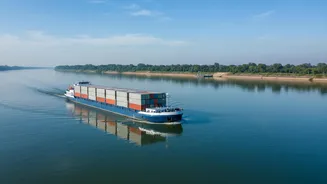
Currently, inland water transport (IWT) accounts for a mere 2% of the country's freight movement, a stark contrast to nations like China, where it's a significant part of the logistics mix. The government aims to increase this share to 5% by 2030. The flagship initiative driving this is the Jal Marg Vikas Project (JMVP), which focuses heavily on making major rivers like the Ganga navigable for large commercial vessels. The vision is a fully integrated multi-modal transport system where goods can seamlessly switch between ships, trains, and trucks, drastically improving efficiency.
The New River Highways
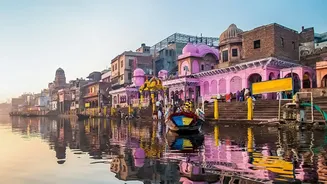
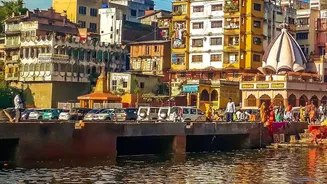
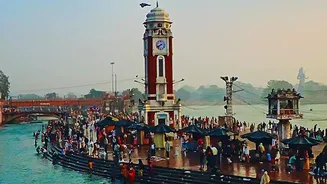
The most prominent project is the development of National Waterway-1 (NW-1) on the Ganga-Bhagirathi-Hooghly river system, stretching from Haldia in West Bengal to Varanasi in Uttar Pradesh. This involves dredging to maintain a navigable depth, constructing multi-modal terminals at key industrial hubs like Varanasi, Sahibganj, and Haldia, and building a new navigational lock at Farakka. As of early 2026, many of these terminals and jetties have been completed and operationalised, some through public-private partnerships. Other key routes include NW-2 on the Brahmaputra River, which enhances connectivity for the Northeast, and the development of waterways in states like Odisha (NW-5) to connect mineral-rich regions with major ports. The Union Budget for 2026-27 even announced the operationalisation of 20 additional waterways, signaling a clear acceleration of the plan.
Cheaper, Greener Cargo
The primary driver for this massive infrastructure push is economics. Logistics costs in India are estimated to be 14-18% of its GDP, significantly higher than the global benchmark of 8-10%. Water transport is dramatically cheaper and more fuel-efficient. Studies show that one litre of fuel can move 105 tonne-kilometers by waterway, compared to 85 by rail and just 24 by road. For businesses, this means the cost of moving one tonne of freight for a kilometer is roughly half the price of rail and significantly less than road transport. This makes IWT ideal for bulk commodities like coal, cement, food grains, and fertilizers. Beyond cost, it's also a greener alternative. Shifting cargo from trucks to barges reduces carbon emissions, eases traffic congestion on highways, and lessens air pollution. A single 2,000-tonne barge can replace a fleet of nearly 125 trucks.
A Boost for Tourism and Travel
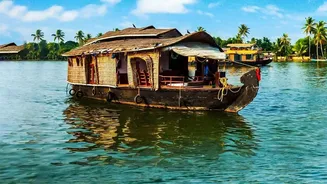
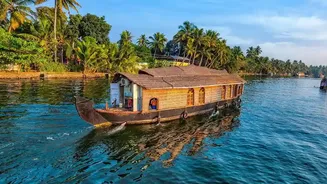
While cargo is the economic engine, the plan equally revitalizes passenger travel and tourism. The development of jetties and terminals is creating new opportunities for river cruises, ferry services, and regional connectivity. The government, through initiatives like the Sagarmala Programme, is actively promoting river cruise tourism on several national waterways. Routes on the Ganga (NW-1) and Brahmaputra (NW-2) are already seeing cruise operations, and plans are afoot to create dedicated tourist circuits connecting religious and cultural sites, such as the one connecting seven temples in Guwahati. In cities like Kochi, the Water Metro project has already demonstrated how reviving waterways can provide a sustainable mass transit system. For citizens, this translates into new ways to travel, explore, and connect with regions along the riverbanks, tapping into both leisure and daily transport needs.
Navigating the Hurdles
The path to a fully developed waterway network is not without challenges. A significant concern is the environmental impact. The process of dredging to deepen river channels can increase water turbidity and disrupt aquatic ecosystems, affecting species like the endangered Gangetic dolphin. Ensuring year-round navigability on rivers that have seasonal flow variations is another major technical hurdle. Furthermore, for the system to be truly effective, seamless last-mile connectivity from river terminals to industrial and agricultural centers is crucial, which requires coordinated planning with road and rail authorities. Acknowledging these issues, the government is pushing for environmental studies before projects commence and promoting a transition toward greener vessels to mitigate the long-term ecological footprint of increased river traffic.