







From Agricultural Waste to Tableware
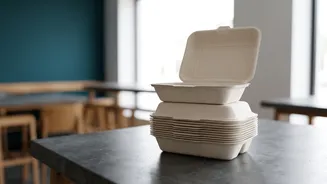
These innovative containers are made from bagasse, the dry, fibrous pulp that remains after sugarcane stalks are crushed to extract their juice. For years, this byproduct was either burned for fuel or discarded. Today, it is being repurposed into a valuable
resource for the packaging industry. The process involves turning the fibrous residue into a slurry, which is then molded under high heat and pressure into sturdy plates, bowls, and clamshell containers. As one of the world's largest producers of sugarcane, India is uniquely positioned to turn this agricultural waste into a cornerstone of a circular economy.
The Clear Green Advantage
The primary appeal of bagasse containers is their environmental credentials. Unlike plastic packaging, which can persist in the environment for hundreds of years, bagasse products are fully biodegradable and compostable. Under the right conditions, they break down naturally within a few months, returning to the soil without leaving toxic residues. This significantly reduces the amount of waste heading to India's already overburdened landfills. Furthermore, the production of bagasse packaging generally has a lower carbon footprint, requiring less energy compared to manufacturing petroleum-based plastics. By opting for bagasse, food brands can align with government initiatives like the ban on single-use plastics and meet the growing consumer demand for sustainable practices.
Perfectly Suited for Indian Cuisine
Beyond their eco-friendly nature, sugarcane containers are highly practical, especially for the diverse and often complex demands of Indian food. They are surprisingly strong and rigid, capable of holding significant weight without buckling. A key advantage is their natural resistance to heat, grease, and moisture. This makes them ideal for serving everything from hot curries and gravies to oily snacks, as they don't warp or leak easily. Many bagasse containers are also microwave and freezer-safe, adding a layer of convenience for consumers who want to reheat their leftovers. This functionality ensures that the shift away from plastic does not mean a compromise in quality or user experience.
A Smart Business Move for Brands
For Indian food brands, adopting sugarcane packaging is more than just an environmental decision; it's a strategic business move. As consumers become more eco-conscious, brands that demonstrate a commitment to sustainability can build significant trust and loyalty. Using visibly green packaging can serve as a powerful marketing tool, differentiating a brand in a crowded marketplace. Many manufacturers in India now offer a wide range of bagasse products, from compartment meal trays to custom-branded containers, making the switch easier than ever. Companies that embrace these alternatives position themselves as forward-thinking leaders, ready to meet the demands of both regulators and the modern consumer.
Challenges on the Horizon
Despite the clear benefits, the transition to widespread use of biodegradable packaging is not without its hurdles. The initial cost of bagasse products can be higher than that of conventional plastics, which may be a barrier for smaller businesses. Scaling up production to meet the massive demand of the Indian market and ensuring a consistent supply chain are other challenges that the industry is actively working to solve. Additionally, for bagasse to achieve its full environmental potential, proper waste management infrastructure is crucial. While the containers are compostable, their benefits are maximized when they are disposed of in facilities that can break them down correctly, an area that requires further development across the country.