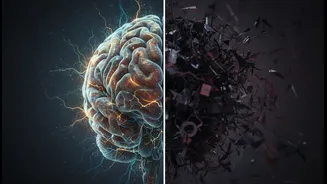









The Rise of Nutritional Psychiatry
In recent years, a field known as nutritional psychiatry has gained significant attention, exploring the connection between what we eat and our mental health. The premise is straightforward: your brain is always working and requires a constant supply
of fuel from the food you consume. High-quality foods rich in vitamins, minerals, and antioxidants nourish the brain, while diets high in processed and refined sugars may be harmful, promoting inflammation and oxidative stress. This has led to a surge of interest in how dietary patterns might prevent or alleviate symptoms of conditions like depression and anxiety. The gut-brain axis is a key area of this research, with studies showing that the gut microbiome, which can be influenced by diet, produces a significant amount of the body's serotonin, a neurotransmitter crucial for mood regulation.
The Challenge: Correlation vs. Causation
Despite the promising connections, a major hurdle in this field is proving direct causation. Many studies are observational, meaning they identify associations or correlations. For example, researchers might find that people who eat a Mediterranean-style diet have lower rates of depression. But does the diet cause the lower risk, or are people who follow this diet also more likely to have other healthy habits, like exercising regularly, not smoking, and having a higher income? This is the classic correlation-versus-causation dilemma. It's also possible that the relationship works in reverse: people experiencing depression or anxiety may find it harder to shop for and prepare nutritious meals, leading them to consume more processed convenience foods. These confounding factors make it incredibly difficult to isolate diet as the sole reason for a change in mental health.
Why Definitive Proof Is Elusive
The gold standard for proving cause and effect is the randomized controlled trial (RCT), where one group changes their diet and a control group does not. However, conducting effective RCTs in nutrition is notoriously complex. It is challenging to get people to stick to a specific diet for a long period, and it's impossible to create a true placebo for food. Furthermore, the effects of individual nutrients or foods may be small, making them hard to detect in studies. As a result, the evidence from RCTs in nutritional psychiatry is still considered limited, and many studies have small sample sizes or other methodological weaknesses. This doesn't mean a link doesn't exist, but it highlights why researchers urge caution and call for more rigorous, large-scale studies.
What the Evidence Does Support
Even with these challenges, a consistent picture is emerging. Diets characterized by high consumption of fruits, vegetables, whole grains, fish, and legumes are consistently associated with better mental health outcomes. A study on an urban North Indian population found that adherence to an Indo-Mediterranean diet was associated with a lower prevalence of depression, while a Western-style diet high in processed foods was linked to a higher risk. The anti-inflammatory properties of these whole-food diets are believed to be a key mechanism, as chronic inflammation is linked to depression. Diets high in refined sugars and processed foods, on the other hand, have been linked to a higher dietary inflammatory index and an increased risk of depressive symptoms.
A Smart Approach to Food and Mood
So, how should you apply this information to your own life? Rather than searching for a single magic-bullet food or nutrient, the evidence points toward the benefits of a holistic dietary pattern. Think of it less as a restrictive diet and more as a style of eating that prioritizes whole, unprocessed foods. This includes plenty of colourful vegetables and fruits, whole grains, legumes, nuts, and healthy fats like those found in fish and mustard oil. Reducing your intake of sugary drinks and ultra-processed foods is also a well-supported strategy. Nutrition should be seen as a powerful tool that complements other mental health treatments, not as a replacement for them. Adopting a healthier eating pattern is a sound investment in both your physical and psychological well-being, even if the exact scientific pathways are still being carefully mapped out.