





A Partnership Written in the Stars
The collaboration between the Indian Space Research Organisation (ISRO) and the National Aeronautics and Space Administration (NASA) is reaching new heights. A key pillar of this growing alliance is India's signing of the Artemis Accords, a US-led framework
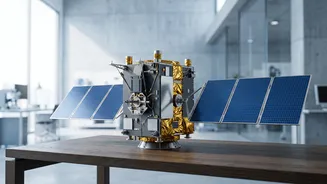
for responsible and peaceful lunar exploration. This aligns India with a global coalition aimed at returning humans to the Moon and beyond. This partnership goes beyond just principles; it involves concrete joint missions, such as the NISAR satellite. The NISAR (NASA-ISRO Synthetic Aperture Radar) mission is a joint Earth-observation satellite designed to map our planet in incredible detail, representing a powerful fusion of NASA's advanced radar technology and ISRO's engineering expertise. Leaders from both nations have committed to expanding commercial space collaboration, covering everything from satellite systems to advanced spaceflight, fostering deeper connections between their space ecosystems.
New Frontiers in Education and Research
For Indian students, this partnership is expected to translate into significant academic opportunities. The Artemis Accords encourage the open sharing of scientific data, which means Indian researchers and university students could gain access to a wealth of information from international space missions. This paves the way for joint research projects between Indian and American universities, focused on everything from astrophysics to planetary science. Programs like ISRO's NISAR Utilization Programme already invite Indian researchers and academics to work with data from the joint mission, with funding and technical support available for promising projects. While direct NASA internships for foreign nationals remain highly competitive, the increased collaboration makes academic exchanges, specialised training programs, and joint-degree courses more likely in the near future.
Fueling India's Private Space Boom
Perhaps the most immediate impact will be felt in India's booming private space sector. For years, space careers in India were largely limited to the prestigious but highly competitive positions at ISRO. However, policy reforms since 2020 have led to the rise of over 300 private space startups in India. Companies like Skyroot Aerospace, Agnikul Cosmos, and Pixxel are now developing launch vehicles, satellites, and data analysis platforms, creating thousands of new jobs. The India-US partnership acts as a massive catalyst for this sector. It provides Indian startups with access to global supply chains, potential partnerships with American companies, and a vote of confidence that attracts investment. This creates a vibrant job market for graduates right here in India, reducing the need to go abroad for a career in space.
The Skills in High Demand
This new era of space exploration is not just for aerospace engineers. The modern space industry is a multidisciplinary field. There is a growing demand for professionals skilled in AI and machine learning to analyse vast amounts of satellite data, robotics engineers to design rovers and automated systems, and data scientists who can turn raw information into actionable insights for agriculture, climate change, and disaster management. Other booming fields include satellite technology, remote sensing, and cybersecurity for space systems. To get a head start, students should focus on building a strong foundation in Physics, Chemistry, and Mathematics (PCM) and then pursue specialised courses in fields like aerospace engineering, data science, or geoinformatics. Developing hands-on skills through internships and university projects is becoming increasingly vital.