


The Menace of Space Weather
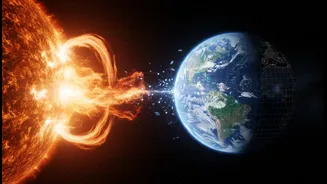
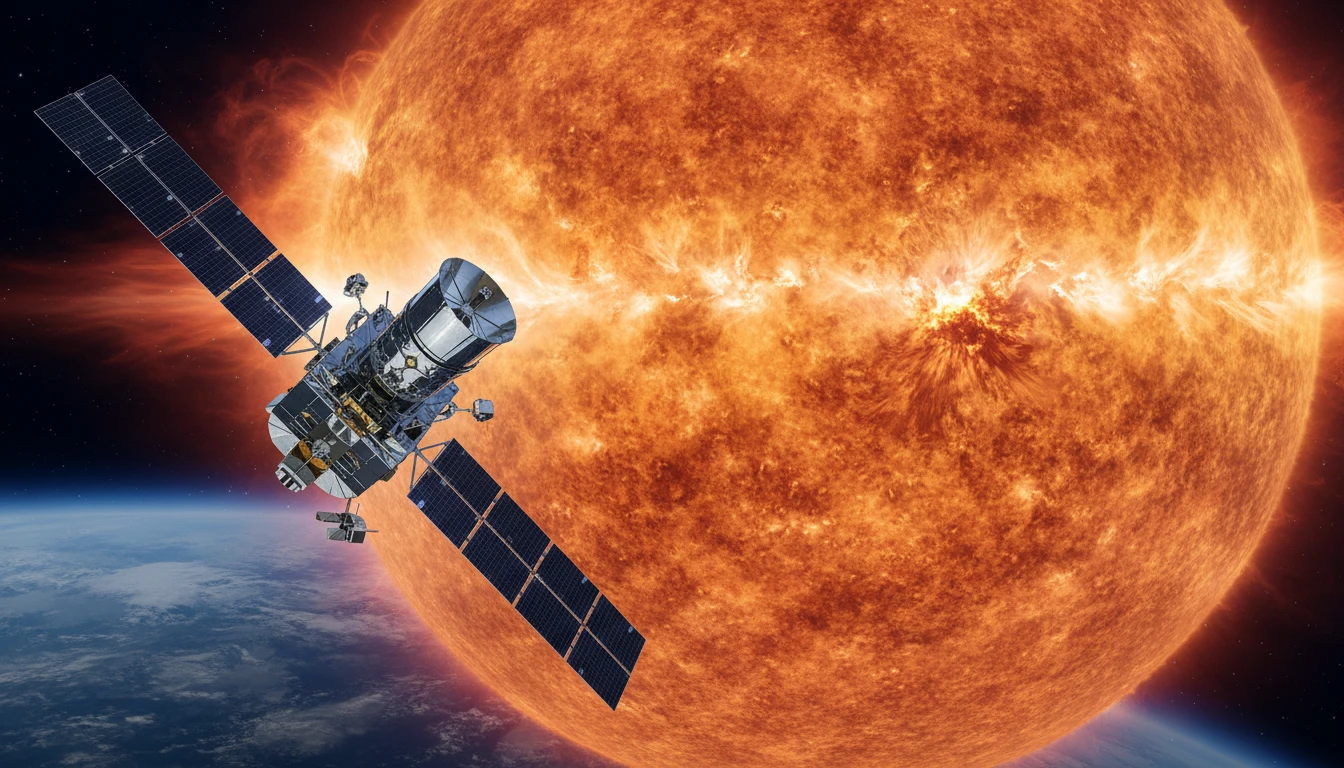
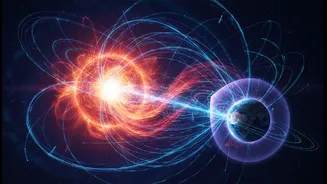
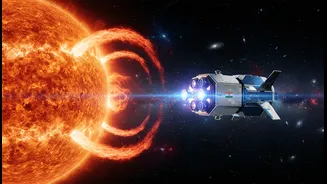
Space weather is a catch-all term for the dynamic conditions in space driven by the Sun. This includes phenomena like solar flares and coronal mass ejections (CMEs), which send streams of charged particles hurtling towards Earth. While we are protected
on the ground by our planet's magnetic field and atmosphere, this solar activity can have serious consequences for our modern, technology-dependent society. Geomagnetic storms can disrupt GPS signals, damage satellites, threaten power grids, and interfere with radio communications. The risk is significant enough that India's own space agency, ISRO, actively monitors solar activity to protect its fleet of more than 50 operational satellites. Just recently, a private Indian earth observation satellite was likely lost after encountering a powerful geomagnetic storm. Better forecasting is crucial to mitigating these risks.
A Surprising Source of Light
The key to a sharper forecast might be hiding in plain sight, or rather, in a light we can't easily see. Every day, tonnes of dust from shooting stars burn up in our atmosphere. This process seeds the upper atmosphere, specifically the thermosphere, with a fine layer of metallic atoms, including iron. These iron atoms, floating at an altitude of about 80 to 105 kilometres, are excited by energy from the sun and the atmosphere, causing them to emit a faint light known as airglow. This 'iron glow' is a permanent, global phenomenon, but it is too faint to be seen with the naked eye. Specialised instruments, however, can detect this ethereal light from orbit.
From Meteor Dust to Wind Gauge
The breakthrough came when scientists realised this iron glow could be used as a tracer. The thermosphere is a turbulent place, a chaotic boundary where weather from Earth below meets space weather from above. Understanding the winds and waves in this region is critical for predicting how space weather events will unfold. By observing the subtle shifts and movements in the iron glow, scientists can effectively measure the speed, temperature, and direction of winds in this inaccessible part of the atmosphere. It provides a direct way to see how the upper atmosphere responds to both terrestrial weather, like large storms or even volcanic eruptions, and incoming solar energy.
Sharpening the Forecast
Missions like NASA’s ICON (Ionospheric Connection Explorer) were designed specifically to study this interface between Earth and space by observing airglow. The data gathered helps scientists build more accurate and reliable models of the upper atmosphere. By feeding real-time information about atmospheric winds and density derived from the iron glow into forecasting models, space weather predictions can become more precise. Instead of just knowing a solar storm is coming, we can better predict its specific impacts: which regions might see GPS disruptions or where atmospheric drag could become a danger to low-orbiting satellites. This improved situational awareness gives satellite operators and power grid managers crucial lead time to take protective measures, such as temporarily shutting down sensitive electronics or adjusting satellite orbits.