


The 'Holy Grail' of EV Batteries
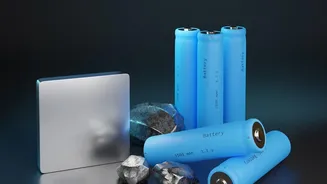
For years, solid-state batteries (SSBs) have been touted as the next great leap for electric vehicles. Unlike current lithium-ion batteries, which use a liquid electrolyte to move charge, SSBs use a solid material. This fundamental difference promises
huge advantages: higher energy density (meaning more range from a smaller, lighter pack), significantly faster charging times, and a much lower risk of fire because they eliminate the flammable liquid. Companies like Toyota have been working on this technology for decades, securing over a thousand patents in the process and viewing SSBs as the key to unlocking the next generation of EVs. Prototypes have demonstrated the ability to charge in as little as 10 minutes and provide a driving range of over 1,000 kilometres.
The Manufacturing Bottleneck: Wet vs. Dry
Despite the science being largely proven in labs, a massive hurdle has stood in the way of mass production: the factory itself. Conventional lithium-ion batteries are made using a 'wet coating' process. This involves mixing active materials with a binder and a toxic solvent called NMP to create a slurry, which is then coated onto foil and painstakingly dried in enormous, energy-hungry ovens. This process is not just slow and expensive; it's chemically incompatible with many of the most promising solid-state materials, particularly sulfide-based electrolytes, which can be degraded by the solvents. This manufacturing challenge has been a primary reason why the commercialisation of SSBs has repeatedly been pushed back.
Japan's Dry Process Breakthrough
This is where the Japanese innovation in 'dry process' manufacturing comes in. Instead of a wet slurry, the dry process involves mixing battery material powders with a binder and using pressure and heat to form a self-supporting film, completely eliminating the need for solvents and the drying process. This seemingly simple change has profound implications. It drastically simplifies the manufacturing workflow, reduces energy consumption, and enables the creation of thicker, more energy-dense electrodes that are difficult to produce with wet coating. This method is seen as a prerequisite for making high-performance solid-state batteries commercially viable.
The Toyota and Idemitsu Edge
Leading this charge are Japanese firms like Toyota and its key partner, the energy giant Idemitsu Kosan. After years of collaboration, the two companies are moving to commercialise SSBs by 2027-2028. Idemitsu, leveraging by-products from its petroleum operations, is building a large-scale pilot plant to mass-produce the crucial sulfide solid electrolyte. This partnership aims to solve the production puzzle at scale. By focusing on mastering the manufacturing technology in parallel with the battery chemistry, they are creating a powerful competitive advantage. While other automakers like Nissan are also exploring dry processes, Toyota's deep patent portfolio and its focused supply chain partnership with Idemitsu position it as a formidable leader.
Paving the Road to Mass Production
The dry process advantage isn't just theoretical; it translates directly to a stronger business case. By eliminating solvents and massive drying ovens, factories can be smaller, cheaper to build, and faster to operate. This directly attacks the biggest remaining challenge for SSBs: cost-competitiveness with ever-cheaper lithium-ion batteries. While competitors worldwide are also racing to develop SSBs, solving the manufacturing problem is as important as solving the chemistry. The ability to produce these advanced batteries at high volume and reasonable cost is what will ultimately determine the winner. Japan's focus on the dry process shows a strategic understanding that the future of EVs will be won not just in the lab, but on the factory floor.