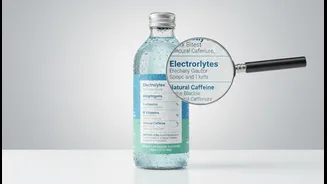










The Marketing vs. The Reality
The front of the can is designed to sell you a feeling: 'Energy', 'Focus', 'Calm', 'Immunity'. But the real story is on the back, in the nutrition facts and ingredients list. In India, the food regulator FSSAI has even pulled up brands for making misleading
claims about boosting energy or enhancing focus, noting that these terms are not officially permitted for food products. Many drinks marketed as 'energy drinks' are now required to be labelled 'caffeinated beverage' to avoid misleading consumers. This distinction is important because 'functional' doesn't automatically mean 'healthy'. Many of these drinks can be loaded with sugar or contain stimulants that might not be suitable for everyone.
Decoding the Caffeine Content
Caffeine is the most common active ingredient in drinks promising energy and focus. While a moderate amount can improve alertness, too much can lead to anxiety, restlessness, insomnia, and heart palpitations. In India, FSSAI regulations limit caffeine in 'caffeinated beverages' to a maximum of 300 mg per litre. A standard 250 ml can would contain around 75-80 mg, similar to a cup of coffee. However, some larger cans or stronger formulations can push you closer to the safe daily limit for adults, generally considered to be 400 mg. If a label says 'High Caffeine', it's a mandatory warning. Be mindful of your total intake from all sources, including coffee, tea, and other products.
The Search for Hidden Sugars
A wellness drink that contains 30-40 grams of sugar is working against your health goals. Excess sugar contributes to weight gain and increases the risk of type 2 diabetes and other health issues. Manufacturers often use different names to disguise sugar. Look for ingredients ending in '-ose' (like sucrose, fructose, dextrose) and terms like corn syrup or juice concentrate. The ingredients are listed by weight, so if a sugar is one of the first few items, the drink is primarily sugar water. Even 'sugar-free' versions warrant a closer look. They often contain artificial sweeteners (like aspartame, sucralose) or sugar alcohols (like erythritol), which can cause digestive discomfort in some people and may have other long-term effects that are still being studied.
Understanding 'Active' Ingredients
Beyond caffeine, functional drinks often boast a cocktail of 'bioactive' ingredients. Adaptogens like Ashwagandha and Ginseng are added for stress relief, while Nootropics like L-theanine are included to enhance focus. While some studies support these benefits, the key is dosage. A drink might list an impressive-sounding herb, but the quantity could be too low to have a real effect. Furthermore, some of these ingredients aren't meant for long-term daily use, as your body can build a tolerance. If you are on any medication, it's particularly important to be cautious, as herbs and other compounds can interact with prescription drugs.
Check the Serving Size
This is a simple but often overlooked detail. A single can or bottle may contain more than one serving. All the values on the nutrition label—calories, sugar, caffeine—are listed per serving. If you drink the entire container, you could be consuming double or even triple the amount you think you are. For caffeinated beverages in India, labels must include a warning against consuming more than a certain amount per day (e.g., not more than 500 ml). They also carry mandatory warnings for children, pregnant or lactating women, and individuals sensitive to caffeine.