







The Confusion in the Cooking Oil Aisle
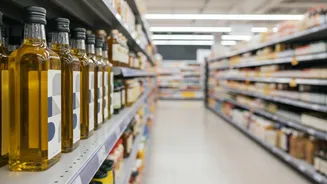
For years, Indian consumers have navigated a confusing landscape when buying edible oil. Shelves are often filled with an array of non-standard pack sizes—850ml, 910g, 950ml—alongside the more traditional 1-litre packs. This practice makes it nearly impossible
for a regular shopper to make a quick and accurate price comparison between brands. Calculating the unit price (price per litre or per kilogram) requires mental gymnastics that few have the time for during a weekly shop. This strategy was often a way for companies to engage in 'shrinkflation'—reducing the quantity of the product while keeping the price the same, thereby masking a price increase. Shoppers might mistakenly believe they are getting a better deal on a 900ml pack, not immediately noticing it contains 10% less oil than a 1-litre alternative.
A New Rule for Clarity
In a significant move to protect consumer interests, the Department of Consumer Affairs has mandated standard pack sizes for all major edible oils sold in the country. The new rules, brought in under the Legal Metrology framework, require that oils like palm, soybean, sunflower, and mustard be sold only in specific, uniform quantities. Following extensive consultations with industry bodies representing about 90% of the sector, the government has phased out confusing, irregular packs. Manufacturers, packers, and importers have been given a three-month transition period to comply with the new norms. This means odd sizes like 810g and 870g will disappear from shelves, replaced by a clear, consistent system.
The New Standard Sizes
Under the amended regulations, major edible oils can now only be sold in the following prescribed sizes (by volume or weight): 200ml/g, 500ml/g, 1 litre/kg, 2 litres/kg, 3 litres/kg, 4 litres/kg, and 5 litres/kg, with larger packs available at 15 and 20 litres/kg. This standardization applies to both domestically produced and imported oils. However, to ensure affordable options remain available, packages below 200ml or 200g are exempt from these rules. The move brings much-needed uniformity to the market, simplifying the shopping experience and empowering consumers with clear choices.
How This Makes Pricing Honest
The primary benefit of this new rule is the restoration of honest price comparisons. When all brands are selling oil in a 1-litre pack, the consumer's decision becomes simple: the brand with the lower MRP is the more economical choice. There is no longer a need to second-guess quantities or calculate unit prices on the fly. This transparency levels the playing field, forcing brands to compete directly on price and quality rather than through confusing packaging. The government has also stipulated that packages declaring quantity in volume (litres) must also mention the equivalent weight (kilograms), adding another layer of clarity for the buyer.
A Direct Hit on Shrinkflation
Standardised packaging is one of the most effective tools against shrinkflation. By fixing the quantities that can be sold, the regulation makes it much harder for companies to quietly reduce the amount of product to absorb rising costs. Previously, a manufacturer facing higher input costs for raw materials like palm oil or wheat could reduce a 1-litre pack to 950ml to avoid a direct price hike, a move many consumers might not notice. Now, any price increase will have to be just that—an increase in the MRP on a standard-sized pack, which is far more transparent. This ensures that consumers can accurately track the real cost of their essential groceries over time.