

The Main Event: Perseid Meteor Shower
August is the month of the Perseids, one of the best and most reliable meteor showers of the year. It will reach its peak on the nights of August 12th and 13th, 2026. This year's viewing conditions are expected to be nearly perfect. The peak coincides
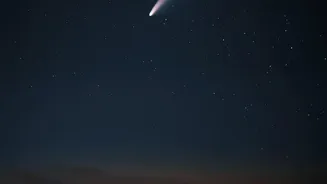
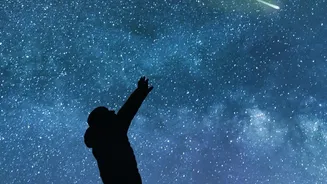
with a new moon, which means darker skies and a much better chance of seeing fainter meteors. At its peak, you could see up to 100 meteors per hour under clear, dark skies. These meteors are actually tiny debris particles left behind by the comet Swift-Tuttle. As Earth plows through this dust trail, the particles burn up in our atmosphere, creating the fleeting, fiery streaks we call 'shooting stars.'
How to Watch the Perseids
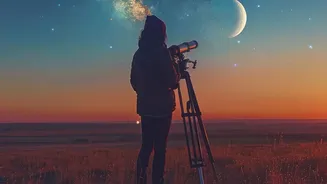
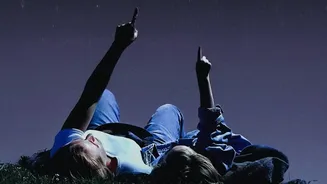
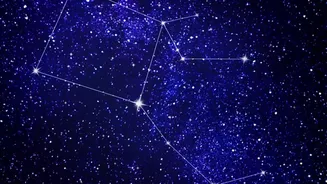
The best part about watching a meteor shower is that you don’t need any special equipment like a telescope or binoculars. In fact, your naked eyes are best, as they provide the widest field of view. The optimal viewing time in India is in the early morning hours, between 2:00 AM and 4:30 AM IST, before dawn’s light begins to interfere. Find a comfortable spot away from city lights, lie back on a blanket or a reclining chair, and look generally towards the northeast. While the meteors appear to radiate from the constellation Perseus, they can be seen streaking across any part of the sky. The most important tip is patience: allow your eyes at least 20-30 minutes to fully adapt to the darkness.
A Parade of Planets Before Dawn
August 2026 also offers a stunning planetary alignment in the pre-dawn sky. Around August 12th, you'll have the chance to see a parade of six planets: Mercury, Mars, Saturn, Jupiter, Uranus, and Neptune. Mars and Saturn will be the easiest to spot with the naked eye. Jupiter and Mercury will also be visible, but they will be very low on the eastern horizon just before sunrise, making them a bit more challenging to find. For the distant ice giants, Uranus and Neptune, you will need a pair of binoculars or a small telescope. The best time to catch this planetary procession is about 60 to 90 minutes before your local sunrise. Look for a line of bright 'stars' arcing across the eastern sky.
Finding India's Darkest Skies
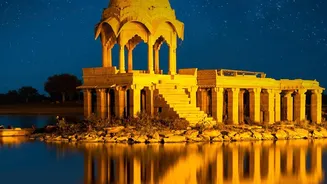
The biggest challenge for stargazing in August for most of India is the monsoon cloud cover. To maximize your chances, consider heading to regions that are typically drier during this time. The absolute best spots are in the high-altitude, rain-shadow regions like Ladakh and Spiti Valley in Himachal Pradesh. Hanle in Ladakh is even home to India's first designated Dark Sky Reserve. Western Rajasthan, including areas around Jaisalmer, also offers clearer and darker skies away from the monsoon's reach. For those in other parts of the country, the key is to get as far away from city light pollution as possible. Head to a nearby national park, a remote village, or even a dark spot on the outskirts of your city for the best possible views.
Your Simple Stargazing Toolkit
You don't need much to have a successful night of stargazing. Your essential kit is simple and low-tech. First, bring something comfortable to lie on, like a blanket, yoga mat, or a reclining chair. Looking straight up for an extended period can strain your neck. Dress in layers, as even summer nights can get chilly, especially in the pre-dawn hours. A red-light torch is highly recommended; its light won't ruin your night vision the way a regular white flashlight will. Finally, patience is your most important tool. Meteors appear at random intervals, so give yourself at least an hour of dedicated viewing time. Let your eyes adjust, get comfortable, and enjoy the show.