




The Paddle Brush: For Daily Smoothing
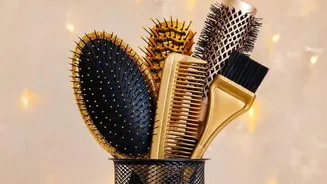
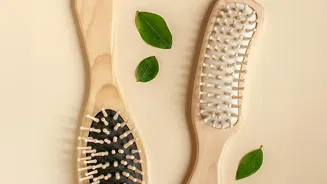
Think of the paddle brush as the wide-tooth comb's efficient older sibling for dry hair. Its large, flat, cushioned surface covers a lot of ground quickly, making it perfect for daily grooming of medium to long hair. While a wide-tooth comb is the undisputed
champion for detangling fragile, wet hair without causing breakage, a paddle brush excels at smoothing dry hair, taming flyaways, and distributing natural oils. It's the go-to for achieving a sleek, straight look without the concentrated heat of a straightener. However, unlike a comb that separates every knot, a paddle brush is for general smoothing once major tangles are already out.
The Round Brush: For Styling and Volume
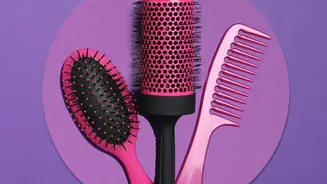
If a wide-tooth comb is for carefully taking things apart, a round brush is for skillfully putting them together. This is not a detangling tool; it is a styling weapon. Used with a blow-dryer, a round brush creates tension to shape hair, add bouncy volume at the roots, and form smooth curls or waves. The size of the barrel matters: smaller barrels create tighter curls, while larger ones are for creating volume and gentle waves in longer, thicker hair. Its purpose is the opposite of a wide-tooth comb's—instead of gently separating strands to prevent breakage, it grips hair to mould it into a style.
The Boar Bristle Brush: For Shine and Health
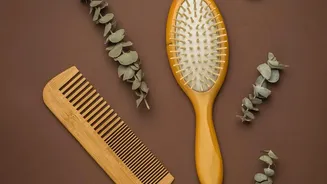
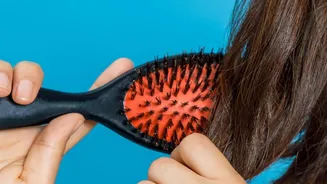
A boar bristle brush is the ultimate finisher, providing a benefit a wide-tooth comb simply can't: intense shine. These natural bristles are structurally similar to human hair, allowing them to grip and distribute your scalp’s natural oils (sebum) from root to tip. This action smooths the hair's cuticle, which dramatically reduces frizz and creates a polished, glossy finish. It's not designed to tackle serious knots—that's still the comb's job. Instead, use it on dry, already-detangled hair to condition it naturally, improve texture, and promote a healthy lustre, especially for straight or wavy types.
The Detangling Brush: For Stubborn Knots
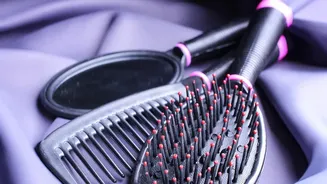
When you encounter knots that a wide-tooth comb struggles with, a modern detangling brush is the specialist to call. These brushes are designed with flexible, multi-length bristles that bend and flex around tangles instead of pulling through them. This reduces pain and breakage significantly. While a wide-tooth comb is still the safest bet for very wet and fragile hair, a detangling brush can be more effective at working through dense, dry tangles in all hair types, from fine and straight to thick and wavy. Think of it as a more advanced version of the comb for tackling particularly difficult spots with strategic gentleness.
The Denman Brush: For Defining Curls
For those with curly hair, a wide-tooth comb is great for initial detangling, but it can sometimes separate curl clumps, leading to frizz. Enter the Denman brush, a styling tool revered in the curly community. When used on wet, conditioned hair, its unique nylon pins create tension that clumps curls together, resulting in superior definition, shape, and bounce. Unlike a comb that just passes through, the Denman brush is used to physically style and shape the curls, often by twisting the brush as it moves down the hair shaft. It’s a tool for enhancing and defining your natural pattern, not just for getting knots out.