





A Shift in Travel Mindset
The era of chasing the cheapest, quickest flight between Bangkok and Phuket or Kuala Lumpur and Singapore is facing a quiet rebellion. Fuelled by a greater awareness of carbon footprints and a desire for more authentic experiences, a segment of modern
travellers is deliberately slowing down. This isn't just about 'flight shaming'; it's a proactive choice for 'train bragging'. The decision stems from a simple calculation: a short-haul flight in Asia can emit over 100-150 kg of CO2 per passenger, while a similar journey by train can be a fraction of that, often under 20 kg. For travellers who want their presence to be a positive, or at least neutral, force, that difference is becoming impossible to ignore.
Beyond Carbon: The Appeal of Slow Travel
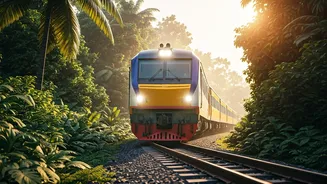
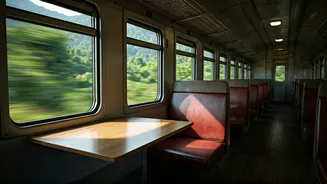
The environmental argument is compelling, but the real magic lies in the experience. Flying is sterile; it's about getting from Point A to Point B with maximum efficiency and minimum connection to the space between. Train travel is the opposite. It’s an immersion. Instead of a uniform view of clouds, train passengers watch the landscape transform from bustling city outskirts to verdant rice paddies and remote villages. It's a front-row seat to the country itself. This 'slow travel' philosophy rejects the checklist approach to tourism. It prioritises depth over breadth, allowing for spontaneous interactions, unexpected views, and a truer sense of a country's scale and character that is simply lost at 30,000 feet.
Case Study: The Thai-Malay Peninsula
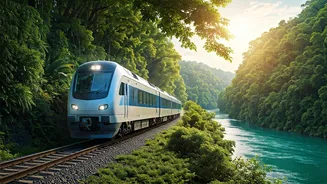
Consider the popular route from Bangkok, Thailand, down to Singapore. A flight takes about two hours, plus airport transit time. The train journey, in contrast, is a multi-day adventure. Travellers can take an overnight train from Bangkok to the Thai border, cross into Malaysia, and then connect to the country’s excellent Electric Train Service (ETS). This modern network whisks passengers through lush landscapes, with potential stops in charming colonial towns like Ipoh or Penang. While it demands more time, the cost can be comparable to or even cheaper than flying, especially when factoring in baggage fees and airport transfers. It transforms a simple transit into a core part of the travel itinerary.
Vietnam’s Legendary Reunification Express
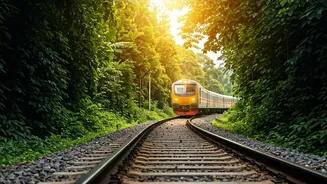
Perhaps no single route captures the spirit of this movement better than Vietnam’s Reunification Express. This iconic railway line stretches over 1,700 kilometres, linking Hanoi in the north and Ho Chi Minh City in the south. To cover this distance by air would require multiple flights, hopping between cities like Hue, Da Nang, and Nha Trang. The train, however, stitches the country together into a single, continuous narrative. Passengers share compartments with local families, buy snacks from vendors at provincial stations, and watch the entire length of the country unfold outside their window. It's less a mode of transport and more a rolling cultural institution, offering a perspective on Vietnam that is simply unavailable from the air.
The Infrastructure Hurdle
Of course, the romance of rail has its practical limits. While Malaysia boasts a modern and efficient network, rail infrastructure in other parts of Southeast Asia can be dated, slower, and less comfortable. The dream of a seamless, high-speed pan-Asian railway is still a work in progress, with ambitious projects like the China-Laos-Thailand line slowly taking shape. For now, travellers must be willing to navigate different national systems, occasional delays, and varying levels of comfort. This challenge, however, is often part of the appeal for the adventurous eco-traveller, who sees logistical hurdles as part of an authentic experience, not a bug in the system.