








Embrace the Carry-On Challenge
The single most effective way to avoid baggage fees is to not check a bag at all. For a four-day trip, a standard carry-on and a personal item are more than enough. Most domestic airlines in India allow a cabin bag of around 7 kg plus a smaller personal item like
a laptop bag or handbag. This strategy not only saves you money but also time, letting you walk straight out of the airport upon arrival. The key isn't just packing less, but packing smarter. It requires a mental shift from 'what if I need this?' to 'what will I actually use?'. Weighing your empty suitcase at home is a great first step; a heavy bag can eat up half your allowance before you've even packed a single shirt.
Build a Capsule Wardrobe
A capsule wardrobe is a small collection of items that can be mixed and matched to create multiple outfits. For a four-day trip, this is your secret weapon. The '5-4-3-2-1' rule is a popular starting point: five tops, four bottoms, three pairs of shoes, etc., but for a short trip, you can simplify it even further. Think in terms of a '3-2-1' method: three versatile tops, two bottoms, and one layering piece like a jacket or cardigan. Choose a neutral colour palette (like black, beige, navy, and white) for your main items and add a splash of colour with one or two tops or accessories. Before you pack an item, ensure it can be worn with at least two other things in your bag. This versatility is what allows a few pieces to create a week's worth of looks.
The Rolling vs. Folding Debate
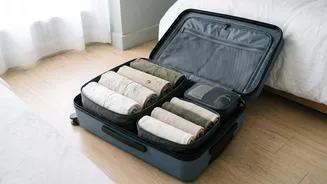
For saving space in a suitcase, rolling your clothes is generally superior to folding them flat. Tightly rolled garments, especially items made from cotton or synthetic blends like t-shirts, trousers, and shorts, can be packed more densely than folded ones. This method helps to minimise hard creases and allows you to fit more into the nooks and crannies of your bag. For more structured items like blazers or dress shirts, a combination can work best: fold carefully and place on top. The goal is to create tight, compact bundles that can be arranged like a puzzle inside your carry-on, maximising every square inch of available space.
Leverage Packing Cubes and Compression Bags
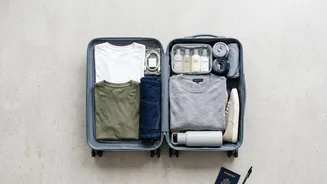
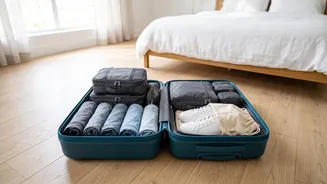
Packing cubes are small, zippered pouches that revolutionise organisation. Use them to categorise your clothing: one for tops, one for bottoms, one for underwear. This not only keeps your bag tidy but also slightly compresses the contents. For bulkier items like sweaters or a light jacket, consider vacuum-sealed compression bags. By squeezing the air out, you can dramatically reduce the volume of these items. However, be mindful of weight. Compressing clothes makes them smaller, not lighter. Since you’re aiming to stay within that crucial 7 kg carry-on limit, use these tools strategically for volume, not as an excuse to pack more.
Downsize Liquids and Toiletries
Liquids are a major hurdle in carry-on travel, governed by strict security rules. All liquids, gels, and aerosols must be in containers of 100ml or less and fit into a single, transparent, resealable plastic bag. To save space and avoid potential leaks, switch to solid toiletries. Solid shampoo bars, conditioner bars, and toothpaste tablets are game-changers for the light traveller. Decant your essential liquids into smaller, travel-sized reusable bottles instead of bringing the full-sized products from home. This single change can free up significant space and weight, while keeping you compliant with airport security.
Wear Your Weight
This is one of the simplest and most effective packing hacks. Identify the heaviest and bulkiest items in your planned wardrobe—this is usually a pair of boots or sneakers, a jacket, or a heavy sweater. Wear these items on the plane. While it might feel a little cumbersome, an outfit worn on your person doesn’t count towards your baggage allowance. That heavy jacket could be the very thing that pushes your bag over the weight limit. By wearing it through the airport, you save that precious space and weight for other essentials inside your bag, ensuring you stay well under the limit.