








A Radical Plan to Cool the Ocean
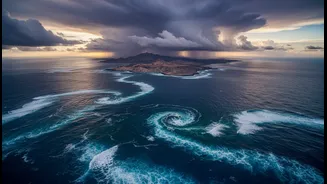
The idea grabbing headlines involves a technique called marine cloud brightening (MCB). In simple terms, it means spraying tiny sea salt particles into low-lying clouds over the ocean. These particles act as seeds, helping to form more and smaller cloud droplets.
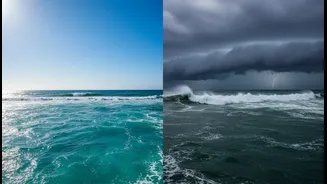
This makes the clouds whiter and more reflective, causing more of the sun's energy to bounce back into space instead of warming the water below. The goal is to create a targeted cooling effect, potentially in areas like the Pacific Ocean where heat builds up and drives extreme weather. The technology is still highly experimental, but some see it as a potential emergency tool to protect critical ecosystems like coral reefs or even weaken powerful tropical storms.
The Promise of a Quick Fix
With the impacts of climate change becoming more severe, the appeal of a quick intervention is undeniable. Recent computer simulations published in July 2026 suggest that a well-timed marine cloud brightening operation in the Pacific could significantly weaken or even neutralise a powerful El Niño event. El Niño, a natural warming of the Pacific, can cause devastating droughts, floods, and heatwaves around the world. Taming it could save lives and prevent trillions of dollars in economic damage. Proponents argue that such targeted interventions could be a more surgical approach than trying to cool the entire planet, offering a way to address specific, acute climate threats while we work on the long-term solution of cutting emissions. The inspiration partly came from a natural experiment: smoke from massive Australian bushfires in 2019-2020 drifted over the Pacific, brightened clouds, and appeared to help trigger a cooling La Niña phase.
The Unforeseen Consequences
This is where the "big climate questions" come in. Tampering with a system as complex as the global climate is fraught with peril. A recent study from the University of California found that brightening clouds over the eastern Pacific could have a shockingly powerful and potentially disastrous side effect: it could weaken the entire El Niño cycle by as much as 61%. While that might sound good, this cycle is a fundamental driver of weather patterns globally. Drastically altering it could shift rainfall patterns in unpredictable ways, potentially triggering droughts in South America or altering Asian monsoons. Then there's the "termination shock" problem: if we start a large-scale cooling project and then suddenly stop, the world could experience rapid and catastrophic warming. Finally, there is a significant moral hazard; the prospect of a tech-fix for climate change could reduce the urgency to cut greenhouse gas emissions, the root cause of the problem.
Ripple Effects on the Indian Monsoon
For India, any large-scale manipulation of the Pacific Ocean is a matter of critical national concern. The Indian monsoon, the lifeblood of the country's agriculture and economy, is deeply connected to the happenings in the Pacific, particularly the El Niño-Southern Oscillation (ENSO). Generally, an El Niño (a warm Pacific) is associated with weaker monsoon rains in India. Conversely, a La Niña (a cool Pacific) can enhance them. If marine cloud brightening were to dramatically cool the Pacific and disrupt the natural ENSO rhythm, the effects on the monsoon could be profound and unpredictable. It could lead to severe droughts that threaten food security or, conversely, cause more extreme and erratic rainfall events. Given that over a billion people depend on the monsoon's reliability, meddling with its primary driver is a gamble with impossibly high stakes. Scientists stress that the link is not always straightforward, but the potential for devastating disruption is a core concern.