




A Landmark Journey So Far
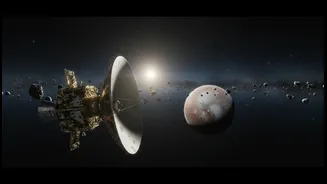
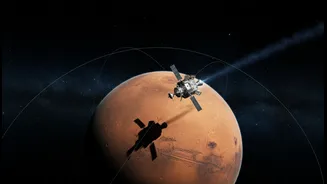
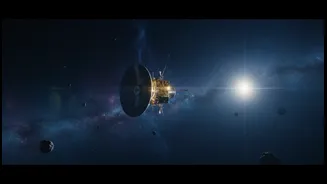
Launched in 2006, New Horizons secured its place in history on July 14, 2015, when it performed humanity's first up-close exploration of Pluto. The stunning images it sent back transformed our view of the dwarf planet from a distant, fuzzy point of light
into a complex world with towering ice mountains and a vast nitrogen-ice glacier. But its work was far from over. On New Year's Day 2019, the spacecraft flew by Arrokoth, a snowman-shaped object in the Kuiper Belt, making it the most distant object ever explored by a spacecraft. These encounters provided scientists with a treasure trove of data about the formation of our solar system.
A New Mission in Deep Space
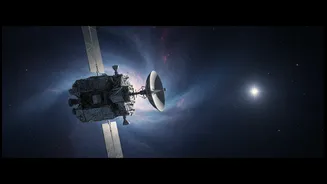
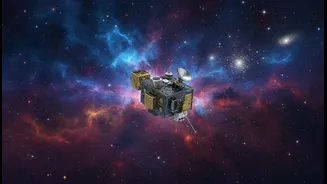
After its latest and longest hibernation period, a 321-day slumber to conserve resources, NASA confirmed the spacecraft woke up in good health on June 23, 2026. Now nearly 6 billion miles from Earth, it has begun its second Kuiper Belt Extended Mission (KEM2). This new phase shifts the probe's focus. With no other reachable Kuiper Belt Objects (KBOs) currently identified for a flyby, New Horizons is transforming into a unique deep-space observatory. Its primary goals now involve interdisciplinary science, branching out into heliophysics—the study of the Sun's sphere of influence—and astrophysics.
Studying the Sun's Outer Boundary
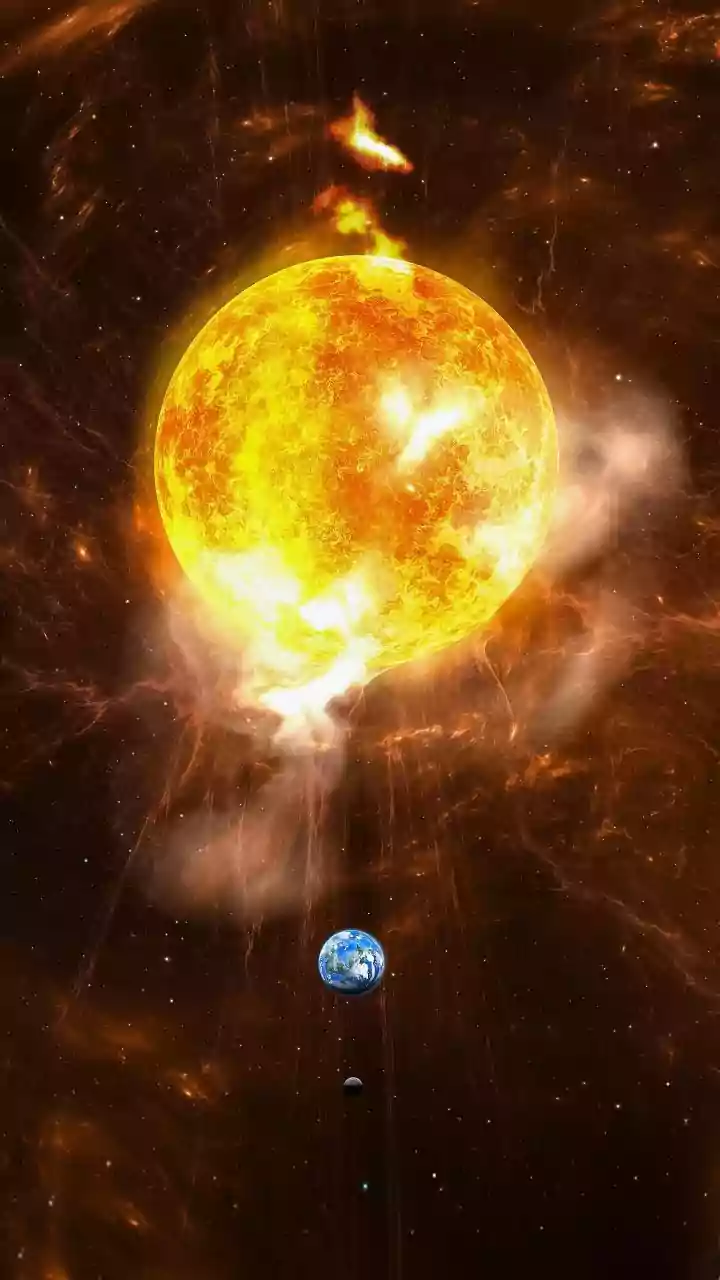
The main objective of this new science phase is to study the outer heliosphere, the vast bubble of charged particles blowing outward from the sun, known as the solar wind. As New Horizons travels farther, it will gather data on how this solar wind interacts with the interstellar medium—the material between stars. Scientists are particularly interested in an area called the "termination shock," where the solar wind is expected to slow down dramatically. Only the twin Voyager probes have crossed this boundary before, but New Horizons carries more advanced instruments, like its Solar Wind Around Pluto (SWAP) and Alice ultraviolet spectrograph, which can make more sensitive measurements of this unexplored region. The data will be a 'treasure trove' for understanding how this boundary works.
A Vantage Point Like No Other
Its unique position in the Kuiper Belt allows New Horizons to conduct science impossible from Earth. It can observe dozens of other KBOs from a much closer range, providing unique insights into these ancient remnants of planet formation. The spacecraft is also continuing its hunt for cosmic dust with its student-built dust counter, mapping the distribution of particles at the solar system's edge. Furthermore, its instruments will study the faint light of the cosmic optical background and take a look at the ice giants, Uranus and Neptune, from an angle we cannot get from our home planet. This mission extension allows it to serve as a multi-purpose observatory in a region no other active probe is exploring.
Racing Toward Interstellar Space
New Horizons is speeding away from Earth at a rate of about 300 million miles per year. While it continues its scientific observations, the mission is a race against time and distance. The signals confirming it had awakened took nearly nine hours to reach Earth. Its nuclear power source is finite, though it is expected to keep operating into the 2030s or even beyond. Current predictions suggest the spacecraft could reach the termination shock as early as 2029 or as late as 2040. Once it crosses that frontier, it will join the Voyager probes in interstellar space, continuing its journey as a silent ambassador for humanity among the stars.