






A New Space Age in India
India's space industry is undergoing a monumental shift. Beyond the celebrated missions of the Indian Space Research Organisation (ISRO), a vibrant ecosystem of private startups is emerging, creating a surge in demand for skilled professionals. This new
era, propelled by government support and private innovation, has opened up unprecedented opportunities for students to get involved long before graduation. The focus has moved from purely academic learning to gaining practical, real-world experience. Whether through government initiatives or startup internships, the message is clear: India needs its next generation of engineers, scientists, and innovators to not just watch the journey to space, but to actively participate in it.
The ISRO Gateway: Programs for Young Talent
ISRO has long been the cornerstone of India's space ambitions, and it actively nurtures young talent through structured programs. The most prominent is the "Young Scientist Programme" or YUVIKA, a two-week residential program for school students. It aims to impart basic knowledge on space technology and science by allowing students to interact with eminent scientists, visit labs, and participate in hands-on activities. For university students, ISRO offers internships and project trainee schemes at its various centres, such as the Vikram Sarabhai Space Centre (VSSC) and U R Rao Satellite Centre (URSC). These programs allow students in fields like engineering and physics to work on real projects, though they are highly competitive and often unpaid. ISRO also supports universities in developing their own satellites, providing technical guidance and launch opportunities for student-led projects.
The Startup Frontier: Internships with Private Players
The most exciting new frontier for students is the burgeoning private space sector. Companies like Skyroot Aerospace, Agnikul Cosmos, and Pixxel are not just building rockets and satellites—they are actively hiring interns. These startups offer a dynamic environment where interns can gain significant hands-on experience in a much shorter time frame than in larger organizations. For instance, Skyroot Aerospace, founded by former ISRO scientists, offers internships in roles like data science and aerospace engineering. Pixxel, a satellite imagery company, seeks interns for geospatial data analysis and AI/data engineering roles. Agnikul Cosmos, known for its 3D-printed rocket engines, also brings in interns to contribute to its innovative launch vehicle development. These internships are often the fastest pathway to a full-time job, as startups are keen to retain the talent they help train.
University-Led Initiatives and Collaborations
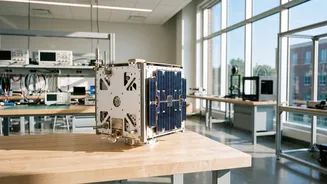
Academic institutions are increasingly becoming hubs of practical space education. Many engineering colleges now have their own satellite projects, where students design, build, and operate small satellites, often with mentorship from ISRO. Projects like StudSat, a picosatellite built by a consortium of colleges, have given students end-to-end experience in a space mission. Furthermore, the Indian National Space Promotion and Authorisation Centre (IN-SPACe) is bridging the gap between academia and industry. IN-SPACe facilitates internship opportunities for students at private space companies, ensuring that academic institutions can connect their students with practical training opportunities across the sector. This collaborative approach ensures that the curriculum is aligned with industry needs.
How to Prepare for a Real-World Space Career
Securing these coveted opportunities requires preparation. A strong academic foundation in Science, Technology, Engineering, and Mathematics (STEM) is fundamental. Students should focus on core subjects like physics, mathematics, and computer science. Beyond academics, building practical skills is crucial. Proficiency in programming languages like Python and experience with design software like CAD are highly valued. Building a portfolio of projects, participating in rocketry or robotics clubs, and engaging in online competitions can make a significant difference. Networking is also key. Following the work of Indian space startups on professional platforms, engaging with their content, and attending industry webinars can provide valuable insights and connections.