




Walk into any Indian restaurant and 'saag' is a familiar sight. But this term is often misunderstood as just a spinach dish. In reality, saag represents a vast and vibrant category of dishes central to the Indian diet.
So, What Exactly Is Saag?
The word 'saag' or 'shak' originates
from the Sanskrit word 'śāka', which simply means leafy green vegetables. Therefore, saag isn't one specific recipe but a culinary category for dishes made from a variety of greens, slow-cooked with spices. While spinach (palak) is a common ingredient, authentic saag often involves a mix of greens, which are cooked down into a thick, flavourful purée. The final dish is typically finished with a tempering of ghee, garlic, ginger, and green chillies to create its signature rich and earthy flavour.
The King of Saags: Sarson ka Saag
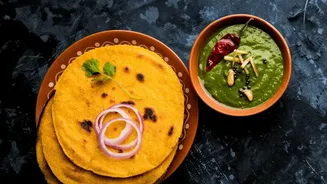
The most famous variant is Sarson ka Saag, a winter delicacy from the Punjab region. This dish is intrinsically linked to the winter harvest of mustard greens (sarson). The sharp, slightly peppery taste of mustard leaves is its defining characteristic. To balance this, cooks often blend mustard greens with milder ones like spinach (palak) or bathua (chenopodium/goosefoot). Traditionally, it's slow-cooked for hours, thickened with a bit of maize flour (makki ka atta), and served with a generous dollop of white butter alongside Makki di Roti (a flatbread made from cornmeal). This pairing isn't just a meal; it's a cultural symbol of warmth and abundance during North India's colder months.
A Country's Worth of Greens
India's diverse climates yield a staggering variety of edible greens, and many find their way into regional saag preparations. Beyond mustard and spinach, some popular choices include:
Fenugreek (Methi): Known for its slightly bitter taste and aroma, methi is rich in iron and fibre. It's widely used across western and northern India.
Bathua (Chenopodium): A winter green popular in Uttar Pradesh and Bihar, it is packed with minerals like potassium and calcium and is considered a blood purifier.
Amaranth (Chaulai/Lal Saag): Found in both green and red varieties, amaranth leaves are a great source of calcium, iron, and Vitamin A. They are used across the country, from the Himalayan foothills to South India.
Malabar Spinach (Pui Saag/Basale): This climbing vine is common in Bengal, Karnataka, and along the Malabar coast. Its succulent leaves add a pleasant thickness to curries and dals.
* Other notable greens include radish greens (mooli ka saag), taro leaves (arbi ke patte), and drumstick leaves (sahjan), each bringing a unique texture and flavour profile.
The Nutritional Power of Greens
Leafy green vegetables are nutritional powerhouses, and saag is an excellent way to consume them. These greens are densely packed with essential vitamins like A, C, and K, and minerals such as iron, calcium, and potassium, all while being low in calories. The high dietary fibre content aids digestion and promotes gut health. For instance, mustard greens are a fantastic source of antioxidants and Vitamin K, which is crucial for bone health. Spinach is loaded with iron and folate, while fenugreek is also rich in iron. Regular consumption of these greens can help boost immunity, support heart health, and reduce the risk of chronic diseases.
Incorporating Saag into a Modern Diet
In a world leaning towards whole foods, saag fits perfectly. It's a versatile, gluten-free dish that celebrates seasonal produce. While traditional preparations can be rich with ghee and butter, home-style versions can easily be made lighter with minimal oil. Saag is more than just a side dish; it can be a hearty main course when paired with a rustic flatbread like roti or a simple bowl of rice. By exploring different combinations of greens, you can create a variety of saags that are not only delicious but also tailored to your nutritional needs. It's a wonderful way to ensure a diverse intake of micronutrients straight from nature's pantry.