


A Tale of Two Policies
On paper, direct commerce between the two nuclear-armed neighbours is at a near standstill. Following the 2019 Pulwama attack, India revoked Pakistan's 'Most-Favoured Nation' status and hiked customs duties. Pakistan retaliated by formally suspending
bilateral trade after India's decision regarding Article 370 in Jammu and Kashmir. This tit-for-tat exchange effectively shut down official trade channels, including the bustling Wagah-Attari land port, bringing formal trade to a grinding halt. For years, this freeze has defined the economic relationship, a direct reflection of the political iciness between New Delhi and Islamabad.
The Numbers Don't Lie
Despite the formal bans, recent figures from the State Bank of Pakistan tell a different story. In the first quarter of the 2026-27 fiscal year (July-September), Pakistan's imports from India soared to $61.74 million, a staggering 69% increase from the $36.55 million recorded in the same period last year. Meanwhile, Pakistan's exports to India were recorded as zero, highlighting a one-sided flow of goods. This surge has raised questions on both sides of the border about how, in an era of suspended trade, Indian goods are not only reaching Pakistan but doing so in increasing volumes.
The Lifeline of Essential Goods
The primary driver of this continued trade is necessity. Shortly after its 2019 trade ban, Pakistan's government carved out an exemption for life-saving medicines and pharmaceutical products. This was a pragmatic admission of the country's reliance on India's robust pharmaceutical industry. Today, pharmaceutical products and organic chemicals make up the vast majority—over 96%—of Pakistan's imports from India. Items like vaccines, anti-cancer drugs, and active pharmaceutical ingredients (APIs) are crucial for Pakistan's healthcare sector and are often more affordable and accessible from India than from any other country. This dependency underscores a simple truth: for critical industries, economic and geographical logic often outweighs political principle.
The Third-Country Detour
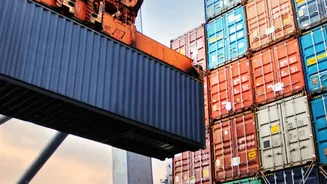
While exceptions for medicine explain some of the trade, they don't account for the full volume or the recent surge. The secret lies in a well-established 'grey-zone' strategy: third-country trade. Indian goods are shipped to ports in the UAE, Singapore, or Sri Lanka, where they are re-labelled and re-exported to Pakistan. This circuitous route allows businesses to bypass direct trade restrictions. Though it adds to the final cost for Pakistani consumers, it keeps vital supply chains open for products beyond just pharmaceuticals, including chemicals, dyes, and other industrial inputs. According to one think tank, this unofficial trade could be worth billions of dollars annually, far exceeding the officially recorded numbers.
A Growing Call to Normalize
This paradoxical situation has not gone unnoticed within Pakistan. The country's business community has become increasingly vocal in calling for the restoration of direct trade with India. Business leaders point to significant economic losses, estimated by some to be as high as $40 billion since 2019, due to the need to source goods from more distant and expensive markets. They argue that resuming direct trade would lower costs for key sectors like pharmaceuticals, textiles, and agriculture, providing a much-needed boost to the nation's struggling economy. Pakistani officials, including the Foreign Minister, have acknowledged these calls, stating that they will 'seriously' consider the matter, hinting at a potential, albeit cautious, shift in policy.