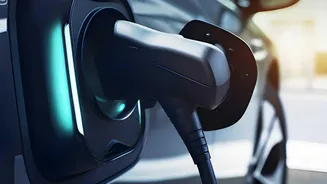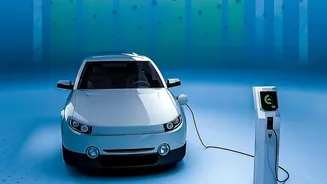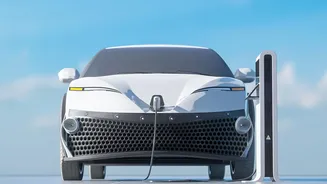



The Current Charging Bottleneck
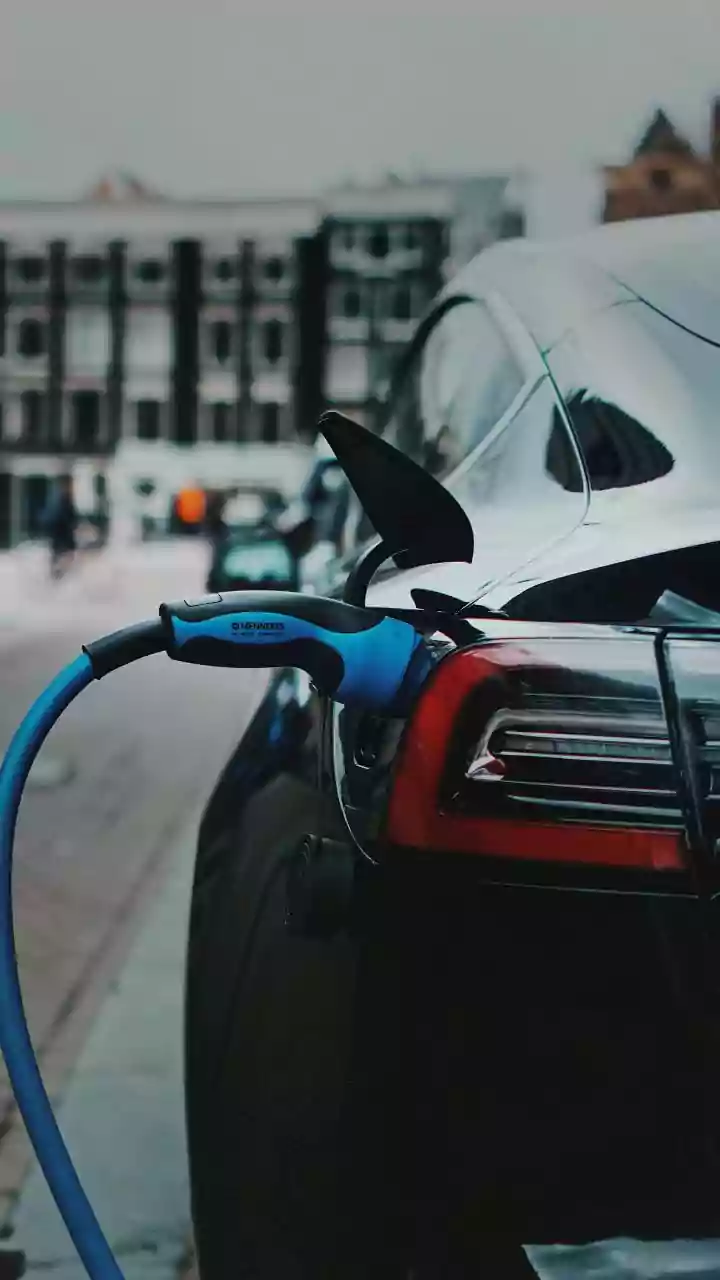
For all their benefits, the lithium-ion batteries powering today's electric vehicles have a fundamental limitation. They rely on a liquid electrolyte to shuttle lithium ions between the anode and cathode during charging and discharging. Pushing too much
energy too quickly through this liquid can cause it to overheat and, more critically, can lead to the formation of tiny, needle-like structures called dendrites. These dendrites can grow and eventually pierce the separator between the battery's positive and negative sides, causing a short circuit, reducing the battery's lifespan, and in worst-case scenarios, leading to a fire. To avoid this, an EV's battery management system deliberately slows down the charging process, especially after reaching 80%, resulting in the 30-minute to several-hour waits that drivers are all too familiar with.
Enter the Solid-State Solution
Solid-state batteries, as the name suggests, replace the flammable liquid electrolyte with a solid material, often a thin layer of ceramic, polymer, or sulfide-based compound. This seemingly simple switch is what scientists consider a game-changer for energy storage. By creating a solid and stable pathway for ions, the core problem that slows down charging in liquid-based batteries is effectively engineered out of the system. This solid electrolyte acts as a rigid barrier, physically blocking the formation of dendrites. Without the risk of short circuits, it becomes possible to send a much higher electrical current into the battery safely.
How Solidity Unlocks Super-Fast Charging
The true magic of solid-state technology lies in its ability to enable superior charge and discharge performance. Without the threat of dendrites, researchers can design batteries that accept energy at a much faster rate. Projections from various developers, including industry giants like Toyota and Nissan, suggest that charging times could be slashed dramatically. Instead of the current 30-45 minutes to get to 80% charge, the goal for many is a charge time of around 10 to 12 minutes. This brings the EV refueling experience remarkably close to the time it takes to fill a tank with petrol, effectively removing one of the most significant psychological and practical barriers for potential EV buyers.
More Than Just Speed
While solving the charging delay is the headline promise, solid-state batteries offer a trifecta of benefits. First, they are inherently safer because they eliminate the flammable liquid electrolyte found in conventional batteries. Second, they boast a much higher energy density. This means they can store more energy in the same amount of space, or the same amount of energy in a smaller, lighter package. For drivers, this translates to vehicles with a significantly longer range—with targets exceeding 1,000 kilometres on a single charge—or lighter, more efficient cars. Finally, these batteries are expected to have a longer lifespan, withstanding more charge and discharge cycles before degrading.
The Road to Reality in India
The journey from the laboratory to the highway is paved with challenges, primarily cost and manufacturing at scale. Automakers and battery firms are in a global race to solve these issues. Companies like Toyota, Nissan, BYD, and CATL are all targeting commercial or trial production between 2027 and 2030. Initially, these advanced batteries will likely appear in high-end or niche models before costs come down enough for mass-market vehicles. For India's burgeoning EV market, this technology could be transformative. Faster charging would alleviate pressure on the still-developing public charging infrastructure and make EVs a more practical choice for a wider range of consumers, accelerating the nation's transition to sustainable transport.