


The Atmosphere's Invisible Barrier
The primary reason winter skies are so transparent is the significant drop in humidity. Warm summer air can hold a lot of moisture, and this water vapour acts like a soft-focus filter on the sky. It scatters light from stars, the moon, and unfortunately,
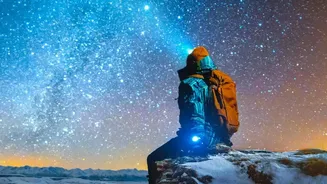
from our cities, creating a hazy, washed-out effect. Cold winter air, however, cannot hold much moisture. This dry air means less haze and less light-scattering, allowing the faint light from distant stars and galaxies to travel to your eyes with minimal interference. The result is a darker background sky and sharper, more brilliant stars.
A Steady and Stable View
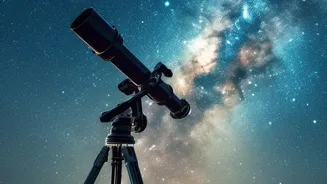
Have you ever noticed how stars seem to 'twinkle' more on some nights than others? This effect, known as scintillation, is caused by turbulence in the atmosphere. Pockets of warmer and cooler air moving around bend the starlight as it passes through, making the star appear to shimmer. During cold winter nights, the atmosphere tends to be more stable and less turbulent compared to the hot, convective air of summer. This steadier 'seeing', as astronomers call it, means the light from stars and planets is less distorted, resulting in crisper and more detailed views through binoculars or a telescope.
More Hours of Darkness
The most practical advantage of winter is simply that the nights are much longer. The sun sets earlier and rises later, giving dark-sky travellers an extended window for observation. Instead of waiting until late in the evening for true darkness to fall as you would in summer, winter nights offer peak viewing conditions as early as 6 or 7 PM. This provides ample time to set up equipment, allow your eyes to fully adapt to the dark, and enjoy the celestial show for hours.
India’s Premier Winter Stargazing Spots
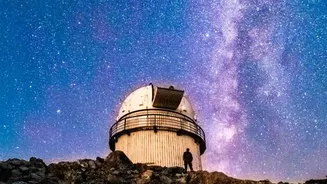
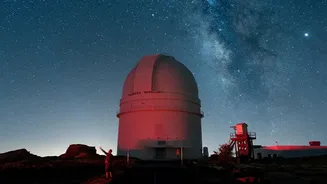
India is blessed with several high-altitude and remote locations that are perfect for winter stargazing. Hanle in Ladakh is the crown jewel, home to India's first official Dark Sky Reserve. Its high altitude and pristine conditions offer what many consider the best stargazing in Asia. Spiti Valley in Himachal Pradesh is another outstanding choice, with villages like Kaza, Kibber, and Langza offering incredibly dark skies. While access can be challenging in deep winter, the post-monsoon months of October and November provide a good balance of clear skies and accessibility. For those in the south, the hills of Coorg in Karnataka offer clear, post-monsoon winter nights away from city lights, especially from peaks like Tadiandamol. The Rann of Kutch in Gujarat also provides vast, flat horizons and dark skies during the cool, dry winter months.
The Winter Celestial Showcase
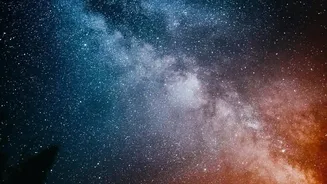
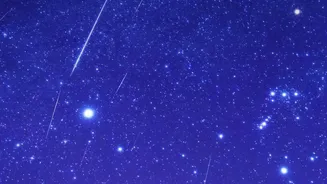
While the bright, dense core of our Milky Way is a highlight of the summer sky, the winter sky has its own cast of brilliant characters. When you look out on a December or January night, you are facing the outer edge of our galaxy. This part of the sky features some of the most famous and easily recognisable constellations. The mighty hunter Orion, with his distinct three-star belt, takes centre stage. Following him are Taurus the Bull, with the beautiful Pleiades star cluster, and Gemini the Twins. The winter sky is also home to Sirius, the brightest star in our night sky, making for a dazzling and easy-to-navigate celestial viewing experience.