





The Birth of the Summer Event
Before 1975, summer was considered a dead zone for movie releases. That all changed with Steven Spielberg's Jaws. By launching the film with a massive television marketing campaign and releasing it in hundreds of theaters simultaneously—a practice known
as 'saturation booking'—Universal Pictures turned a shark movie into a national obsession. It was the first film to gross over $100 million in the US, creating the blueprint for the 'summer blockbuster'. Just two years later, George Lucas's Star Wars took this model and blasted it into hyperspace. It wasn't just a film; it was an escape that introduced audiences to a galaxy of heroes, villains, and, crucially, merchandise. Together, these two films taught Hollywood a vital lesson: a high-concept, widely marketed film could become a shared cultural experience, an 'event movie' that audiences would line up for.
Building on Success: The Sequel Era
With the blockbuster model established, the 1980s saw the rise of the franchise sequel. Films like The Empire Strikes Back and Raiders of the Lost Ark proved that audiences would return for characters and worlds they loved. This era wasn't just about repetition; it was about expansion. Studios began to understand the long-term value of intellectual property. A successful film was no longer just a one-time success but the potential start of a multi-film series with built-in audience awareness. Tim Burton's Batman in 1989 was a landmark, demonstrating that even a well-known character could be rebooted with a fresh vision and become a cultural and commercial phenomenon, paving the way for the superhero dominance to come. This decade cemented the idea that a movie's life could extend far beyond its initial run, creating a cycle of anticipation and return.
The Quantum Leap: Marvel's Shared Universe
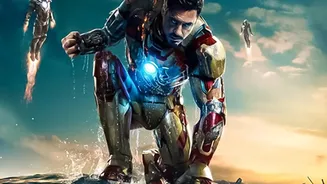
For decades, franchises were linear, following one story or character at a time. Then, the Marvel Cinematic Universe (MCU) changed everything. Starting with Iron Man in 2008 and culminating in The Avengers in 2012, Marvel Studios pioneered the concept of a 'shared cinematic universe'. This wasn't just a series of sequels; it was a complex web of interconnected films and characters that built upon one another. Each film was both a standalone story and a piece of a larger puzzle, rewarding dedicated viewers with overarching plotlines and character crossovers. This model redefined franchise storytelling, shifting the focus from individual films to an entire ecosystem of content. It created unprecedented brand loyalty and turned movie-watching into a long-term hobby, influencing nearly every major studio to attempt to build its own interconnected world.
Redefining the 'Experience' with Technology
While storytelling was evolving, so was the very experience of sitting in a cinema. James Cameron's Avatar (2009) was a watershed moment for cinematic technology. Famously in development for over a decade while Cameron waited for technology to catch up to his vision, the film's revolutionary use of 3D and performance-capture CGI created a world so immersive it felt tangible. Avatar didn't just use 3D as a gimmick; it used it as a storytelling tool to pull audiences into the world of Pandora. Its record-breaking success prompted a massive industry-wide investment in 3D-capable theaters and high-end visual effects, reinforcing the idea that the cinema should offer an experience you couldn't get at home. It proved that a wholly original concept could compete with established franchises if the spectacle was grand enough.