







Lohagad Fort, Maharashtra: Walk Through the Clouds
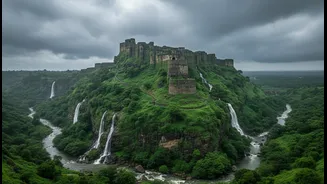
A favourite for trekkers from Mumbai and Pune, Lohagad Fort becomes a heavenly destination during the rains. The name means "Iron Fort," and its sturdy structure, perched at over 1,000 metres, offers an accessible yet thrilling adventure. The trail, mostly
well-laid steps, gets slick with moss, demanding careful footing, but the reward is immense. At the top, dense fog rolls in, often reducing visibility and creating the surreal feeling of walking among the clouds. The fort's most iconic feature, the 'Vinchu Kata' or scorpion's tail, is a narrow, fortified ridge that offers a dizzying, dramatic walk with green valleys plunging on either side. The route is dotted with seasonal waterfalls where you can take a refreshing break.
Sinhagad Fort, Maharashtra: History with a Hot Meal
For those in Pune, Sinhagad is more than a fort; it's a monsoon ritual. Its proximity and well-maintained road access make it a perfect day trip for families and casual visitors. During the rains, the fort is wrapped in a thick blanket of mist, with winds so strong they can feel like they might sweep you off the ramparts. The adventure here is in braving the elements to explore the historic gates and viewpoints. From the top, you get sweeping views of Khadakwasla Dam below, glistening under the overcast sky. The real reward, however, is the local fare served in small stalls at the summit. Huddling under a makeshift roof while savouring hot Kanda Bhaji (onion fritters), Pitla-Bhakri, and Matka Dahi is an experience in itself.
Kumbhalgarh Fort, Rajasthan: The Great Wall in Green
Rajasthan in the monsoon is a revelation, and nowhere is this more apparent than at Kumbhalgarh. The second-largest fort in the state, its massive 36-kilometre wall—often called the Great Wall of India—looks even more formidable against dark, dramatic skies. The usual arid Aravalli Hills that surround it undergo a stunning transformation, turning into a rolling carpet of emerald green. Visiting during this time means fewer crowds, allowing you to explore the UNESCO World Heritage Site in peace. The adventure lies in trekking along its vast ramparts and discovering some of the 360 ancient temples within its walls, with clouds often drifting right up to the fort. The Badal Mahal, or 'Palace of Clouds', truly lives up to its name this season.
Mandu, Madhya Pradesh: The Floating City of Joy
The ruined city of Mandu in Madhya Pradesh is perhaps at its most romantic during the monsoon. Emperor Jehangir famously called it 'Shadiabad' or the 'City of Joy,' a name that feels particularly apt when the rains arrive. Perched on a plateau, the entire area becomes lush and green, with its beautiful domes and arches reflected in the numerous lakes and reservoirs that fill to the brim. The famous Jahaz Mahal, or Ship Palace, built between two artificial lakes, appears as if it's floating on the water. Exploring this vast complex involves walking through misty paths to discover gems like Rani Roopmati's Pavilion, which offers breathtaking views, and the Hindola Mahal (Swinging Palace) with its unique sloping walls. The blend of Afghan architecture and rejuvenated nature makes for a serene and picturesque adventure.