






The Hidden Cost of Modern Farming
Modern agriculture has achieved incredible feats of production, but it has often come at a cost. The heavy reliance on synthetic chemical fertilisers and pesticides, while boosting yields in the short term, has led to significant challenges. Over time,
these practices can degrade soil health, reduce biodiversity, and lead to nutrient runoff that pollutes waterways. The overuse of certain fertilisers, like urea, has created an imbalance in soil nutrients, while the cost and supply chain vulnerabilities of imported chemicals pose economic risks to farmers and the nation's food security. This has created a pressing need for solutions that can sustain productivity without harming the environment.
An Underground Revolution: The Soil Microbiome
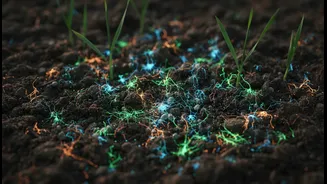
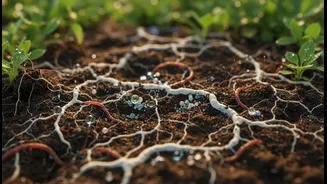
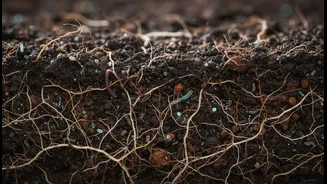
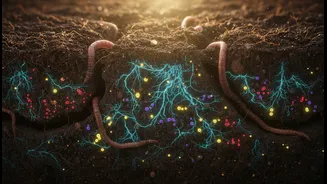
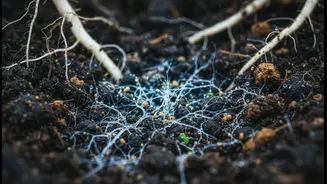
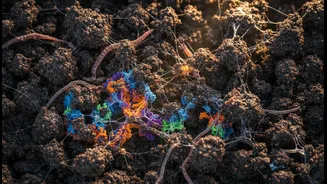
The answer may lie in an ecosystem we are only just beginning to fully understand: the soil microbiome. Every handful of healthy soil is teeming with billions of microscopic organisms, including bacteria, fungi, and other life forms. This bustling underground community is not just dirt; it's a living system that is fundamental to plant health and soil fertility. These microbes perform critical functions, from breaking down organic matter to cycling nutrients and forming beneficial relationships with plant roots. This complex web of life works together to create a resilient, self-sustaining environment for crops to thrive.
Nature's Bio-Fertilisers and Bio-Pesticides
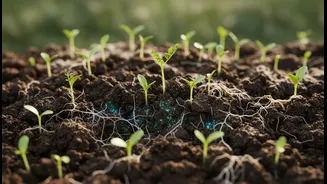
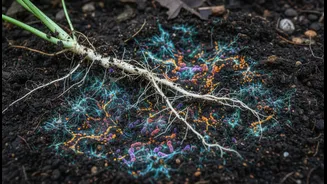
The power of microbes lies in their ability to act as nature's own agricultural inputs. Certain bacteria can pull nitrogen from the air and 'fix' it into a form plants can use, reducing the need for synthetic nitrogen fertilisers. Other microbes work to unlock phosphorus and potassium already present in the soil, making these essential nutrients more available to crops. Beyond providing nutrients, some microbes act as bodyguards for plants. They can outcompete harmful pathogens for resources or produce compounds that suppress diseases, functioning as natural biopesticides. This symbiotic relationship enhances plant growth, improves stress tolerance against conditions like drought, and bolsters overall crop resilience.
From the Lab to the Land
Researchers and companies are harnessing this natural power by developing microbial inoculants—products containing specific, beneficial microorganisms. These can come in liquid or powder forms that farmers can apply to seeds or soil. In India, the push for these biological solutions is growing, driven by a desire for sustainable practices and the increasing consumer demand for organic and residue-free food. Companies are now investing in scaling up production of biofertilisers and biopesticides, which can enhance soil health while reducing dependence on chemical imports. Studies have shown that integrating these biological products can boost yields while cutting chemical fertiliser use by as much as 30 percent.
Challenges on the Path to Adoption
Despite the immense potential, the path to widespread adoption of microbial solutions is not without its hurdles. One of the main challenges is inconsistency. The effectiveness of an inoculant can vary greatly depending on soil type, climate, and farming practices. The microorganisms are living products with a limited shelf life, and they are sensitive to temperature and storage conditions, which can be a problem in hot climates. Furthermore, a lack of awareness and trust among some farmers, coupled with competition from established chemical products, can slow down adoption. Overcoming these barriers will require continued research to develop more robust microbial strains, better quality control, and increased farmer education to unlock their full potential.