





The Cosmic Haystack Problem
Since the 1990s, astronomers have confirmed the existence of thousands of exoplanets, with estimates suggesting there could be tens of billions of rocky worlds in the Milky Way alone. This presents a monumental challenge: we can't possibly study every
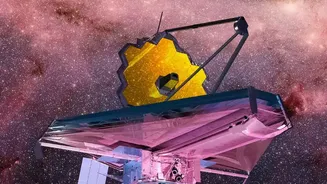
single one in detail. The JWST is incredibly powerful, but its time is precious. Pointing it at a planet to hunt for the chemical signs of life—or biosignatures—is a time-intensive process. Scientists need an efficient way to filter out the duds and focus on the most promising candidates, creating a shortlist of potentially habitable worlds.
An Atmosphere Is Everything
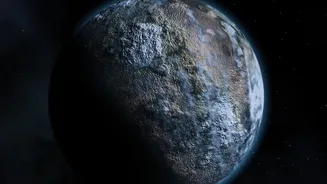
For a rocky planet to be considered habitable, a substantial atmosphere is non-negotiable. An atmosphere acts like a planetary blanket; it helps regulate temperature, ensuring a world isn't scorching hot on one side and frozen on the other. It also provides protection from harmful stellar radiation and is essential for maintaining liquid water on the surface—a key ingredient for life as we know it. Many rocky planets, especially those orbiting close to their stars, are bombarded by intense radiation and stellar winds that can strip their atmospheres away over time, a process called atmospheric escape or stripping. These worlds become barren, airless rocks, entirely unsuitable for life.
Seeing What Isn't There
This is where the JWST's clever screening technique comes in. The telescope primarily studies atmospheres using a method called transit spectroscopy. When a planet passes in front of its star, a tiny fraction of the starlight filters through its atmosphere. By analyzing this light with its sensitive spectrographs, JWST can detect the chemical fingerprints of molecules like water, methane, and carbon dioxide. But this technique also works in reverse. If a planet has no atmosphere at all, there's nothing for the starlight to filter through. The light is simply blocked. JWST is so precise that it can easily tell the difference between a planet with a thick atmosphere, a thin one, or no atmosphere at all.
A Filter for Finding Life
By looking for the clean signal of a bare rock, astronomers can quickly and efficiently identify planets that have lost their atmospheres. While this sounds like a negative result, it's actually a huge time-saver. Instead of spending weeks trying to analyze a planet that turns out to be an airless wasteland, scientists can rule it out in a much shorter observation period. This process of elimination is crucial. It allows researchers to build a vetted list of targets that do appear to have atmospheres. These are the worlds that merit the long, detailed follow-up observations required to search for biosignatures, the subtle chemical hints that could point to the presence of life. It transforms the search from finding a needle in a cosmic haystack to searching through a much smaller, more promising pile.
The First Results Are In
Early observations with JWST have already put this method into practice. While the telescope has yet to find a confirmed Earth-like world with a confirmed Earth-like atmosphere, it has successfully characterized the atmospheres of super-hot super-Earths like 55 Cancri e and TOI-561 b. It has also definitively ruled out a thick, Venus-like carbon dioxide atmosphere on the rocky exoplanet TRAPPIST-1 c. Each observation, whether it finds an atmosphere or confirms its absence, provides crucial data points. These results help scientists refine their models of how planets form and retain their atmospheres, which is essential context for the ultimate search for life elsewhere. Every barren world identified gets us one step closer to finding one that isn't.