





In a world where 80% of people live under light-polluted skies, finding true darkness is a rare luxury. In the remote heights of Ladakh, India's first Dark Sky Reserve in Hanle offers a celestial spectacle that is among the best on Earth.
What is the Hanle Dark Sky Reserve?
Designated in
2022, the Hanle Dark Sky Reserve is a protected zone within the Changthang Wildlife Sanctuary, created through a partnership between local authorities and the Indian Institute of Astrophysics (IIA). Spanning a radius of about 14 miles around the village of Hanle, the reserve enforces strict controls on artificial light to preserve the natural darkness. This isn't just about pretty views; it’s a scientific and conservation effort. Hanle's location is uniquely suited for astronomy, sitting at an altitude of about 14,800 feet in a cold, dry desert. This elevation places it above much of the atmospheric water vapor, and its remote setting means it has nearly 300 clear, cloudless nights a year with almost zero light pollution, making it one of the premier astronomical sites globally.
A Celestial Showcase for Everyone
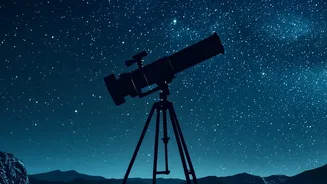
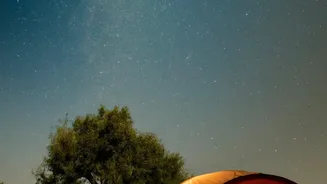
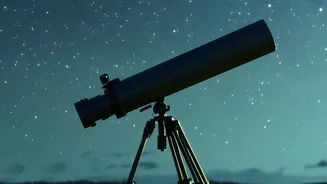
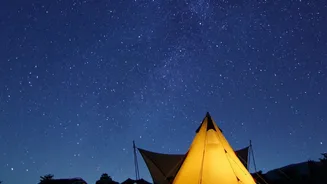
On a clear, moonless night in Hanle, the sky is overwhelming. The Milky Way isn't a faint smudge but a brilliant, textured river of light stretching from horizon to horizon. Visitors can easily spot constellations, planets, and even the Andromeda Galaxy with the naked eye. But the experience is elevated by the community's involvement. The IIA has trained local villagers, many of them women, to be 'Astronomy Ambassadors'. These guides lead stargazing sessions for visitors using powerful 8-inch telescopes, pointing out celestial wonders like Saturn’s rings and distant nebulae. This initiative provides a sustainable livelihood for the community while giving travelers an authentic, educational experience. You don't need to be a scientist; the local guides make the cosmos accessible to all.
More Than Just Stargazing
While the stars are the main event, Hanle itself is a destination. It is home to the Indian Astronomical Observatory (IAO), a world-class research facility. While night access to the professional telescopes is not permitted, daytime visits to the observatory complex can often be arranged. The region also features the historic 17th-century Hanle Monastery, perched on a hill with stunning valley views. For the truly adventurous, Hanle serves as a base for trips to Tso Moriri, a breathtaking high-altitude lake, or the Umling La Pass, one of the world's highest motorable roads. Accommodations are primarily local homestays, offering a warm and authentic glimpse into traditional Ladakhi life in this remote, high-altitude landscape.
How to Plan Your Trip
A trip to Hanle requires careful planning. The best time to visit is from May to September, when the roads are clear and the weather is most stable. For the best stargazing, plan your visit around the new moon to ensure the darkest possible skies. Reaching Hanle involves a long drive of 8–10 hours from Leh, Ladakh's main town. Because Hanle is at an extreme altitude, acclimatization is critical; spend at least two full days in Leh (at 11,500 feet) before ascending further to prevent altitude sickness. All visitors need permits. Indian citizens require an Inner Line Permit (ILP), while foreign nationals need a Protected Area Permit (PAP), which should be arranged in advance through a registered travel agent. Pack for extreme cold, as night temperatures drop below freezing even in summer. Connectivity is limited, and there are no ATMs, so carry sufficient cash.