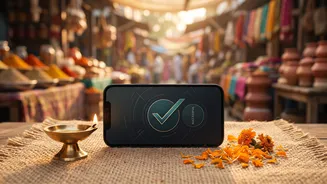









The Customer Is Now Digital
The single biggest driver for this change is the customer. A growing number of shoppers, particularly younger Indians, simply don't carry large amounts of cash anymore. They have grown accustomed to the convenience of Unified Payments Interface (UPI)
for everything from paying bills to buying groceries. For a small vendor, refusing to accept digital payments is like closing the door to a significant portion of their potential customers. During Diwali, when footfall is at its peak, turning away a customer because they only have Google Pay or PhonePe is a lost sale that vendors cannot afford. This shift is not just an urban phenomenon; it has penetrated semi-urban and rural areas, too. The widespread availability of affordable smartphones and internet access has made digital payments a baseline expectation.
More Than Just Convenience
For vendors, the benefits go far beyond simply accommodating customer preference. Going digital means no more fumbling for change during peak hours, which can significantly speed up transactions and shorten queues. This is a critical advantage during the frantic pace of festive shopping. It also enhances security. Carrying a day's worth of cash earnings is a risk, with potential for theft or loss. Digital transactions, which are instantly credited to a linked bank account, eliminate this worry. Furthermore, it simplifies accounting. Instead of manually tracking cash sales, vendors have a digital record of every transaction, which helps in managing their finances and understanding sales patterns.
An Affordable and Accessible Shift
A few years ago, accepting digital payments meant investing in a costly Point of Sale (POS) machine, which was out of reach for most street vendors and small 'kirana' stores. The rise of QR codes has completely changed the game. A vendor can start accepting payments with just a printed QR code and a basic smartphone linked to a bank account. This low-cost, minimal-hardware setup has democratized digital payment acceptance, allowing even the smallest entrepreneurs to participate in the formal economy. Government initiatives like Digital India and the initial zero-fee structure for UPI merchant transactions aggressively pushed this adoption forward, making it an almost frictionless transition for many.
Navigating the Challenges
Despite the rapid adoption, challenges remain. Unreliable internet connectivity, especially in more remote areas, can lead to failed or delayed transactions, frustrating both the vendor and the customer. There is also a learning curve, and some vendors may lack the digital literacy to troubleshoot issues. Perhaps the most significant recent concern revolves around the introduction of a Merchant Discount Rate (MDR), a small fee on certain UPI transactions over ₹2,000. Retailer associations have warned that for merchants operating on thin margins, this fee could create an incentive to revert to cash, especially with the change timed near the crucial festive season. However, reports in early October 2026 suggested the government might delay this rollout to January 2027 to avoid disrupting festive sales, indicating a willingness to calibrate the policy.