





More Than Just Greens
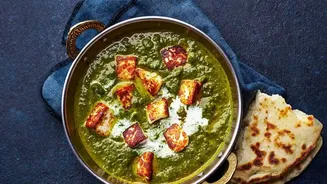
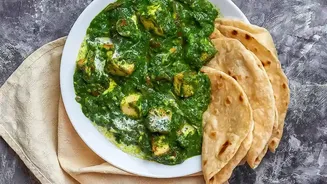
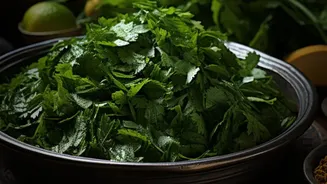
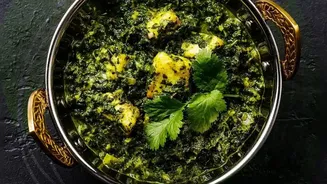
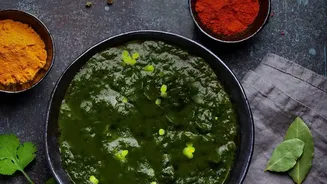
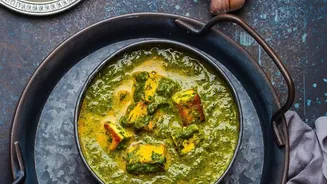
At its heart, saag is a celebration of seasonal leafy greens. Traditionally made with 'sarson' (mustard greens), its sharp, peppery flavour is often balanced with milder greens like spinach ('palak') or lamb's quarters ('bathua'). These greens form the
canvas, providing an earthy, slightly bitter base. While essential, the greens are only the starting point. Without proper seasoning, saag can taste flat, raw, or overly bitter. The magic happens when layers of flavour are thoughtfully introduced, transforming the humble greens into a complex and satisfying dish.
Building the Flavour Base
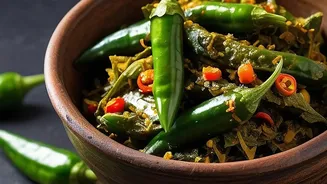
The first layer of seasoning is the foundation, cooked directly into the dish to build savoury depth. This process, often called 'bhunao', typically starts with aromatics like onions, ginger, and garlic. Sautéed patiently, they lose their raw pungency and develop a deep, mellow sweetness. Green chillies are also added at this stage, infusing a fresh, sharp heat throughout the greens as they cook. This initial step is not to be rushed; it’s where the foundational character of the saag is established, creating a rich base upon which other flavours can be built.
The Role of Ground Spices
Once the aromatics have softened, ground spices are introduced. Unlike some cuisines where a single spice blend is used, in saag, each powder has a distinct purpose. Turmeric provides warmth and its signature earthy note, while coriander powder adds a bright, almost citrusy dimension. A touch of red chilli powder can be used to adjust the heat. These spices are often added after the initial sauté but before the dish simmers, allowing them to 'bloom' in the hot oil and release their essential oils, ensuring their flavours are cooked into the very fabric of the saag rather than just sitting on top. However, saag is meant to be mildly spiced to allow the flavour of the greens to shine.
The Grand Finale: The Tadka
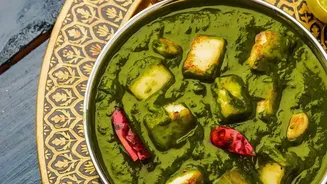
Perhaps the most crucial seasoning step is the 'tadka', or tempering, which is added at the very end. This is a separate process where ghee (clarified butter) or oil is heated in a small pan. Whole spices like cumin seeds, dried red chillies, or aromatics like thinly sliced garlic and ginger are flash-fried in the hot fat until fragrant. This infused, aromatic oil is then poured over the finished saag just before serving. The 'tadka' provides a final, dramatic burst of aroma and flavour that awakens the entire dish. It adds a layer of texture and a fresh, toasted spice note that would be lost if the spices were simply boiled in the saag from the start. Skipping this step can leave the final dish tasting unfinished.
Balancing and Finishing Touches
Beyond spices, other ingredients play a key seasoning role. 'Makki ka atta' (maize flour) is traditionally stirred into the saag not just to thicken it, but also to add a subtle, sweet, and nutty flavour that complements the greens. Fat is also a critical component. A generous dollop of butter or a swirl of ghee at the end doesn't just add richness; it helps to soften any residual bitterness from the mustard leaves, coating the palate and creating a smoother, more balanced taste. Some cooks finish with a pinch of garam masala for a final aromatic lift, but many purists prefer to let the simple, layered flavours of the greens and the tadka take centre stage.